Sarajevo is a safe city for visitors and has been for many years. It is also a city where the nineteen nineties siege is still visible in the buildings, which is what prompts the question more than any current risk.
Is it safe?
Yes, with the ordinary precautions of any European city. Violent crime against visitors is rare, the centre is busy into the evening and people are notably welcoming. Petty theft exists at the usual level and no more.
What about landmines?
A genuine legacy issue in parts of rural Bosnia rather than in the city. Demining continues in the countryside, and the standing advice is not to leave marked paths or enter abandoned buildings in rural areas. Sarajevo itself and its main attractions are clear.
Check current government travel advice before visiting for the position in any rural area you plan to walk in.
What is the city like?
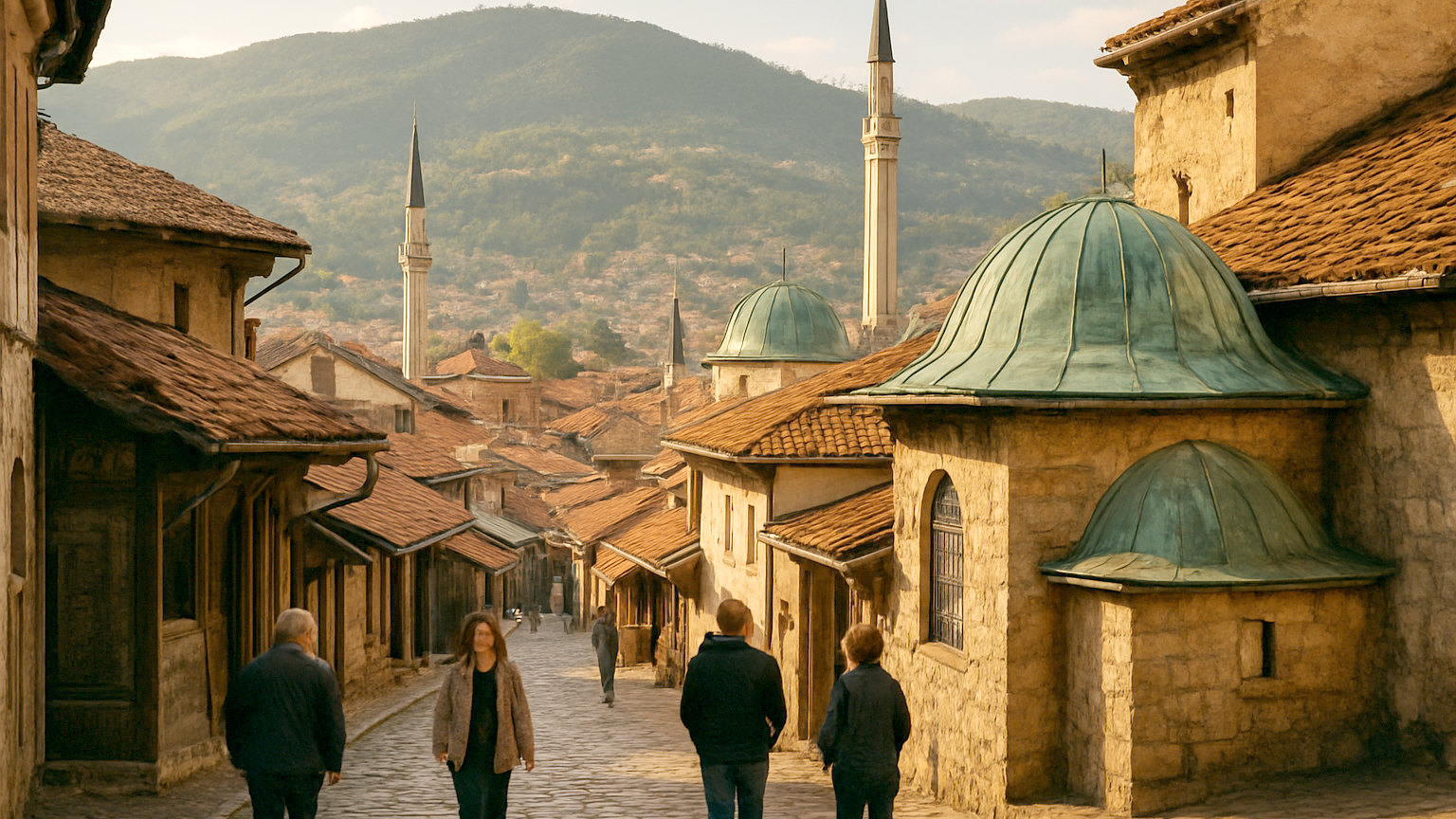
Unusually layered. Ottoman, Austro-Hungarian, Yugoslav and modern quarters sit in sequence along one valley, and a mosque, a Catholic cathedral, an Orthodox church and a synagogue stand within a few minutes walk of each other.
What should you see?
Bascarsija, the Ottoman bazaar quarter at the heart of the old town. The Latin Bridge, where the assassination that triggered the First World War took place. The Tunnel of Hope museum, dug under the airport during the siege. The old Olympic venues from nineteen eighty-four.
Should you take a war tour?
Many visitors do and they are generally well done, frequently led by people who lived through the siege. They need some preparation and are not a light morning, and they explain the city more than any museum.
How expensive is it?
Cheap by European standards. Coffee, meals and accommodation cost well below central European prices, and the local currency is the convertible mark, which is pegged to the euro.
What should you eat?
Cevapi, grilled minced meat served with flatbread and onion, which the city takes seriously. Burek and other filled pastries. Bosnian coffee, served in a copper pot in a ritual worth learning.
How long do you need?
Two or three nights. The old town is compact, the museums are substantial and the surrounding hills are worth a half day for the views over the valley.
What is nearby?
Mostar, two hours by road or rail, with its rebuilt bridge. The Neretva valley. The Bjelasnica and Jahorina ski areas, half an hour away and cheap in winter.
When should you go?
May, June and September for walking weather. Winter is cold and the surrounding mountains have inexpensive skiing. The city sits in a bowl and can hold poor air quality in still winter conditions.
What is the city like now?
Lively and normal. Bascarsija fills every evening, the cafe culture is strong, and the visible damage that remains is concentrated on particular buildings rather than the whole city. Visitors are common enough to attract no attention.
Should you talk about the war?
People generally will if asked respectfully, and many guides do so directly. It is recent enough that almost everyone over thirty lived through it, and following their lead rather than pressing is the sensible approach.
What should you know about the currency?
The convertible mark is pegged to the euro. Cards are accepted in the centre and cash remains useful in the bazaar and for smaller places.
How do you get there?
Flights from several European cities, with the airport twenty minutes from the centre, and good bus connections to Mostar, Dubrovnik, Belgrade and Zagreb. The railway to Mostar is slow and among the most scenic journeys in the Balkans.
Do you need cash?
Useful in the bazaar and for smaller cafes, with cards accepted in most hotels and restaurants in the centre.
See also What Is Skopje Known For?, which covers a related part of the same decision, and our other Destinations guides.
The short answer
Safe for visitors, with normal city precautions and one rural caveat about staying on marked paths outside the city. Allow two or three nights for Bascarsija, the Tunnel museum and a war history tour, and expect prices well below western Europe.