
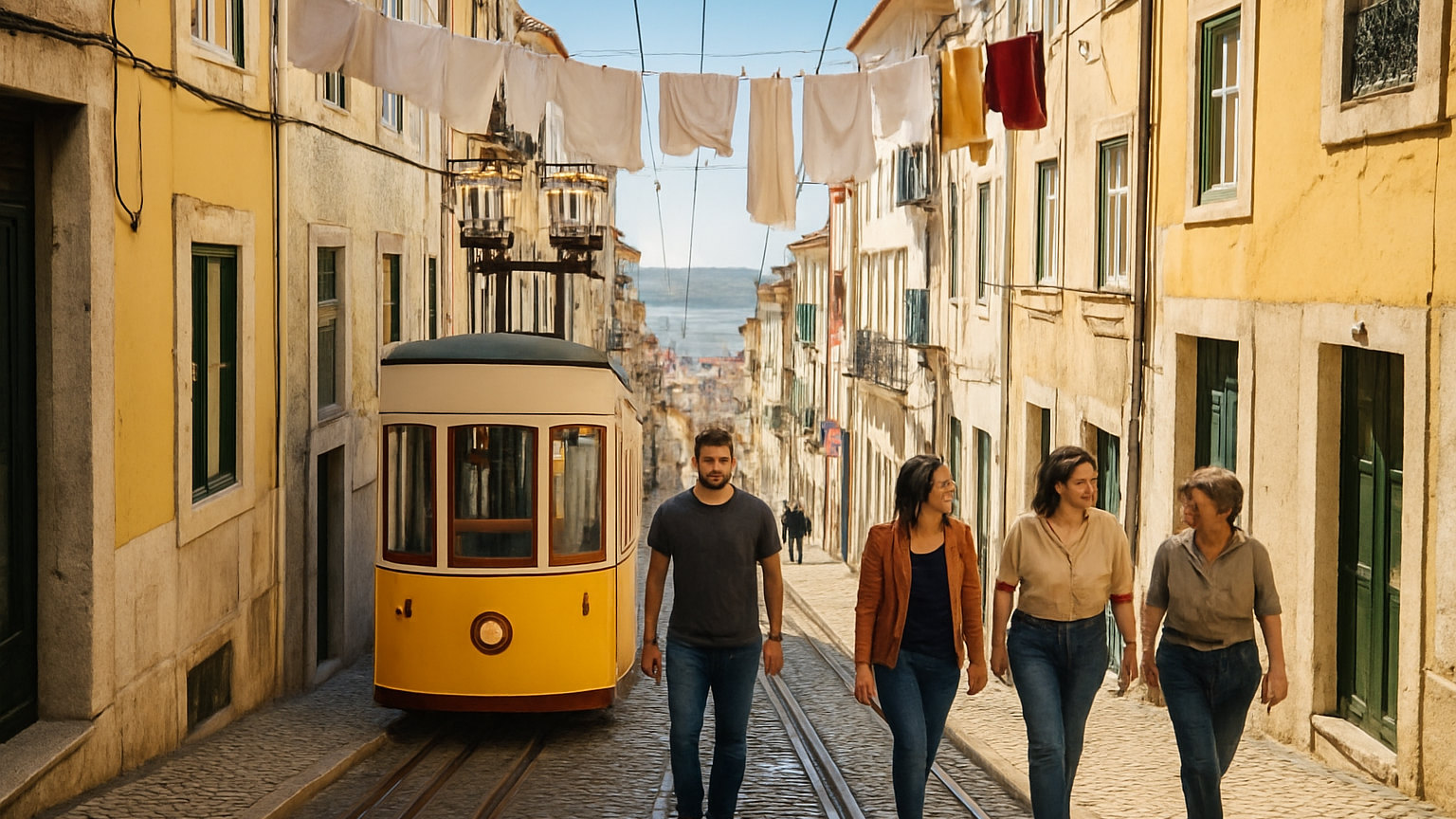
Lisbon is built across seven hills above a river estuary, which is the source of both its views and its main practical difficulty. The climbs are steeper and more frequent than photographs suggest, and planning a day without thinking about the gradient is the commonest mistake visitors make here.
How long do you need?
Four nights. Three covers the city centre and Belem, and the fourth allows Sintra, which is the single best thing within reach and deserves a full day rather than half of one.
What are the essential sights?
Belem, a short tram ride west, with the Jeronimos Monastery and the Belem Tower, both UNESCO listed and both the product of the age of exploration. The Alfama, the oldest district, a maze of lanes below the Sao Jorge castle. The Baixa grid, rebuilt after the 1755 earthquake. The miradouros, which are the viewpoint terraces scattered across the hills and are where the city is at its best.
Is tram 28 worth it?
The route is genuinely lovely and the tram is also a working service, so in the middle of the day it is packed and a known target for pickpockets. Ride it early, before nine, or take tram 12 which covers part of the same ground with a fraction of the crowd.
Where should you stay?
Baixa and Chiado for central, flat-ish and walkable. Principe Real for a smarter residential feel and good restaurants. Alfama for atmosphere, accepting that every arrival involves a climb and a suitcase on cobbles. Avoid anywhere described as having character if you have mobility concerns, which here usually means stairs.
Where should you eat?
Away from the Rua Augusta and the main squares. The Time Out Market is good and busy and is not the only option. Look for tascas, the small traditional restaurants, and order grilled fish, which is the city strength. Pastel de nata is best at Belem where the original recipe is made, and the queue moves faster than it looks.
How do you get around?
The metro is clean and quick and does not reach the hills. Trams and the funiculars cover the climbs and are included on a day travel card, which pays for itself almost immediately. Walking is the main mode and the shoes matter, since the pavements are polished limestone and become slippery in rain.
When is the best time to visit?
March to June and September to October. July and August are hot and the hills make it feel hotter. Lisbon is mild in winter at around fifteen degrees and is one of the better European cities for a January break. The Santo Antonio festival in June fills the Alfama with grilled sardines and street parties.
What is worth a day trip?
Sintra, forty minutes by train, for the Pena Palace, the Moorish castle and the Quinta da Regaleira with its initiation well. It is extremely busy, so go early and book the palace entry. Cascais for a seaside afternoon. Setubal and the Arrabida coast for beaches.
What do people get wrong?
Underestimating the hills and booking an apartment at the top of one. The second is the couvert, the bread and olives brought to the table unbidden, which is charged for and can be declined without awkwardness.
How much should you budget?
Lisbon has risen sharply and is no longer the bargain it was five years ago, though it remains below Paris, Amsterdam or Barcelona. Accommodation is the main cost. Eating is where the value sits, and a set lunch, the prato do dia, in a neighbourhood tasca costs a fraction of dinner in a tourist restaurant for better food. Transport is cheap and a day travel card covering the trams and funiculars pays for itself within about three journeys.
Prague in Two Days: What to See and What to Skip answers a related question in more depth, and there is more of the same across our Destinations guides.
The short answer
Four nights in Baixa or Principe Real, Belem on one morning, the Alfama on foot, tram 28 before nine, and a full day in Sintra with the Pena Palace booked in advance.


