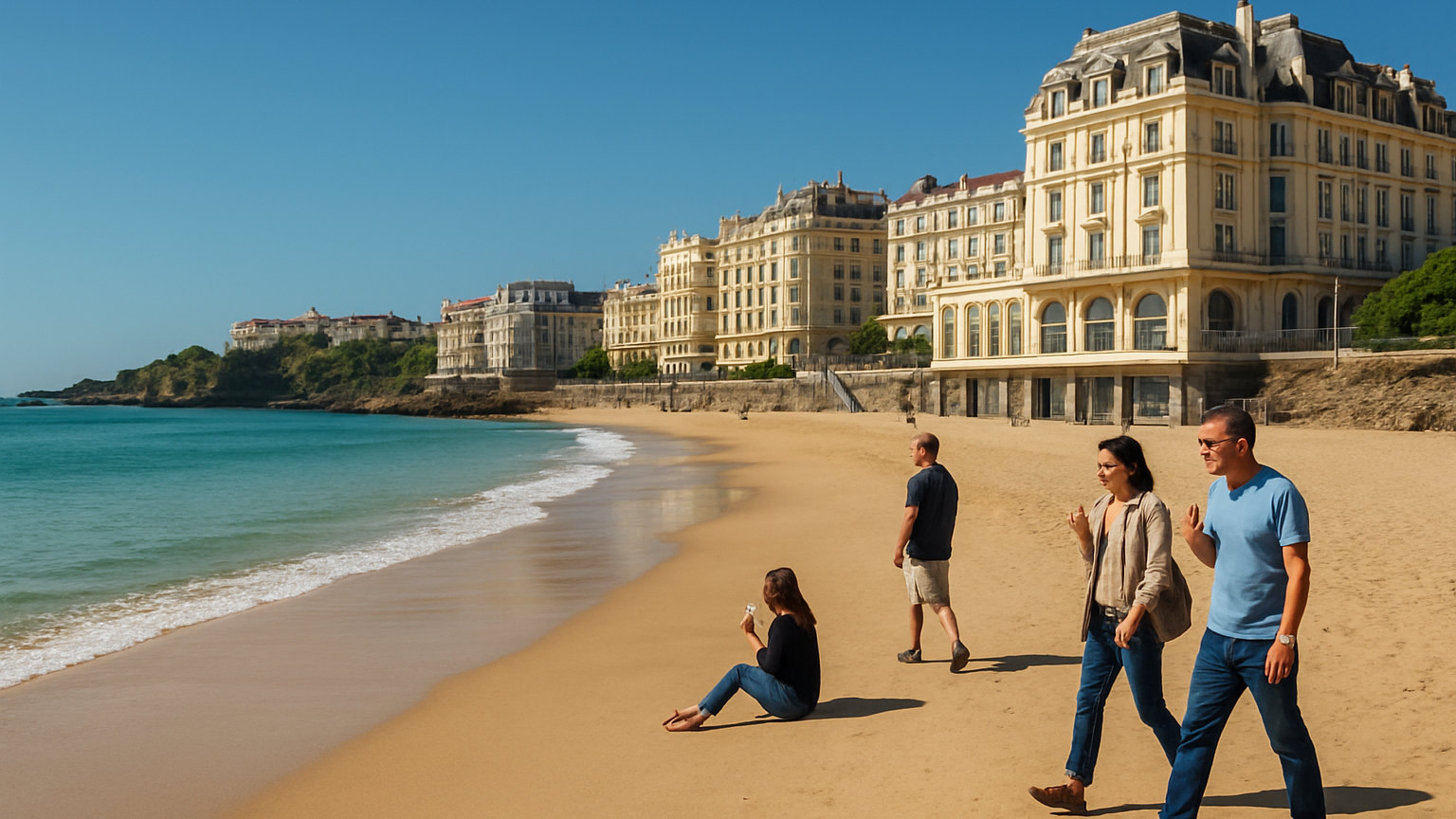
Biarritz was built as an imperial seaside resort in the nineteenth century when Napoleon III and Empress Eugenie made it fashionable, and it became the birthplace of European surfing in the 1950s. Those two identities sit alongside each other: grand belle epoque hotels above beaches full of boards.
How long do you need?
Three or four nights, or a week using it as a base for the Basque coast on both sides of the border. The town itself is small and the surrounding area is the reason to stay longer.
What are the beaches like?
Grande Plage is the central beach below the old casino, sandy and wide and busy in season. Cote des Basques to the south is the historic surfing beach, backed by a cliff, and largely disappears at high tide, which catches people out. Milady further south is quieter and better for families. The Atlantic is cold, around twenty-one degrees at best, and the waves are real.
Is it a good place to learn to surf?
It is among the best in Europe. Cote des Basques has a long gentle break suited to beginners at the right tide, and there is a very large number of surf schools. The season runs roughly April to October, with the biggest swells in autumn when the beaches are quieter and the water is still reasonably warm.
What is there to see?
The Rocher de la Vierge, a rock outcrop reached by a footbridge attributed to Eiffel. The lighthouse for the view along the coast. The Musee de la Mer aquarium. Les Halles market in the centre, which is the best place to eat at lunchtime. The Chapelle Imperiale from the Eugenie period.
What is nearby?
Bayonne, fifteen minutes inland, which has a fine old town, the best chocolate tradition in France and a cathedral, and is cheaper to stay in. Saint-Jean-de-Luz, a sheltered bay with the calmest swimming on this coast, which is the family choice. Espelette for the pepper. San Sebastian in Spain, forty minutes away.
Where should you stay?
The centre near Grande Plage for convenience at a premium. Saint-Charles and the streets behind Cote des Basques for a quieter and cheaper option within walking distance. Anglet, the next town north, for long beaches and lower prices. Bayonne for the best value of all with a fifteen-minute train.
Where should you eat?
Basque cooking on the French side, which means piperade, Bayonne ham, axoa and sheep cheese with black cherry jam. Les Halles and the surrounding streets are the best area. The town also has a strong pintxos culture borrowed from across the border, served in bars in the early evening.
When is the best time to visit?
June and September are the best months, and September in particular has warm water, good surf and far fewer people. July and August are busy with French holidaymakers. This is the wettest corner of France, so rain is possible in any month.
How do you get there?
Biarritz has its own small airport with seasonal flights, and Bordeaux is two hours away by train. The regional line links Biarritz, Bayonne and Saint-Jean-de-Luz cheaply, and buses cross the Spanish border to San Sebastian.
How much should you budget?
Biarritz is expensive by French coastal standards, particularly in July and August, and Bayonne fifteen minutes inland is substantially cheaper for the same access to the coast. Surf lessons and board hire are competitively priced given the number of schools. Les Halles is where to eat well without paying resort prices.
What do people get wrong?
Arriving at Cote des Basques at high tide and finding almost no beach, since it largely disappears. Check the tide before planning a day there.
Portofino: Is It Worth the Day Trip? is the natural next read, alongside the wider Destinations section.
The short answer
Four nights in Biarritz or Bayonne. Learn to surf at Cote des Basques on a rising tide, eat at Les Halles, take the train to Saint-Jean-de-Luz for calm swimming, and cross to San Sebastian for a day.