
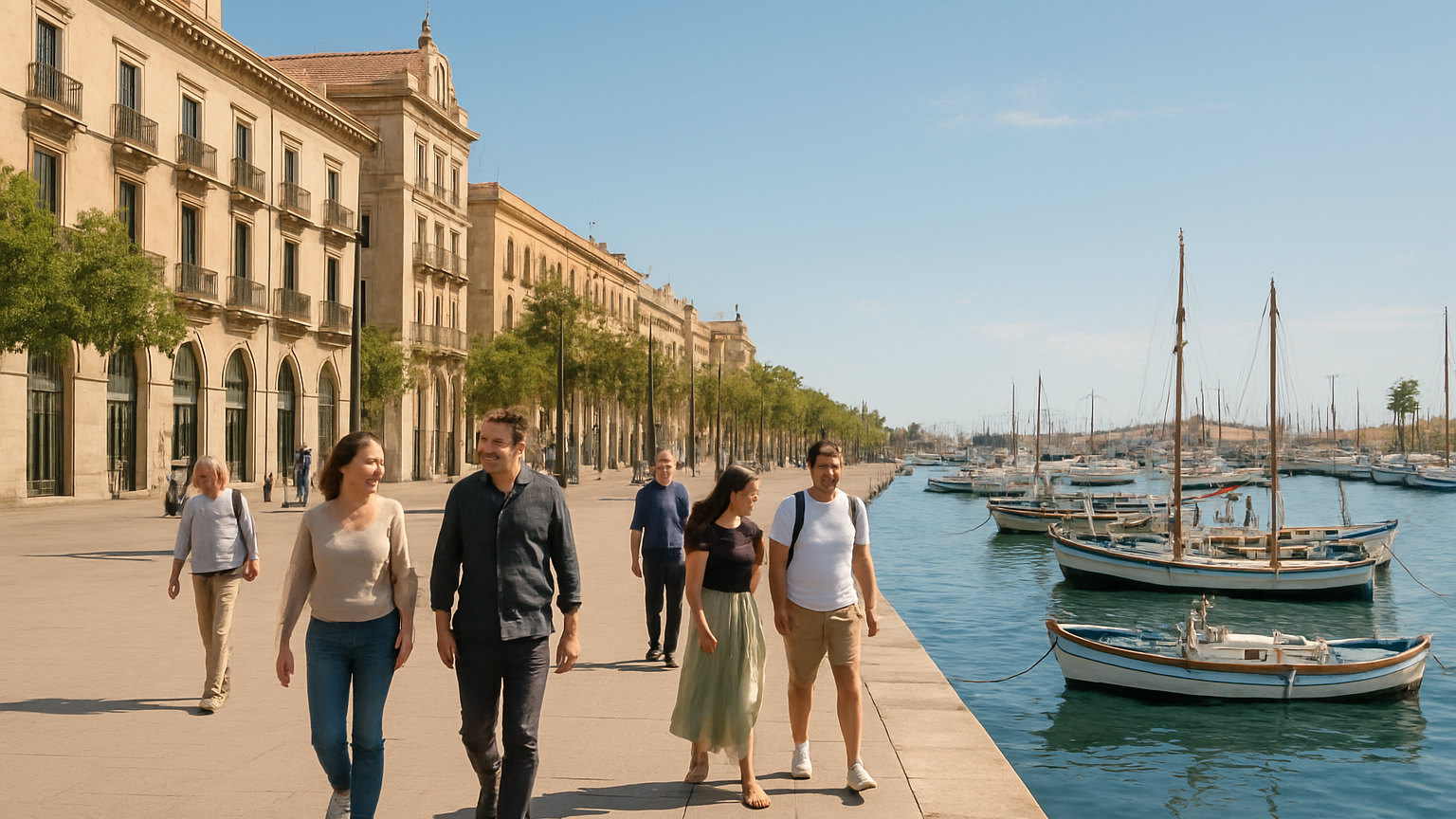
Sitges sits thirty-five minutes down the coast from Barcelona by local train, which makes it one of the most convenient beach towns in Europe. It has seventeen beaches, a whitewashed old town around a church on a headland, and a long-established reputation as one of the most welcoming towns in Spain for LGBT visitors.
Day trip or base?
Both work. As a day trip from Barcelona it gives you a beach afternoon and an old town for the price of a cheap train ticket. As a base it is calmer and often cheaper than the city, with trains running late enough to get back from a night out in Barcelona, which is the arrangement many visitors prefer.
What are the beaches like?
Sandy, sheltered and well organised, which is unusual for this stretch of Catalan coast. Platja de Sant Sebastia beside the old town is the most attractive and the calmest. Platja de la Ribera is the main central beach. The beaches west towards the Garraf headland are quieter, and those east of the centre include the town best-known gay beaches. All are within walking distance of the station.
What is there to see?
The church of Sant Bartomeu on the rock above the sea, which is the postcard image. The Cau Ferrat museum, the former house of the painter Santiago Rusinol, and the Maricel museum next to it, both reflecting the modernist artists who made Sitges a colony in the 1890s. The old town lanes behind the promenade.
What about the nightlife?
Concentrated on Carrer del Pecat, a single short street with a very high density of bars, and the surrounding lanes. It is lively rather than enormous, and the town has a strong and long-standing LGBT scene. It is also entirely possible to stay in the quieter western end and not encounter any of it.
What are the festivals?
Carnival in February is among the biggest in Catalonia, with two large parades and the town population multiplying for a week. The Festa Major in August involves human towers and fireworks. The film festival in October focuses on fantasy and horror and fills the hotels.
Where should you stay?
The old town and Sant Sebastia end for quiet and the prettiest setting. The centre near the promenade for convenience. The Terramar area west of the centre for larger hotels and lower prices with a fifteen-minute walk in.
When is the best time to visit?
May, June, September and October. The sea is swimmable from June to October. July and August are busy, with day visitors from Barcelona at weekends adding substantially to the beaches. Winter is mild and very quiet, and a good deal closes.
How do you get there?
The R2 Sud local train from Barcelona Sants or Passeig de Gracia, around thirty-five to forty minutes and very cheap, running several times an hour. Barcelona airport is closer to Sitges than to central Barcelona, with a direct bus. A car is unnecessary and parking in season is difficult.
How much should you budget?
Mid-priced, cheaper than central Barcelona for accommodation outside festival weeks and more expensive than inland Catalonia. Eating on the promenade carries the usual premium; one street back is noticeably better value.
What do people get wrong?
Treating it as a quiet village. Sitges has a permanent resident population, a serious festival calendar and weekend day visitors from Barcelona, so August Saturdays on the central beaches are busy. The second is booking the Terramar end without checking the walk in, which is pleasant along the promenade and longer than it looks on a map.
How long do you need?
A day if you are visiting from Barcelona, or a week if you are using it as a coastal base for the city, which is the better arrangement for most people.
It is worth reading alongside Cascais: A Coastal Day Trip From Lisbon, which takes a different angle, and the wider Destinations guides.
The short answer
Stay in Sitges and commute into Barcelona rather than the reverse, if you want a beach attached to a city break. Swim at Sant Sebastia, see the church at sunset, and take the train in for the evenings.


