
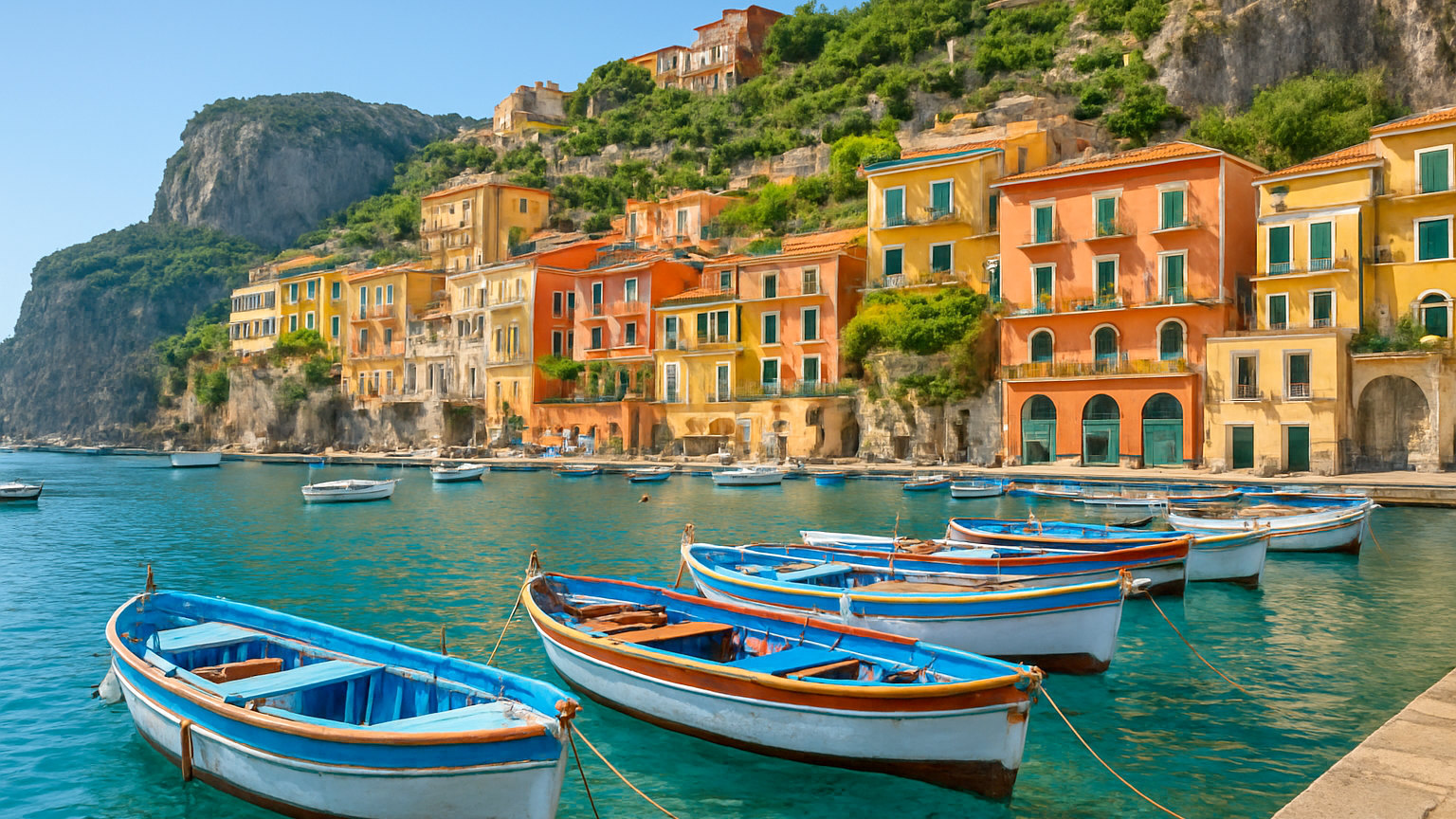
Sorrento sits on a cliff above the Bay of Naples facing Vesuvius, and its value is almost entirely positional. It has a railway line, a ferry port, flat walkable streets and a large supply of hotels, which makes it the most practical base in southern Italy even though it is not the most beautiful town on this coast.
How long do you need?
Five to seven nights, using it as a base. Sorrento itself needs a day. The rest of the time goes to Pompeii, Capri, the Amalfi Coast and Naples, all of which are within an hour.
What is there to see in the town?
A compact old town of narrow lanes with inlaid woodwork shops, a cathedral, and the Marina Grande fishing harbour below the cliffs, which is the prettiest corner and is reached by steps. The Villa Comunale gardens give the classic view across the bay to Vesuvius. The Museo Correale has the local decorative arts. It is a pleasant day rather than a compelling one.
Does Sorrento have a beach?
Not in any meaningful sense, and this is the thing that surprises people most. The town sits on a cliff and the swimming is from wooden platforms built out over the water, charged for by the day. Marina Grande and Marina Piccola have small areas of sand and shingle. For a proper beach you need Positano, or the Punta del Capo rock pools a short bus ride west.
What are the day trips?
Pompeii, thirty minutes on the Circumvesuviana train, which needs half a day and is best done early before the heat. Herculaneum, smaller and better preserved, on the same line. Capri by ferry in twenty-five minutes. The Amalfi Coast by ferry or bus. Naples in an hour, which most visitors skip and should not.
Where should you stay?
The centre near Piazza Tasso for walking distance to the station and the port. Sant Agnello, the next town east, for lower prices and a five-minute train ride. Marina Grande for the harbour setting and the steps back up. Anywhere on the cliff edge charges heavily for the view and many of those hotels have private lifts down to swimming platforms.
Where should you eat?
Away from Piazza Tasso and the main shopping street, which are priced for the coach trade. The Marina Grande has good simple fish restaurants. This is lemon country, so limoncello is genuinely local and the lemons themselves are enormous. Gnocchi alla sorrentina is the town dish.
When is the best time to visit?
April to June and September to October. July and August are hot and Pompeii in particular becomes punishing, with almost no shade. Many hotels close between November and March and the ferry services reduce sharply.
How do you get there?
Naples airport, then either a direct coach, the Circumvesuviana train from Naples central station, or a ferry from the port. The train is cheapest and is basic and crowded. No car is needed at any point, which is one of the main arguments for Sorrento over the Amalfi Coast.
What do people get wrong?
Booking Sorrento expecting a beach holiday. The second is skipping Naples, which is forty minutes away and is the best food city in Italy.
How much should you budget?
Sorrento is mid-priced for southern Italy and noticeably cheaper than Positano or Capri for accommodation of the same standard, which is much of its appeal as a base. Sant Agnello and Meta, one and two stops along the train line, cost less again. Ferry fares add up quickly if you are making a trip most days, so check whether a return is cheaper than two singles.
Is Capri worth a day?
Yes, and go early on the first boat and stay late, since the island is overwhelmed between eleven and four. Take the chairlift up Monte Solaro from Anacapri for the view rather than queueing for the Blue Grotto.
If you are planning further, Cinque Terre: Which Village and When to Go covers the next part of the decision, and there is more in our Destinations guides.
The short answer
A week based in Sorrento or Sant Agnello, using it as a hub rather than a destination. Pompeii early, Capri by ferry, the Amalfi Coast by boat, and a day in Naples. Do not come for the swimming.


