
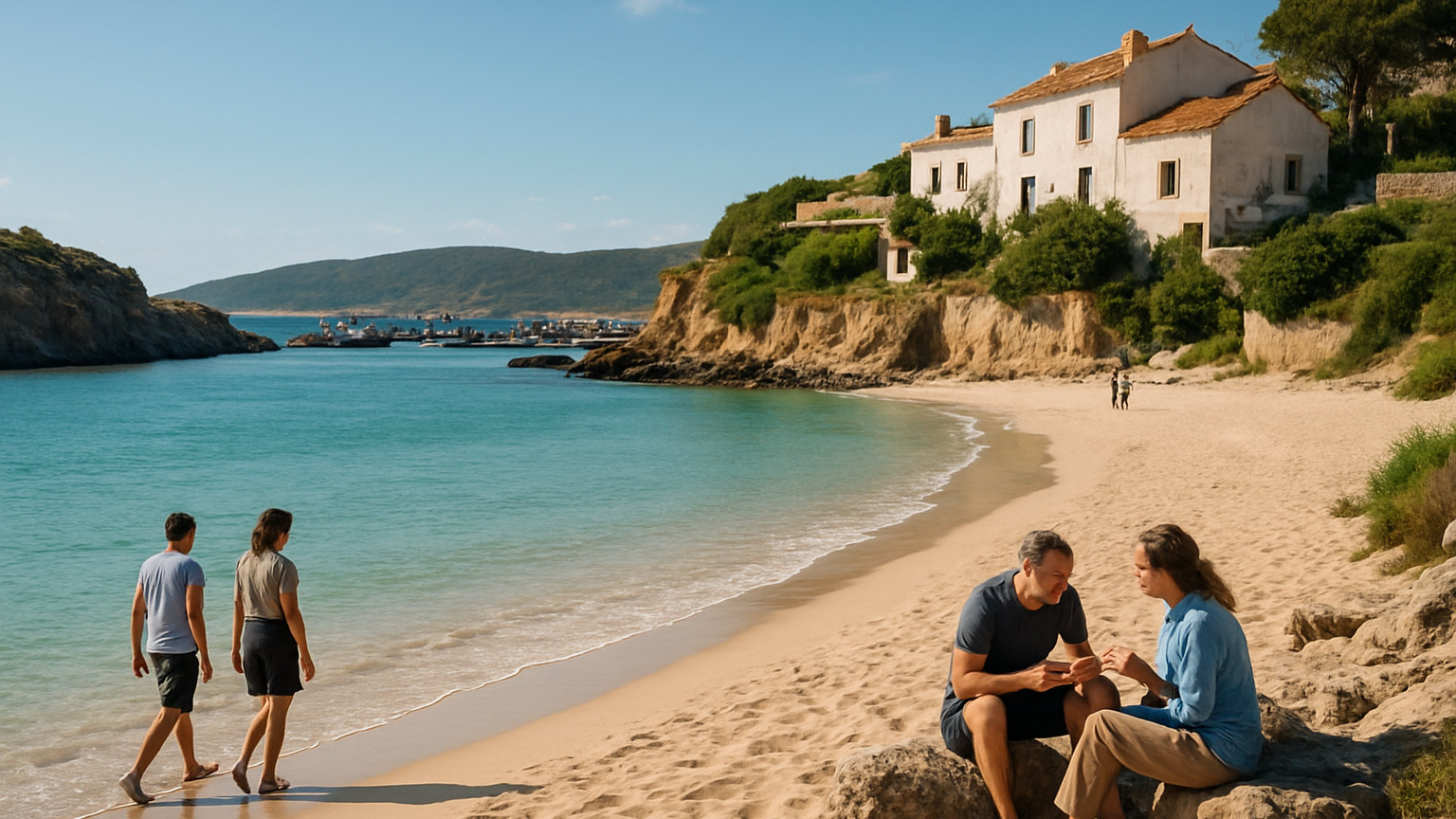
Tarifa sits at the southernmost point of mainland Europe, where the Mediterranean meets the Atlantic and Morocco is visible fourteen kilometres across the strait. The same geography that gives it the view gives it the wind, which funnels through the gap almost constantly and has made the town the kitesurfing capital of Europe.
How long do you need?
Three or four nights, or a week if you are learning to kitesurf or using it as a base for the Costa de la Luz. The old town is small and the beaches and the day trips are what fill the time.
What are the beaches like?
Enormous and largely undeveloped, which is unusual for southern Spain. Playa de los Lances runs for several kilometres north of the town and is the main kite and windsurfing beach. Valdevaqueros further on is the windiest. Playa Chica, beside the harbour, is the only sheltered spot and is tiny. Bolonia, twenty minutes north, has a huge dune and a Roman town behind it and is the best beach in the area.
How windy is it really?
Consistently and strongly, which is the entire basis of the local economy. Two winds dominate: the levante from the east, which is hot and fierce, and the poniente from the west, which is milder. Sunbathing without a windbreak is often impossible. If you want still air for lying on a beach, this is emphatically the wrong town.
Can you learn to kitesurf here?
It is one of the best places in Europe to do so, with a very large number of schools, reliable wind from around March to October and shallow water over long sandy stretches. Beginners usually need several days rather than an afternoon. Windsurfing and, in the sheltered periods, surfing are also well catered for.
What is there in the old town?
A small walled Moorish quarter of white lanes, the castle of Guzman el Bueno, and a gate that marks the entrance to the old town. It is compact, pleasant and has a young international feel from the surf community, with good bars and a decent number of restaurants for a town of this size.
Can you go to Morocco for the day?
Yes, and it is the best day trip in southern Spain. Fast ferries cross to Tangier in around an hour, and a passport is required. It is genuinely a different continent rather than a novelty, and a day is enough to see the medina and the kasbah. Organised trips exist and going independently is straightforward.
What else is nearby?
Bolonia for the dune and the Roman ruins of Baelo Claudia. Zahara de los Atunes and the beaches north along the Costa de la Luz. Vejer de la Frontera, a white hill town inland. Whale and dolphin watching in the strait, where several resident species are reliably seen between April and October.
When is the best time to visit?
May, June and September for the best balance of warmth and manageable wind. July and August are busy with Spanish holidaymakers and the levante can blow for days. Winter is mild and quiet, and the wind continues.
How much should you budget?
Tarifa is mid-priced and cheaper than the Costa del Sol an hour east. Accommodation rises sharply in August. Kitesurfing lessons and equipment hire are the main additional cost and are competitively priced given the number of schools.
How do you get there?
Gibraltar, Jerez, Malaga and Seville are the nearest airports, with Malaga around ninety minutes away and by far the best served. Buses run along the coast from Algeciras, Cadiz and Malaga. A car is worth having for Bolonia and the beaches north, which are not well served by public transport.
What do people get wrong?
Booking Tarifa for a conventional sunbathing holiday and discovering the wind. If you want still air and calm water, the Mediterranean side east of Gibraltar is a better choice, and it is an hour away.
See also Nice: Where to Stay, Eat and What to See, which covers a related part of the same decision, and our other Destinations guides.
The short answer
Four nights in or near the old town. Learn to kite at Los Lances, spend a day at Bolonia, take the ferry to Tangier, and accept that the wind is the point rather than an inconvenience.


