Greece has a longer usable season than most people use, and the best weeks are not the ones most heavily booked. The single most useful fact is that the Aegean is warmer in the first half of October than it is in the whole of June, because the sea lags the air by around two months. That one detail reshapes the calendar.
What is each part of the season like?
April and early May are for the mainland, Athens and the archaeological sites. The light is beautiful, wildflowers are out, the ruins are walkable in the middle of the day, and the sea is around seventeen degrees and unappealing. Many island hotels and ferries have not yet started.
Late May and June bring reliable heat and quiet islands. The sea is warming but still cool, around twenty-one degrees in June, which is fine for a determined swimmer and cold for a child. Prices are moderate and everything has opened.
July and August are hot, expensive and crowded, and in the Cyclades they are windy. Athens can reach the high thirties and is genuinely unpleasant for sightseeing. This is the period to travel only if school holidays require it.
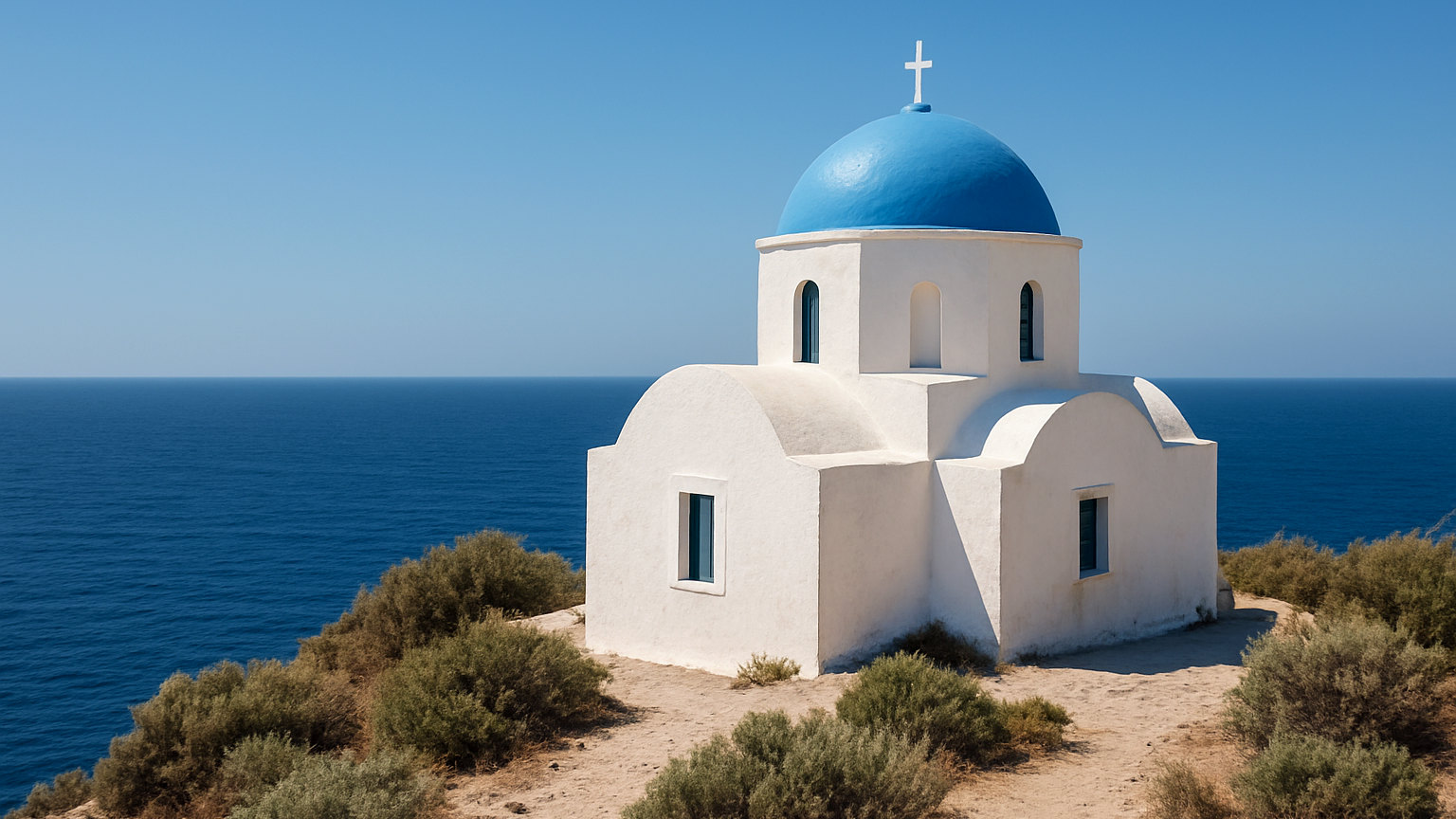
September is the best month in Greece by a clear margin. The sea reaches its annual peak of around twenty-five degrees, the heat has eased, the crowds thin after the first week, and prices fall sharply from the middle of the month.
October is the quiet reward. The first three weeks are warm, the sea is still around twenty-three degrees, and the islands feel like themselves again. From late October the ferries thin out and many island businesses close for winter.
What is the meltemi and does it matter?
The meltemi is a strong dry northerly that blows across the Aegean mainly from mid-July to early September. It makes the heat bearable, and it also cancels ferries, closes exposed beaches and makes small-boat crossings unpleasant. It is strongest in the Cyclades, which includes Mykonos, Paros and Naxos. If you are travelling in August and want calm water, the Ionian islands on the west side, such as Corfu, Kefalonia and Zakynthos, are barely affected.
When do the islands open and close?
The bigger islands, meaning Crete, Rhodes and Corfu, run roughly April to late October and keep some life going year round. Mid-sized islands open in May and close in early October. Small islands may only operate from June to September, and outside that a visit means a very quiet place with one taverna open and a reduced ferry.
Which month suits which traveller?
Families tied to school holidays should choose the Ionian in August to dodge the meltemi, or the very end of August when prices begin to fall. Couples should take September without much debate. Anyone interested in ruins, walking or Athens should take April, May or October and treat swimming as a bonus. Anyone wanting the cheapest warm week should look at the second half of October.
Is winter worth considering?
For Athens, yes. The city is mild, the sites are empty, and hotel prices fall by half. For the islands, generally no, unless you want a very quiet Crete or Rhodes, both of which stay functional through winter.
What does it cost across the season?
The price curve in Greece is steeper than the weather curve, which is the whole opportunity. A room on a popular island in mid-August frequently costs three times what the identical room costs in the last week of September, when the sea is a degree warmer. Ferries are broadly fixed, so almost all the saving sits in accommodation. If you are not tied to school dates, moving a booking back three weeks from the August peak is the single largest saving available anywhere in Mediterranean travel, and it buys better conditions rather than worse ones.
Why Is France the Most Visited Country in the World? goes into more detail on a closely related question, and the rest of our Destinations section covers the wider subject.
The short answer
September is the best month overall, early October the best value, and May the best choice if you care more about ruins than swimming. Avoid the Cyclades in August unless wind does not bother you, and check the sea temperature rather than the air temperature when the swimming matters.