
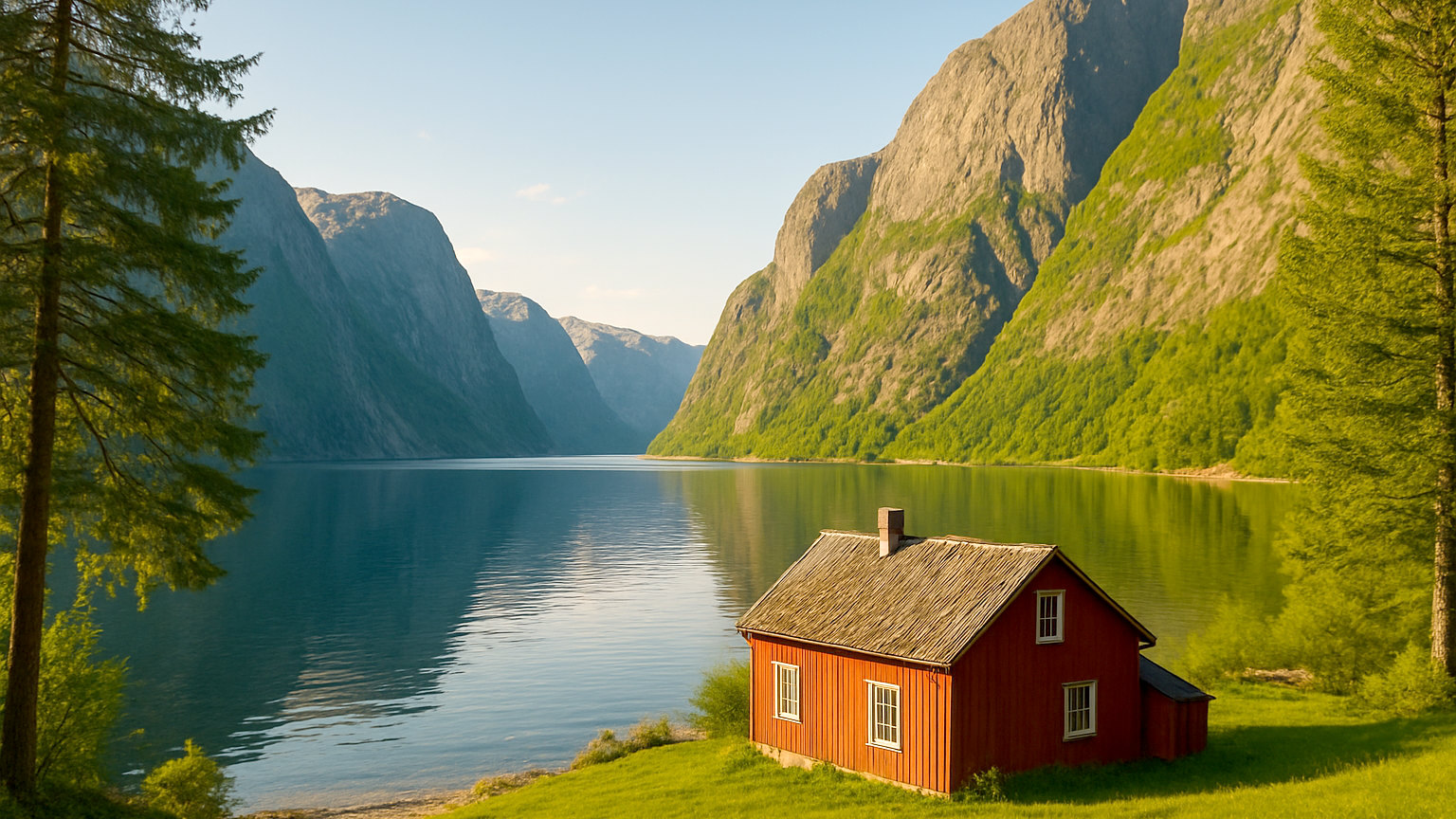
Norway is the country most often underestimated on a map. From Oslo to the North Cape is further than from Oslo to Rome, and the coastline is fractured by fjords that turn a short straight-line distance into a long drive or a ferry. Almost every disappointing Norwegian trip is the result of planning it as though the country were the size of Scotland.
How long for the fjords?
Five to seven nights for the classic western fjords, based around Bergen. That allows Bergen itself for two nights, the Sognefjord or Hardangerfjord area for two or three, and a day absorbed by the journeys, which are scenic and slow by design. Three nights is enough for a taste and will feel rushed.
Can you combine Oslo, the fjords and the Arctic?
Not in a week, and barely in ten days. Tromso and the Lofoten Islands are a separate trip requiring an internal flight of around two hours from Oslo. Attempting all three in seven nights produces four travel days and three real ones. If the northern lights are the goal, fly directly north and treat the fjords as a different holiday.
What does each region need?
Oslo needs two nights, three if the museums interest you, and it is a good city rather than the reason to visit Norway. Bergen needs two. The fjord region needs three to five depending on how much you walk. Lofoten needs four nights minimum, because the islands are strung out along a slow road. Tromso needs three, and for northern lights you want at least three clear-sky attempts because one night is a coin toss.
Is the Norway in a Nutshell route worth it?
For a short trip, yes. The combination of the Bergen railway, the Flam line, a fjord boat and a bus packs the headline scenery into a single long day and requires no driving. It is busy and it is not a substitute for staying in the fjords, but as a way of seeing a great deal in one day it is efficient and genuinely spectacular.
When should you go?
June to August for the fjords, when the days are extremely long, the roads are all open and the weather is at its most reliable, which in western Norway still means rain. September is quieter with autumn colour and shorter days. For northern lights, late September to late March, with the caveat that the coast is cloudier than the inland areas.
Winter in the fjord region is beautiful and considerably harder, with many mountain roads closed and limited daylight.
How expensive is it?
Comparable to Switzerland, with the same concentration of cost in restaurants and alcohol. Self-catering, supermarket lunches and cabin accommodation make an enormous difference, and Norway has an unusually good supply of simple cabins. The scenery itself is free and the right to roam is generous, so walking costs nothing.
Do you need a car?
For Lofoten and for exploring the fjords at your own pace, yes. For the Bergen to Flam corridor, no, because the train, boat and bus network covers it well. Driving in Norway is straightforward, slow, and involves ferries and tunnels which are part of the experience rather than an obstacle.
What does the weather actually do?
Western Norway is one of the wettest inhabited parts of Europe, and Bergen in particular receives rain on well over half the days of the year. This is not a reason to avoid it, but it is a reason to plan for it: fjords in low cloud are atmospheric rather than ruined, and the trip fails only if the whole plan rests on one clear day. Book flexible activities where you can, allow more days in the region than the sights strictly require, and treat waterproofs as equipment rather than a precaution.
Which European Country Has the Best Food? answers a related question in more depth, and there is more of the same across our Destinations guides.
The short answer
Allow a week for the fjords or a week for the Arctic, and do not try to do both in one trip. Two nights for Oslo, two for Bergen, and at least three where the scenery is. Plan around the distances rather than the map, because Norway is very much larger than it appears.


