Bosnia and Herzegovina is the most visibly Ottoman country in Europe, with minarets and copper markets in towns that are otherwise central European, and it is the country most marked by the wars of the nineteen nineties. Both facts shape a visit, and the second is not something to travel around: it is a large part of what you will be shown.
How long does Sarajevo need?
Three nights. The Bascarsija old bazaar is Ottoman, the streets a few minutes west are Habsburg, and there is a marked line in the pavement where one becomes the other. The Tunnel of Hope museum, the Latin Bridge where the First World War was triggered, and the abandoned bobsleigh track from the 1984 Olympics are the three things most visitors remember.
Is Mostar worth staying overnight?
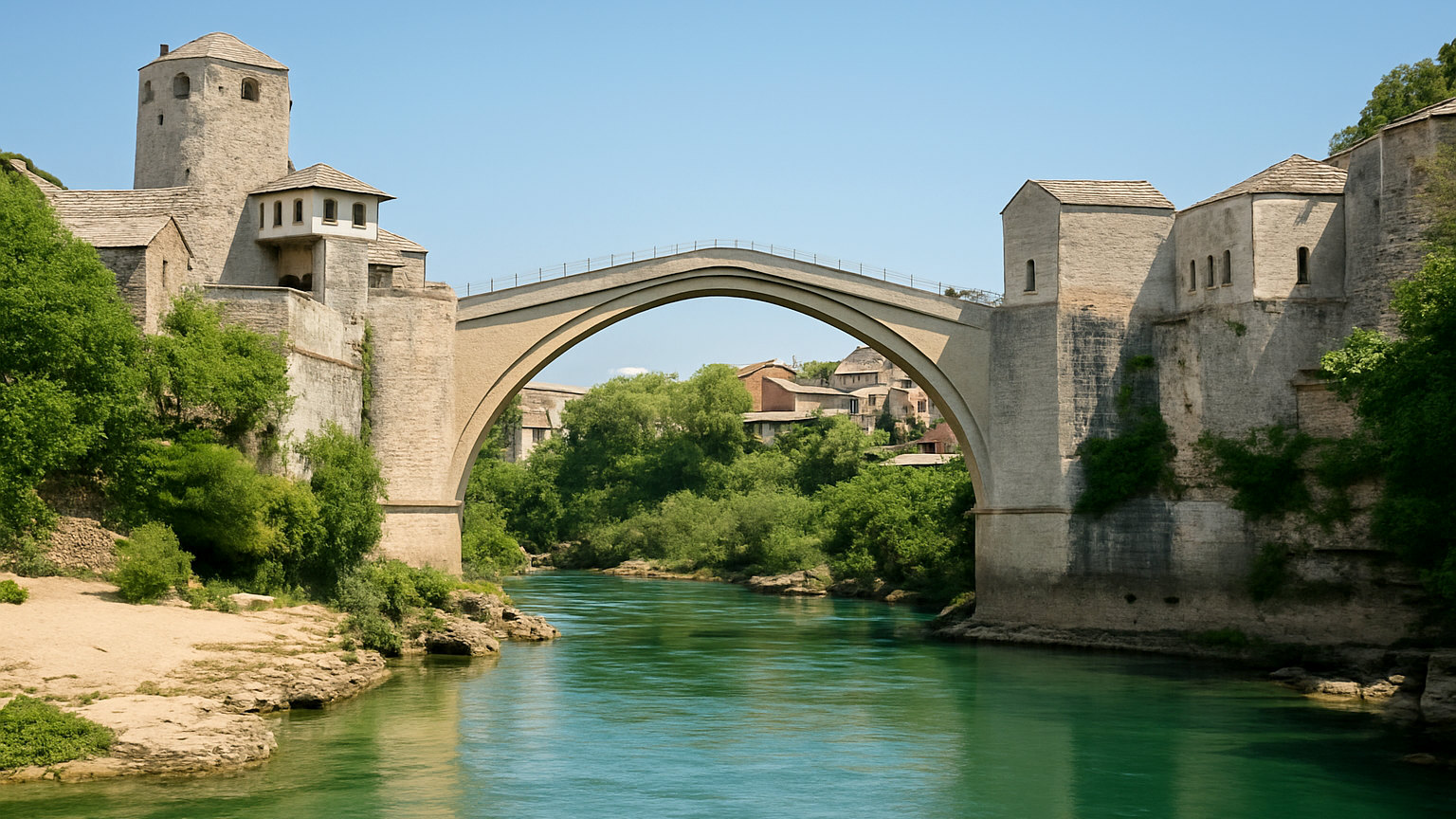
Yes, and it makes more difference here than almost anywhere. Mostar receives very large day-trip numbers from the Croatian coast, and the old bridge and bazaar are packed from mid-morning to late afternoon. In the evening the town belongs to itself again, the bridge is lit, and the divers who jump from it perform for a smaller crowd.
What else is in Herzegovina?
Blagaj, where a dervish house sits at the foot of a cliff beside a spring that is the source of a river. Pocitelj, a stepped Ottoman village on the Neretva. The Kravice waterfalls, a wide curtain of falls with a swimmable pool beneath, which are the best hot-day stop in the country. All three are within an hour of Mostar.
Where should you go for landscape?
The Neretva and Una rivers, both an improbable green, with rafting on the Una around Bihac and the Una national park waterfalls. Sutjeska national park has one of the last primeval forests in Europe and the country highest peaks. Jajce has a waterfall in the middle of the town itself.
How should you approach the war history?
Directly and with some care. Buildings still carry shell damage, the siege of Sarajevo lasted nearly four years, and Srebrenica has a memorial centre that is difficult and important. Local guides are usually willing to talk about it and many lived through it. Landmines remain in some rural areas, so stick to marked paths and established trails in the countryside.
Is Bosnia cheap?
Very, and among the cheapest in Europe alongside Serbia and Albania. It uses the convertible mark, pegged to the euro, and cash is more useful than a card outside the main cities. Coffee, accommodation and restaurant meals are all a fraction of western European prices.
When is the best time to visit?
May, June and September. July and August are very hot in Mostar and Herzegovina, which sit in a low valley, though Sarajevo at altitude stays more comfortable. Winter brings cheap skiing at Jahorina and Bjelasnica, the 1984 Olympic mountains, twenty minutes from the capital.
Do you need a car?
It helps considerably. Sarajevo and Mostar are linked by a scenic train along the Neretva that is worth taking for its own sake, but Blagaj, Pocitelj, Kravice and the national parks are much easier with a car. Roads are winding and journey times are longer than the map implies.
How does it combine with neighbours?
Mostar is around three hours from Dubrovnik and Split, which is why so many people see it as a day trip, and staying instead makes it a far better one. Sarajevo connects by coach to Belgrade, Zagreb and Podgorica, and the train south to Mostar and on to the Croatian coast is one of the most scenic rail journeys in the Balkans.
What should you eat?
Burek and the other filled pastries sold by weight, cevapi with flatbread and raw onion, and Bosnian coffee, which arrives in a copper pot with a cube of sugar and is not to be rushed.
See also Where to Visit in Albania: Coast, Mountains and Cities, which covers a related part of the same decision, and our other Destinations guides.
The short answer
Three nights in Sarajevo, two in Mostar so you see it in the evening, and a day covering Blagaj, Pocitelj and Kravice. Take the train between the two cities, carry cash, and engage with the recent history rather than avoiding it.