
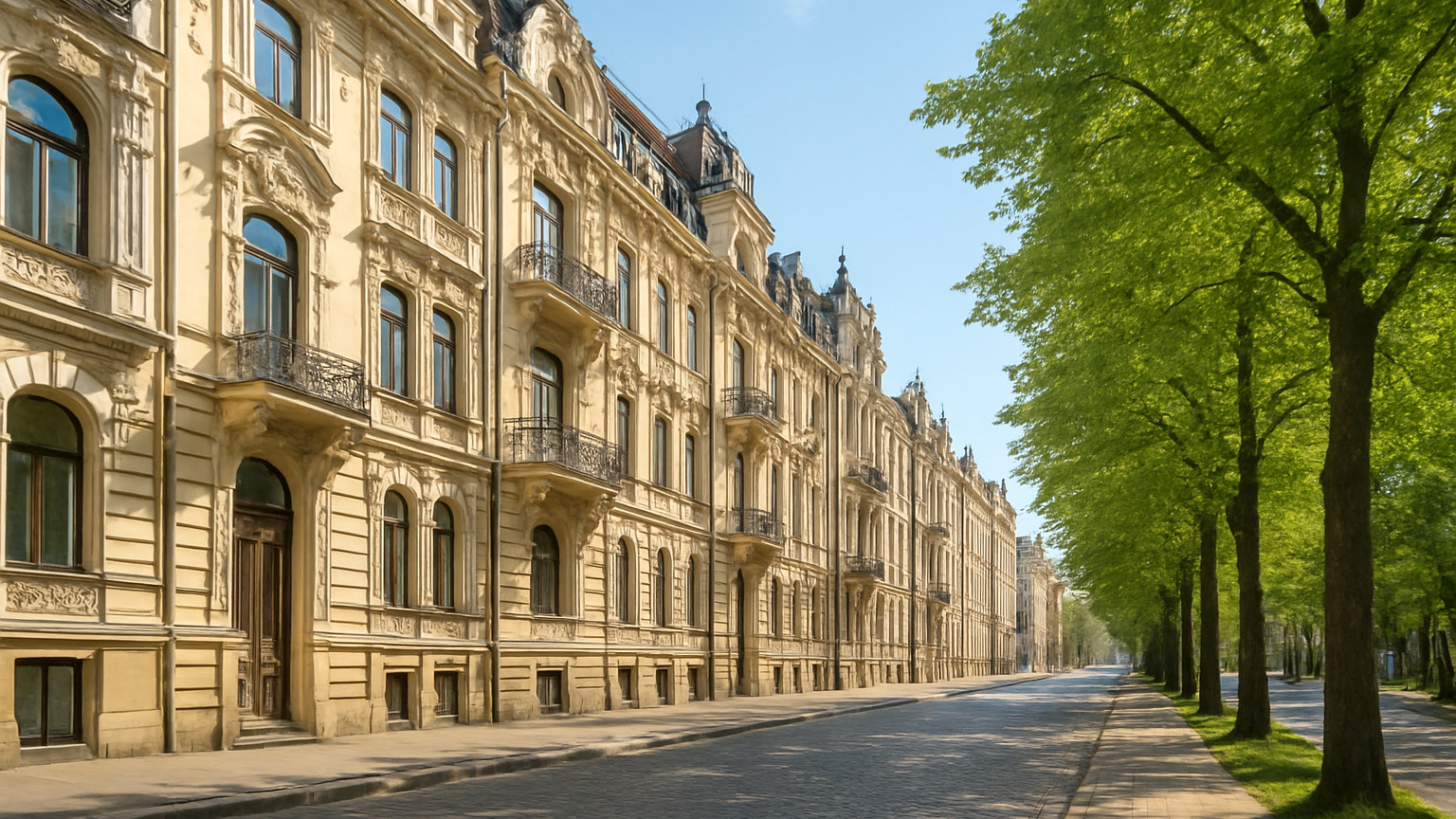
Latvia sits between Estonia and Lithuania and is the least visited of the three, which is difficult to justify given that its capital holds the largest concentration of art nouveau architecture anywhere in Europe. Riga is the reason to come, the coast is half an hour away, and the countryside is forest, rivers and castles.
How long does Riga need?
Three nights. The medieval old town is the obvious start, with the House of the Blackheads and the cathedral, but the art nouveau district around Alberta iela is what makes the city distinctive and is a short walk north. The central market, housed in five former Zeppelin hangars, is among the largest in Europe and is where the city actually shops.
What else is in the capital?
The Museum of the Occupation of Latvia, which covers both the Soviet and Nazi periods and is the necessary context for everything else. The Academy of Sciences tower for the view. The Moscow district and the former Spikeri warehouses for the contemporary side of the city.
Is Jurmala worth a day?
Yes, and it is twenty-five minutes by train. It is a long strip of white sand backed by pine forest and wooden villas, a spa resort since the nineteenth century and still the summer destination for Riga. The sea is shallow and cold and the beach is enormous enough to absorb any crowd.
Where should you go inland?
The Gauja valley, an hour from Riga, which is the closest thing Latvia has to a mountain landscape. Sigulda has castle ruins, a cable car across the river gorge and a bobsleigh track open to visitors. Cesis further on has a genuinely impressive medieval castle where visitors are given a lantern to explore the unlit interior.
What about Kuldiga and the west?
Kuldiga has the widest waterfall in Europe, which is a modest two metres high and a couple of hundred wide, and a wooden old town that has survived almost unaltered. The Kurzeme coast beyond it is empty, windswept and dotted with fishing villages and Soviet-era ruins, including the abandoned military town of Karosta at Liepaja.
Is Latvia cheap?
Among the better value destinations in the eurozone. Riga old town prices are aimed at visitors and walking a few streets out changes the bill considerably. Public transport, museums and intercity coaches are inexpensive, and the Latvian tradition of the lunch canteen, where you pay by the weight of your plate, is the cheapest good meal in the Baltics.
When is the best time to visit?
June to August for the beach, the long evenings and the midsummer celebrations, which are taken seriously. September is pleasant and quiet. December for the Christmas market, Riga having a reasonable claim to the first decorated Christmas tree. January and February are cold, dark and very cheap.
How does it fit with the other Baltic states?
Riga is the natural middle stop. Coaches run to Tallinn in about four hours and Vilnius in about four and a half, both cheap and comfortable, which makes a three-capital week straightforward without a car or a flight between them.
What do people get wrong?
Skipping the art nouveau district, which is what makes Riga different from any other Baltic city and sits a ten-minute walk from the old town. More than a third of the central buildings are in the style and the concentration on Alberta iela is extraordinary. The second mistake is changing money at the exchange booths around the old town, which offer poor rates in a country where cards work almost everywhere.
What should you eat?
Rye bread, smoked fish and the grey peas with bacon that count as the national dish. The central market is the cheapest and best place to try all three.
For the next step, see Where to Visit in Lithuania: Vilnius, Coast and Dunes, or browse the full Destinations section.
The short answer
Three nights in Riga with a morning in the art nouveau district and an afternoon in the central market, a day at Jurmala in summer and a day in the Gauja valley. Treat it as the middle leg of a Baltic trip rather than a destination on its own.


