
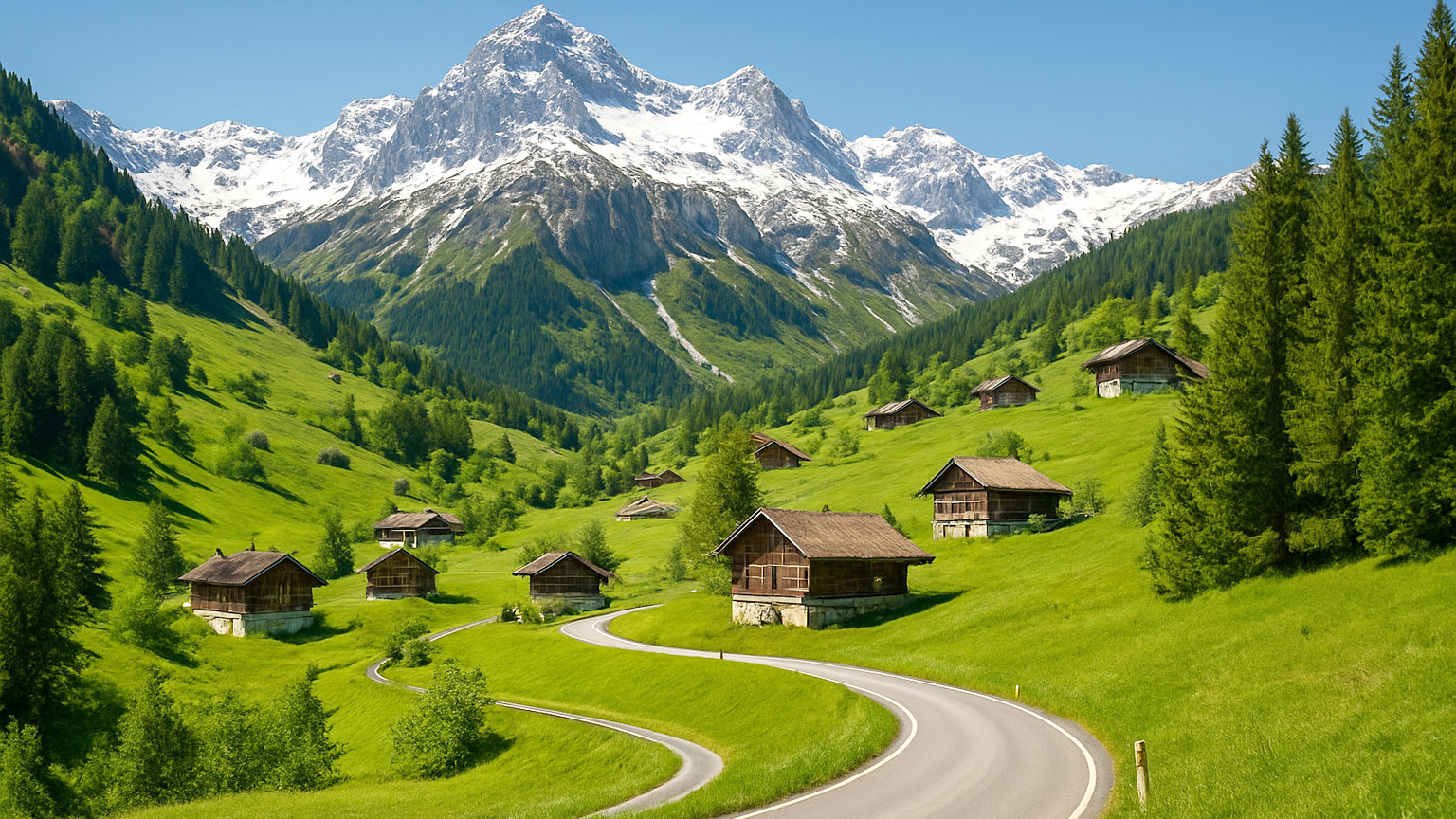
Liechtenstein is a principality of around forty thousand people between Switzerland and Austria, twenty-five kilometres long and in places under ten wide. It has no airport and no railway station of its own worth using, and it is best understood as a half-day or day addition to a trip through the eastern Alps rather than a place to build a holiday around.
What is there to see in Vaduz?
The capital has a population of about five thousand and a single pedestrian street. Vaduz Castle sits on the hillside above and is the princely residence, so it is closed to the public and viewed from outside, with a marked path climbing to it in about twenty minutes. The Kunstmuseum holds a strong modern collection, the national museum covers the history, and the postage stamp museum is a genuine attraction given that stamps once funded a large part of the state.
Is there anything beyond the capital?
Malbun, the mountain village at the top of the country at around sixteen hundred metres, which has a small ski area in winter and walking trails in summer. Triesenberg on the road up has a Walser heritage museum and the best views over the Rhine valley. Balzers has Gutenberg Castle, which unlike Vaduz can be visited.
Is it worth walking?
This is the strongest reason to stay rather than pass through. There are around four hundred kilometres of marked trails in a very small area, the Furstensteig ridge path above Malbun is a well-known and genuinely exposed route, and the Liechtenstein Trail runs the length of the country through all eleven municipalities.
How do you get there?
The nearest useful station is Sargans in Switzerland, with a bus to Vaduz taking around half an hour. Zurich airport is roughly an hour and a half away, and Innsbruck around two hours. The country is served by the Swiss postbus network and is entirely straightforward to reach without a car.
Is the wine any good?
Better than expected. The Rhine valley slopes produce Pinot Noir and Chardonnay, and the princely wine cellar in Vaduz offers tastings. Production is small and almost none of it leaves the country, which is the reason to try it there.
Is it expensive?
Yes, at Swiss levels, and it uses the Swiss franc. Accommodation is limited and priced accordingly, restaurants are costly, and there is no cheap option in the way there would be in Austria half an hour away. Staying across the border in Switzerland or the Austrian Vorarlberg is considerably cheaper.
When is the best time to visit?
June to September for the walking, when the high trails are clear and the Malbun lifts run. December to March for the small ski area, which suits beginners and families rather than experienced skiers. The national day on 15 August is the one occasion the country is genuinely busy, with the whole population invited to the castle gardens.
How long do you need?
Half a day for Vaduz and the castle view. Two or three days if you are walking, which is the only version of the trip that uses the country properly.
What do people get wrong?
Expecting a country and finding a valley. Liechtenstein is smaller than most European cities and a visit to Vaduz alone takes about two hours, which disappoints anyone who has travelled a long way for it. Treated as a walking destination or as a stop between Zurich and Innsbruck, it works well.
Is it easy to combine with neighbours?
Yes. The Swiss station at Sargans, the Austrian Vorarlberg and the Appenzell region are all within an hour, and all three are cheaper places to sleep.
Is San Marino Worth Visiting? What to See There goes into more detail on a closely related question, and the rest of our Destinations section covers the wider subject.
The short answer
Half a day if you are passing between Switzerland and Austria, or two nights at Malbun if you want the walking. See Vaduz castle from the path, visit Gutenberg Castle instead if you want to go inside one, and sleep across the border to save money.


