Czechia receives an enormous number of visitors and almost all of them go to one city. Prague earns it, but the country beyond the capital has the same baroque and gothic architecture, better beer prices, and a fraction of the crowding. The contrast between Prague in July and a Moravian town on the same day is considerable.
How long does Prague need?
Three nights. The castle complex is a half day on its own, the Charles Bridge is best crossed before eight in the morning, and the old town square and the Jewish quarter fill the rest. Prague is no longer cheap by central European standards, though it remains well below western Europe, and prices drop sharply a few streets from the tourist route.
What is the best place outside the capital?
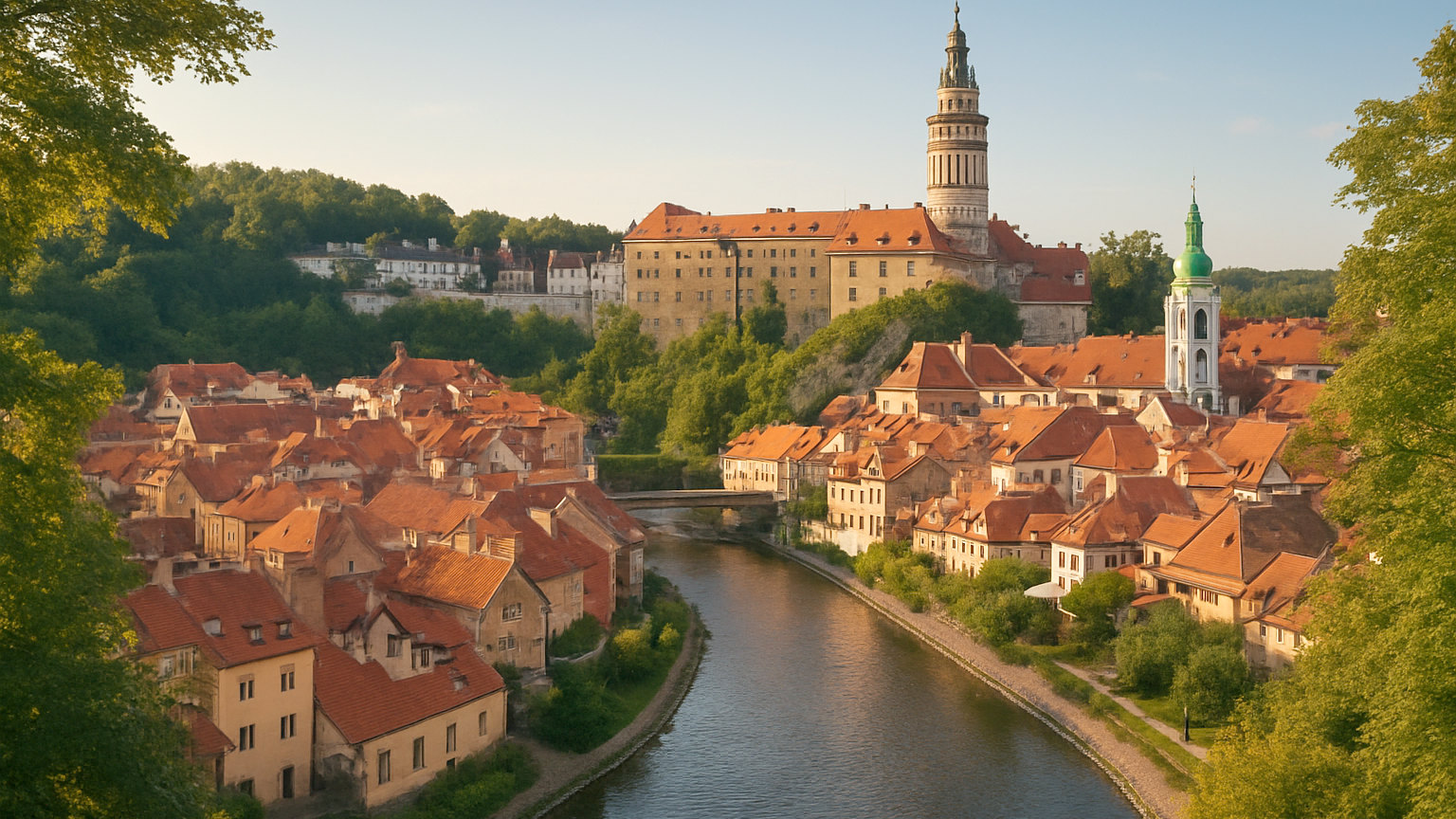
Cesky Krumlov, three hours south, where a castle with a painted tower sits above a town enclosed in a loop of the Vltava. It is extremely busy as a day trip and quite different once the coaches leave, so staying a night is the whole point.
What is worth a day from Prague?
Kutna Hora, an hour by train, for a cathedral built on silver money and the ossuary at Sedlec decorated with the bones of some forty thousand people. Karlstejn castle for the easiest castle visit. Terezin, the wartime ghetto and fortress, for the same reason as Paneriai in Lithuania.
Is Brno worth staying in?
Two nights. It is the second city, in Moravia, with a modernist masterpiece in the Villa Tugendhat, a hilltop fortress and a student population that keeps the bars busy. It is markedly cheaper than Prague and sees very few foreign visitors.
What about the spa towns?
Karlovy Vary and Marianske Lazne in the west are nineteenth-century spa resorts of colonnades, pastel facades and mineral springs you drink from a spouted cup. They are faded in places and genuinely elegant in others, and both work as a two-night stop or a longer stay.
Where should you go for landscape?
Bohemian Switzerland in the north, where sandstone towers and a natural rock arch sit above gorges on the German border. The Moravian Karst for caves and an underground river. The Sumava forest along the Austrian border for walking and cycling.
Is Czechia cheap?
Outside Prague, very. The country uses the koruna rather than the euro, and a beer in a Moravian town costs less than a coffee in Vienna. Accommodation, restaurants and intercity coaches are all inexpensive, and the tourist-priced exchange booths in Prague are the one thing to avoid: use a card or a bank.
When is the best time to visit?
May, June and September for the best balance of weather and crowds. December for the Christmas markets, which are excellent in Prague and much better value in Brno and Olomouc. July and August are hot and Prague is at its most congested.
Do you need a car?
Not for Prague, Kutna Hora, Karlovy Vary or Brno, all of which are well served by fast trains and by an intercity coach network that is cheap and unusually comfortable. A car helps for Bohemian Switzerland, the Sumava forest and the smaller Moravian wine villages, where services are sparse. Cesky Krumlov is reachable by direct coach from Prague in three hours and needs no car once you arrive.
What do people get wrong?
Treating Prague as the country and paying its prices for a whole week. The second is the exchange booths near the old town square, which quote misleading rates and are best avoided entirely in favour of a card. The third is the restaurant bread basket and unrequested snacks, which are charged for and can be declined.
Anyone weighing this up will also want Where to Visit in Hungary: Budapest, Lakes and Wine, along with the rest of the Destinations section.
The short answer
Three nights in Prague, a night in Cesky Krumlov rather than a day trip, and Kutna Hora as a half day. If you have a week, add Brno or the spa towns, where the same country costs half as much.