
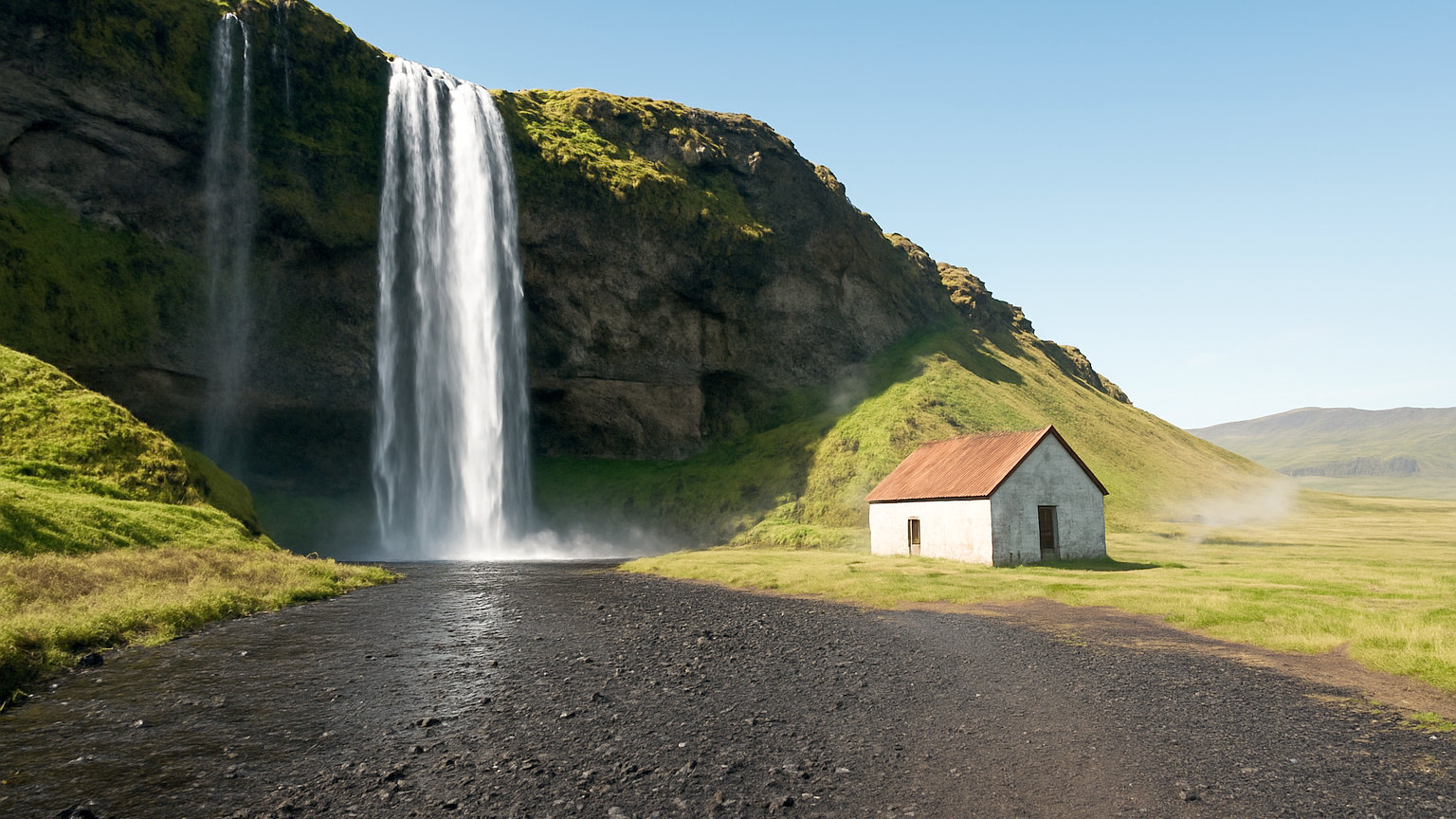
Iceland is among the most expensive countries in Europe and almost everything worth seeing costs nothing to look at. That single fact should shape the trip: spend on the car and the accommodation, save on food, and structure the days around driving rather than attractions.
What can you see in a long weekend?
The Golden Circle and the south coast. The Golden Circle is a half-day loop from Reykjavik covering Thingvellir, where the tectonic plates separate, the Geysir hot spring area and the Gullfoss waterfall. The south coast is better and needs a full day, taking in the Seljalandsfoss and Skogafoss waterfalls, the black sand beach at Reynisfjara and the glacier tongue at Solheimajokull.
How long does the Ring Road take?
Eight to ten days to drive the full circuit properly, and seven at an absolute minimum. It runs the whole coast and takes in the glacier lagoon at Jokulsarlon, the fjords of the east, Lake Myvatn and the waterfall at Dettifoss in the north, and the Snaefellsnes peninsula in the west. Attempting it in five days means driving all day and seeing very little.
Is Reykjavik worth time?
One night, two at most. It is a small, pleasant, colourful town with a striking concert hall and a good eating scene, and it is not the reason anyone flies to Iceland. Most visitors use it as an arrival and departure point rather than a base.
Is the Blue Lagoon worth the cost?
It is expensive, requires booking well ahead and is genuinely enjoyable, though it is a manufactured attraction beside a power station rather than a natural spring. The Sky Lagoon near Reykjavik and the Myvatn Nature Baths in the north are cheaper alternatives, and every town has a municipal geothermal pool costing a few pounds, which is where Icelanders actually go.
When can you see the northern lights?
Roughly late September to late March, when the nights are dark enough. They require clear sky and solar activity together, so allow at least three or four nights for a realistic chance, and stay outside Reykjavik where light pollution is lower. No tour can guarantee them.
Summer or winter?
Summer, meaning June to August, for near-continuous daylight, all roads open and access to the interior highlands. This is the only season in which the full Ring Road is comfortable. Winter offers the lights, ice caves and much lower prices, with short days, closed mountain roads and driving conditions that are demanding rather than dangerous.
What does a trip actually cost?
Accommodation and car hire are the two unavoidable lines and both are high, with fuel expensive and the Ring Road distances long. Food is where the saving sits: supermarkets are reasonable, the petrol station hot dogs are a genuine institution rather than a joke, and self-catering is widely available. Sightseeing itself costs almost nothing, since the waterfalls, beaches and lagoons are free.
What do people get wrong?
Underestimating the wind, which is the real hazard and regularly strong enough to damage a car door if it is opened carelessly. The other is hiring a four-wheel drive without needing one, since it is required only for the interior highland roads marked with an F, which are closed for much of the year.
Where do most people go wrong on the driving?
Planning by distance rather than by daylight. In winter you may have four or five usable hours, which is one or two stops rather than five, and gravel roads and single-lane bridges are slower than the map suggests in any season. Fuel stations are sparse in the east and the Westfjords, so filling up at half a tank is the habit to adopt.
Where to Visit in Norway: Fjords, Cities and Arctic goes into more detail on a closely related question, and the rest of our Destinations section covers the wider subject.
The short answer
Four nights for the Golden Circle and the south coast, or nine to ten for the full Ring Road. Go in summer for the driving and in winter for the lights, skip the Blue Lagoon in favour of a municipal pool, and budget for fuel rather than restaurants.


