Kosovo receives fewer foreign visitors than any country in Europe, which is the strongest argument for going. It is small, extremely cheap, has one genuinely beautiful Ottoman town, several important medieval monasteries and a share of the most dramatic mountains in the Balkans.
Which town is worth the most time?
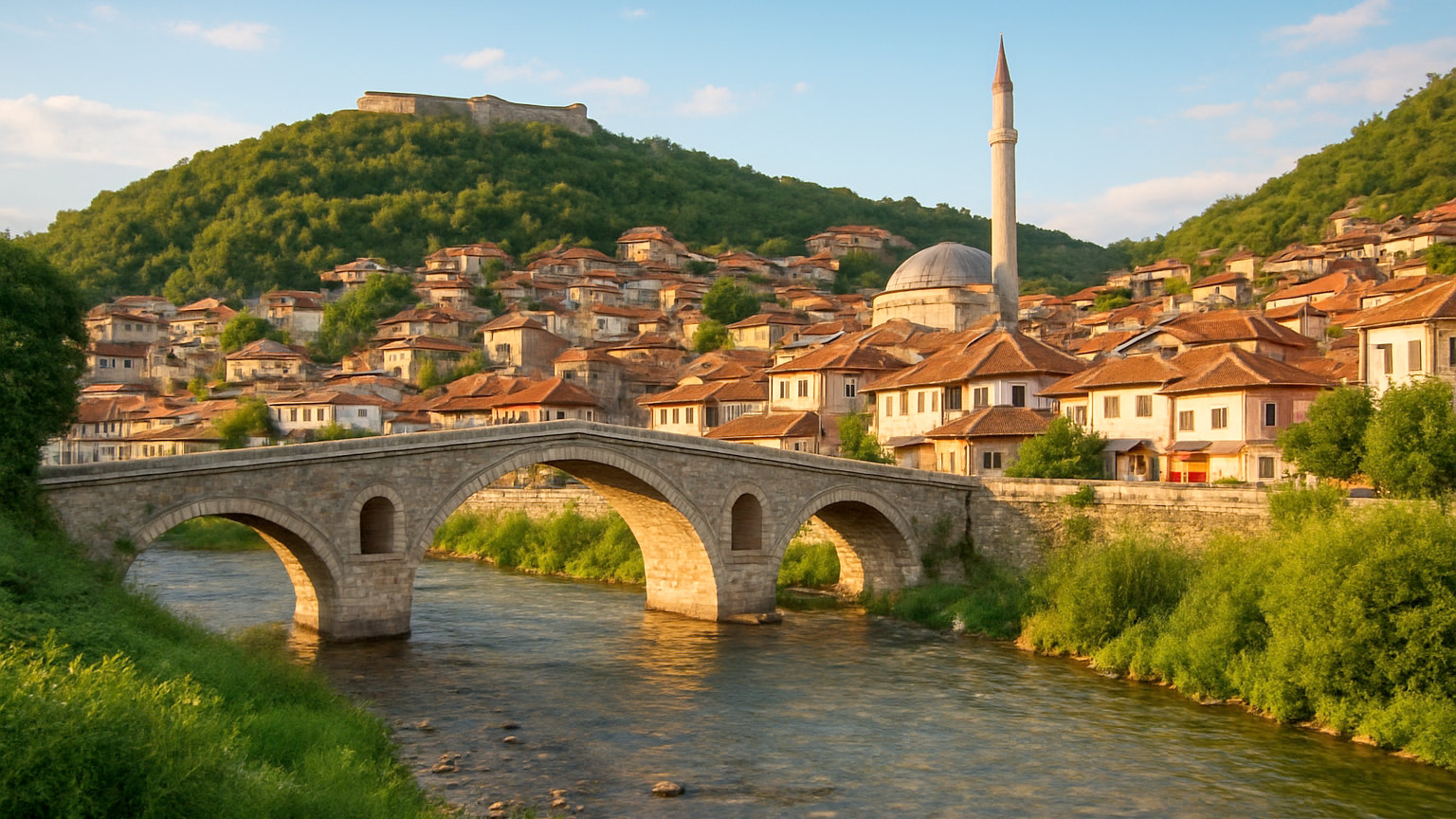
Prizren, without question. It sits below a hilltop fortress with a river running through the centre, an Ottoman stone bridge, a league of mosques and churches within a few hundred metres, and a hillside of red roofs best seen from the castle at sunset. Two or three nights.
Is Pristina worth a night?
One. The capital is young, informal and architecturally chaotic, with the Newborn monument, the extraordinary National Library and a cafe culture that is the main thing to do. It is a place to spend an evening rather than a destination.
What are the monasteries?
Four Serbian Orthodox sites are UNESCO listed, of which Visoki Decani near Peja and the Patriarchate of Pec are the most significant, holding medieval frescoes of the first rank. They remain under protection and visits require a passport at the gate, which is straightforward but worth knowing in advance.
Where should you go for mountains?
The Rugova valley above Peja, a gorge with via ferrata routes, a zipline and walking trails, and the Accursed Mountains beyond it, shared with Albania and Montenegro. The Peaks of the Balkans trail crosses all three countries and is one of the best long-distance walks in Europe, with guesthouse accommodation along the route.
What about Gjakova?
An old bazaar town between Prizren and Peja, rebuilt after the war, with a long street of restored shops and one of the best evening atmospheres in the country. It is a half day and is frequently skipped.
Is it safe to travel?
Yes, for ordinary travel, and the country is used to visitors from the international presence there. The north around Mitrovica is politically sensitive and periodically tense, and is worth checking current advice on before visiting. Elsewhere, Kosovo is calm and the hospitality is emphatic.
Is Kosovo cheap?
Among the very cheapest in Europe. It uses the euro despite not being in the EU. A coffee costs under a euro, a full restaurant meal a few, and accommodation is inexpensive even in Prizren in summer.
When is the best time to visit?
May, June and September. July and August are hot in the lowlands and are the peak season, when the diaspora returns in large numbers and the towns are at their liveliest. The mountains are open roughly June to September, and there is cheap skiing at Brezovica in winter.
How do you get there and around?
Pristina has direct flights from several European cities, and coaches run to Skopje in two hours, Tirana in five and Belgrade with restrictions worth checking. Note that entering Serbia directly from Kosovo can cause difficulty if you entered Kosovo from a third country. Internally, minibuses are cheap and a hire car makes the mountains far easier.
What should you eat?
Flija, a layered pancake dish cooked slowly and served with yoghurt, and the grilled meats common across the region. Kosovo also has a strong coffee culture, and the cafes in Pristina and Prizren are where most of the social life happens.
How long do you need?
Four to six nights covers the country comfortably, which is why it works best combined with North Macedonia or Albania rather than visited alone.
Where should you stay?
Prizren for the setting and the evenings, Peja if the mountains are the priority, and Pristina only if you are flying in late or out early. Guesthouses are the norm outside the capital and are inexpensive.
Where to Visit in Slovakia: Tatras, Castles and Cities goes into more detail on a closely related question, and the rest of our Destinations section covers the wider subject.
The short answer
Three nights in Prizren, one in Pristina, and two at Peja for the Rugova valley and Decani. Check the routing if Serbia is also on the itinerary, and expect the lowest prices and the fewest tourists in Europe.