
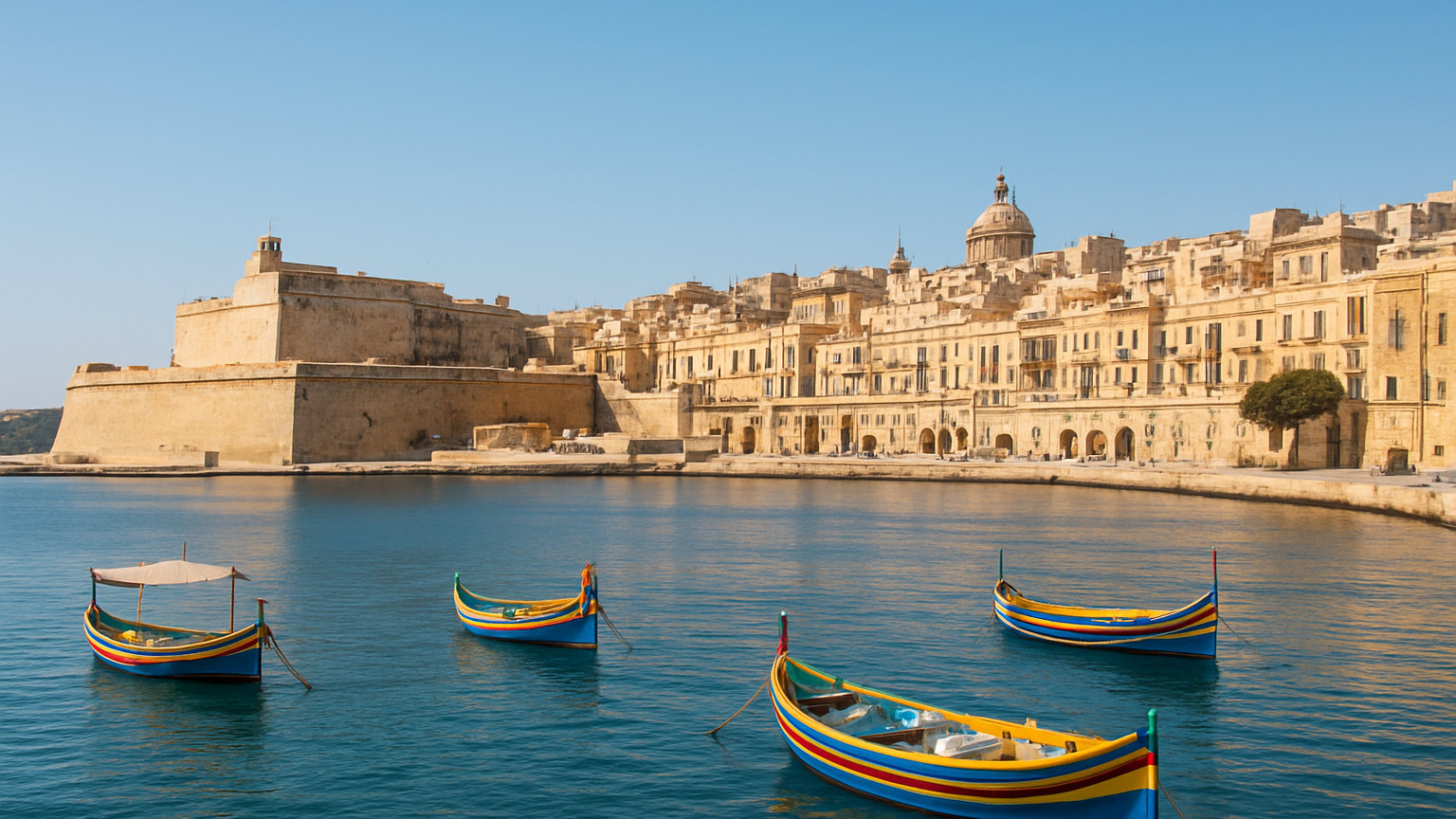
Malta is small enough to cross by car in under an hour and dense enough to fill a week. It has a walled baroque capital, prehistoric temples older than the pyramids, a second island with a different pace, and a swimming season running from June into November, which is longer than almost anywhere else in Europe.
How long does Valletta need?
A full day, two if you like museums. It is a fortified sixteenth-century city built by the Knights of St John on a peninsula, small enough to walk end to end in twenty minutes. St Johns Co-Cathedral holds a Caravaggio and an interior of extraordinary density, the Upper Barrakka Gardens give the view over the Grand Harbour, and the Grandmasters Palace covers the history.
What else is on the main island?
Mdina, the silent former capital on a hill inland, which is best in the evening once the day visitors leave. The Three Cities across the harbour from Valletta, which are where Maltese life goes on without the crowds. The temples at Hagar Qim, Mnajdra and the Tarxien complex, which are among the oldest freestanding structures in the world.
Is Gozo worth staying on?
Yes, and two or three nights is the right amount. It is greener, quieter and more rural than the main island, with the Ggantija temples, the citadel at Victoria, and salt pans cut into the coastal rock. The ferry takes twenty-five minutes and runs frequently. Staying there rather than day-tripping is what separates the two islands in character.
Where should you swim?
Malta has little sand and a great deal of rock, which is better than it sounds because the water is exceptionally clear. Golden Bay and Mellieha Bay are the main sandy beaches on the main island, Ramla Bay is the best on Gozo, and the Blue Lagoon on Comino is spectacular and extremely crowded in summer, so go early or late in the day.
Do you need a car?
Not necessarily. The bus network covers the island thoroughly and cheaply, though it is slow and gets congested in summer. Driving is on the left, which suits British visitors, and parking in Valletta is difficult enough that most people leave the car outside and walk in.
When is the best time to visit?
April, May, September and October are the best months, warm and walkable with a sea that is swimmable from June through to early November. July and August are hot, busy and expensive. Winter is mild at around fifteen degrees, which makes Malta one of the few European destinations where a February city break is comfortable outdoors.
Is Malta expensive?
Mid-range and cheaper than Italy across the water. It uses the euro, English is an official language alongside Maltese, and the driving, plug sockets and general administrative habits are recognisably British, which makes it one of the easiest Mediterranean countries for a UK visitor to navigate.
How long do you need?
A week covers it comfortably: four nights on the main island and three on Gozo. A long weekend works for Valletta and the temples alone. Anything longer than ten days and you will have seen the country twice.
What do people get wrong?
Expecting sandy beaches everywhere. Malta is largely rock and limestone platform, which gives clear water and awkward entry, and swim shoes help considerably. The second is underestimating the summer heat, which combines with very little shade at the temples and in Valletta to make midday sightseeing genuinely unpleasant in July and August.
What should you eat?
Rabbit, which is the national dish and best eaten inland at a village restaurant, and the pastizzi pastries sold from hole-in-the-wall counters for small change.
For the next step, see Where to Visit in Cyprus: Coast, Mountains and Ruins, or browse the full Destinations section.
The short answer
Four nights based near Valletta for the capital, Mdina and the temples, then three on Gozo for the quieter half. Travel in May or October for the best balance, and reach the Blue Lagoon before the boats arrive.


