North Macedonia is small, landlocked and built around one extraordinary lake. Ohrid is somewhere between two and five million years old, deep, clear and ringed by Byzantine churches, and it is the reason most people come. The capital is a separate and much odder experience.
How long do you need at Lake Ohrid?
Three or four nights. The old town of Ohrid stacks up a hill to a fortress, with the church of Saint John at Kaneo on a cliff above the water in the country most reproduced image. There are said to be hundreds of churches, the lake is swimmable from June to September, and the monastery of Saint Naum sits at the southern end near the Albanian border.
What is Skopje like?
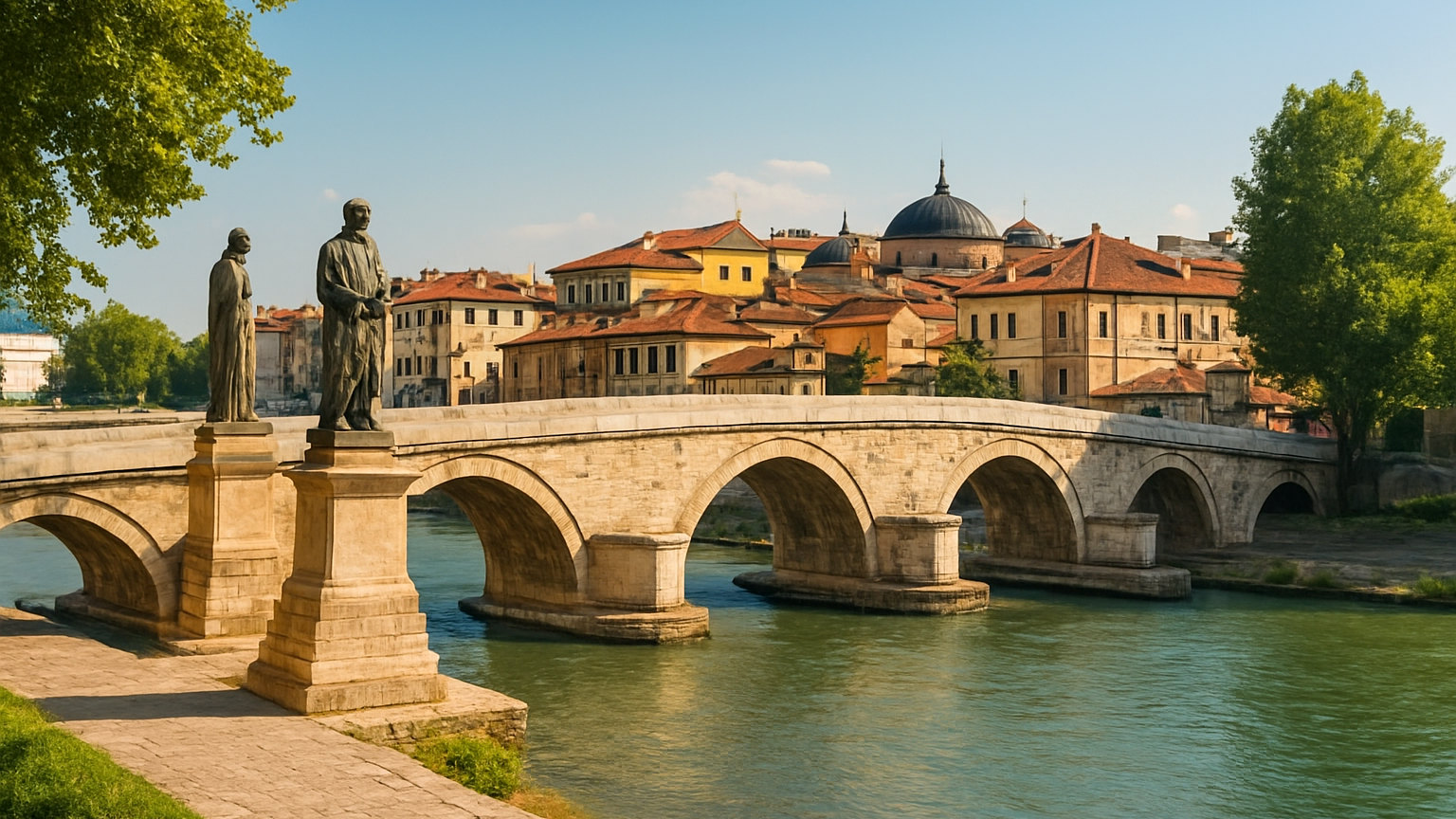
Unlike anywhere else. A state building programme covered the centre in neoclassical facades, enormous bronze statues and a triumphal arch, all built within the last twenty years, sitting beside genuine Ottoman bazaar streets and brutalist blocks from the reconstruction after the 1963 earthquake. It is divisive, frequently strange and worth a night to see for yourself.
What is worth a day from the capital?
The Matka canyon, twenty minutes away, where a reservoir runs between cliffs and can be explored by boat or kayak, with caves at the far end. The old bazaar in Skopje itself is the largest in the Balkans after Istanbul and is where the city feels most alive.
Which other towns are worth it?
Bitola in the south, an elegant former consular city with a long pedestrian avenue and the Roman ruins of Heraclea on its edge. Kratovo, built into a volcanic crater with medieval towers. Krusevo, the highest town in the country, known for paragliding.
Where should you go for mountains?
Mavrovo national park in the west, which has the largest ski area in the country, forested valleys and the submerged church at Lake Mavrovo. Pelister in the south has pine forest and glacial lakes. Both are quiet, cheap and almost entirely free of foreign visitors.
Is North Macedonia cheap?
Among the cheapest in Europe. It uses the denar, cash is important outside Skopje and Ohrid, and restaurant prices are low enough that the cost of a meal is rarely a factor. Accommodation at Ohrid rises noticeably in July and August and remains inexpensive by any western standard.
When is the best time to visit?
June and September for the lake, when the water is warm and the towns are not full. July and August are hot and busy with regional holidaymakers. Spring and autumn suit Skopje and the mountains, and winter is cold with cheap skiing at Mavrovo.
How does it combine with neighbours?
Well, and this is how most people visit. Ohrid sits on the Albanian border and is a straightforward onward journey to Tirana or the Albanian Riviera. Skopje is around two hours from Pristina in Kosovo and five from Sofia in Bulgaria, and coaches run frequently and cheaply on all these routes.
What should you eat?
Tavce gravce, the baked bean dish that is the national staple, ajvar made from roasted peppers, and the lake trout at Ohrid, which is farmed rather than wild for conservation reasons.
Do you need a car?
Not for Ohrid or Skopje, which are connected by frequent coaches taking around three hours, and both towns are walkable once you arrive. A car helps for the national parks, Kratovo and the smaller monasteries, where buses are infrequent. Roads are reasonable on the main routes and slow in the mountains.
How long do you need?
Five or six nights covers the country without hurrying. Anything longer is better spent crossing into Albania or Kosovo, both of which are a few hours away by road.
Where to Visit in Bulgaria: Coast, Mountains and Ski goes into more detail on a closely related question, and the rest of our Destinations section covers the wider subject.
The short answer
Three nights at Lake Ohrid, one or two in Skopje with a day at the Matka canyon, and Bitola if you have longer. Go in June or September, and treat it as one leg of a wider Balkan trip rather than a standalone week.