
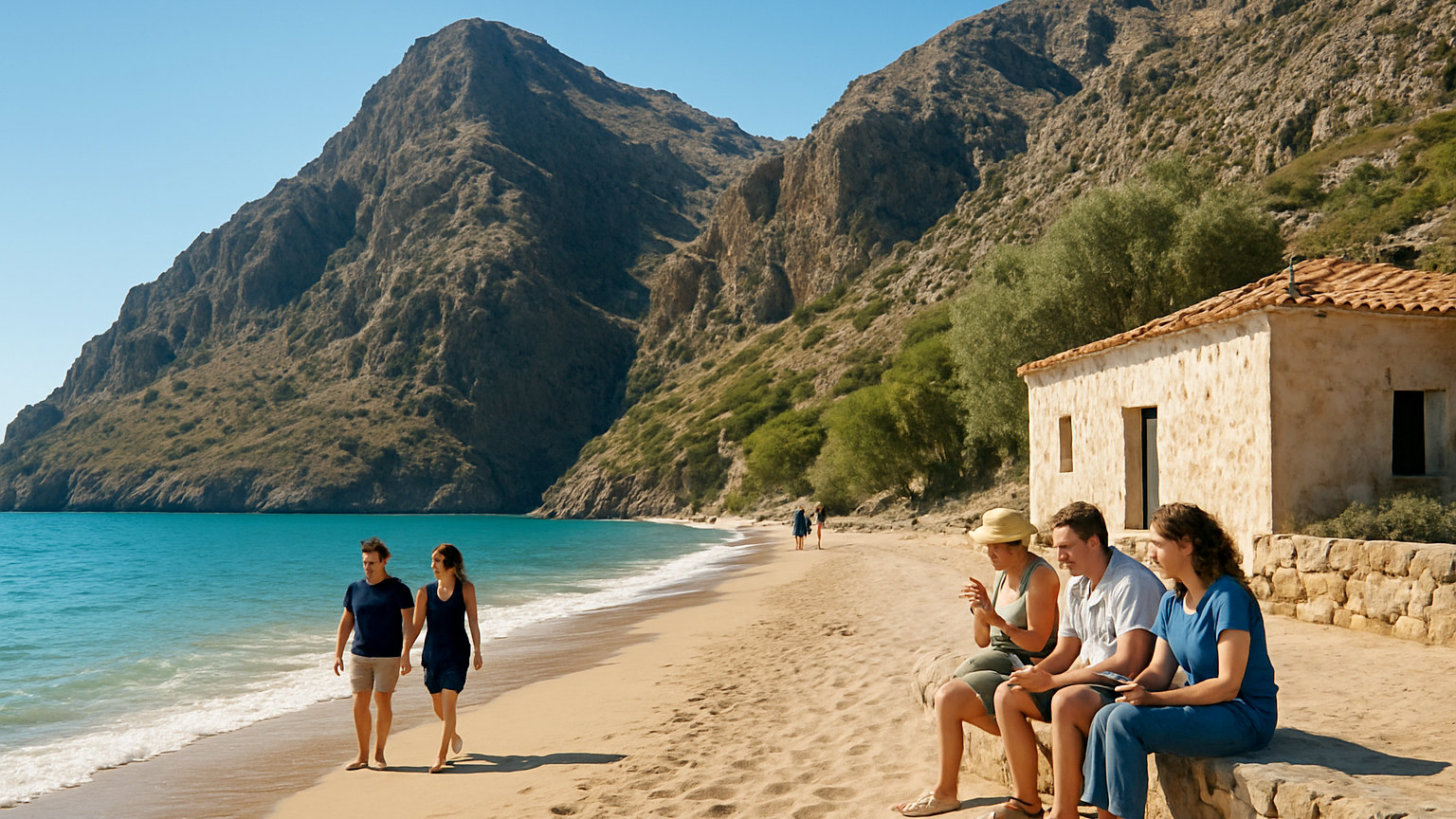
Crete is the largest Greek island and is closer to a small country than an island holiday. It is around two hundred and sixty kilometres end to end on roads that are slower than they look, so choosing the wrong base can leave you four hours from the thing you came to see. The region decision matters more here than on any other Greek island.
Which region should you choose?
Chania in the west for the best old town, the finest beaches and the gorges. Rethymno in the centre for a compromise between the two ends with a Venetian old town of its own. Heraklion in the east for Knossos, the best museum and the widest flight choice. Agios Nikolaos and Elounda in the far east for smart hotels and calm water.
Is Knossos worth it?
Yes, with a caveat. It is the largest Bronze Age site in Crete and the centre of Minoan civilisation, and parts of it were reconstructed in concrete in the early twentieth century in a way archaeologists still argue about. Visit the Heraklion Archaeological Museum on the same day, since the frescoes and artefacts are there rather than at the site, and the two together make sense of each other.
Which beaches are the best?
Elafonisi in the southwest, a shallow lagoon with pink-tinged sand, and Balos in the northwest, a sandbar between a lagoon and the sea reached by boat or a rough track. Both are spectacular and both are extremely busy in high summer. Falassarna for a long sandy sunset beach. Preveli in the south, where a palm gorge meets the sea. Vai in the east has a natural palm forest behind it.
Should you walk the Samaria gorge?
It is sixteen kilometres downhill through the White Mountains, takes five to seven hours, and finishes at a village reached only by boat. It is the most popular walk in Greece and genuinely demanding in the heat. The season runs roughly May to October. Imbros gorge is a shorter and much easier alternative covering similar terrain.
What else is worth seeing?
The Venetian harbour at Chania, which is the prettiest urban set piece on the island. The Lasithi plateau with its windmills. Spinalonga, a fortress island that was a leper colony until 1957, reached by boat from Elounda. The Arkadi monastery, which is central to Cretan identity and the 1866 uprising.
When is the best time to visit?
May, June, September and October. The sea is warmest in September and swimmable from late May to late October, which is longer than most of Greece because Crete sits further south. July and August are hot, with inland temperatures well above the coast, and the gorges become hard work.
Do you need a car?
Yes. The bus network along the north coast is good and reaches almost nothing in the south or the interior, where the best beaches, gorges and villages are. Mountain roads are narrow and the driving takes longer than the distances suggest.
What should you eat?
Dakos, the barley rusk with tomato and mizithra cheese, slow-cooked lamb with wild greens, and the raki that arrives free at the end of a meal. Cretan cooking is distinct from mainland Greek and is generally considered the best in the country.
How long do you need?
A week for one region. Ten nights to combine two, such as Chania and Heraklion. A fortnight to see the island properly, which very few people give it.
How does Crete compare with other Greek islands?
It has the longest season, the best food, the most varied landscape and the only serious mountains. It is also the least intimate: you cannot walk out of your hotel and see the whole island the way you can on a small Cycladic one. Choose Crete if you want variety and a car, and a smaller island if you want somewhere you can absorb in a week.
Where to Visit in Rhodes: Old Town, Coast and Lindos is the natural next read, alongside the wider Destinations section.
The short answer
Chania for a first visit and the best of the island, with a car, Elafonisi and Balos, one gorge and a day trip to Knossos only if you are prepared for the drive. Two weeks if you want both ends of the island.


