Madeira is a volcanic island four hours off the coast of Portugal with a subtropical climate, mountains rising to over eighteen hundred metres and almost no natural sandy beaches. That last point decides who should go: this is an island for walking, gardens and dramatic coastline rather than for a fortnight on a sunbed.
How long does Funchal need?
Two or three days across a week-long stay. The old town, the market, the botanical gardens reached by cable car and the toboggan run down from Monte on a wicker sledge are the fixed points. Funchal is a proper working city rather than a resort strip, and it has a genuinely good restaurant scene.
What are the levadas?
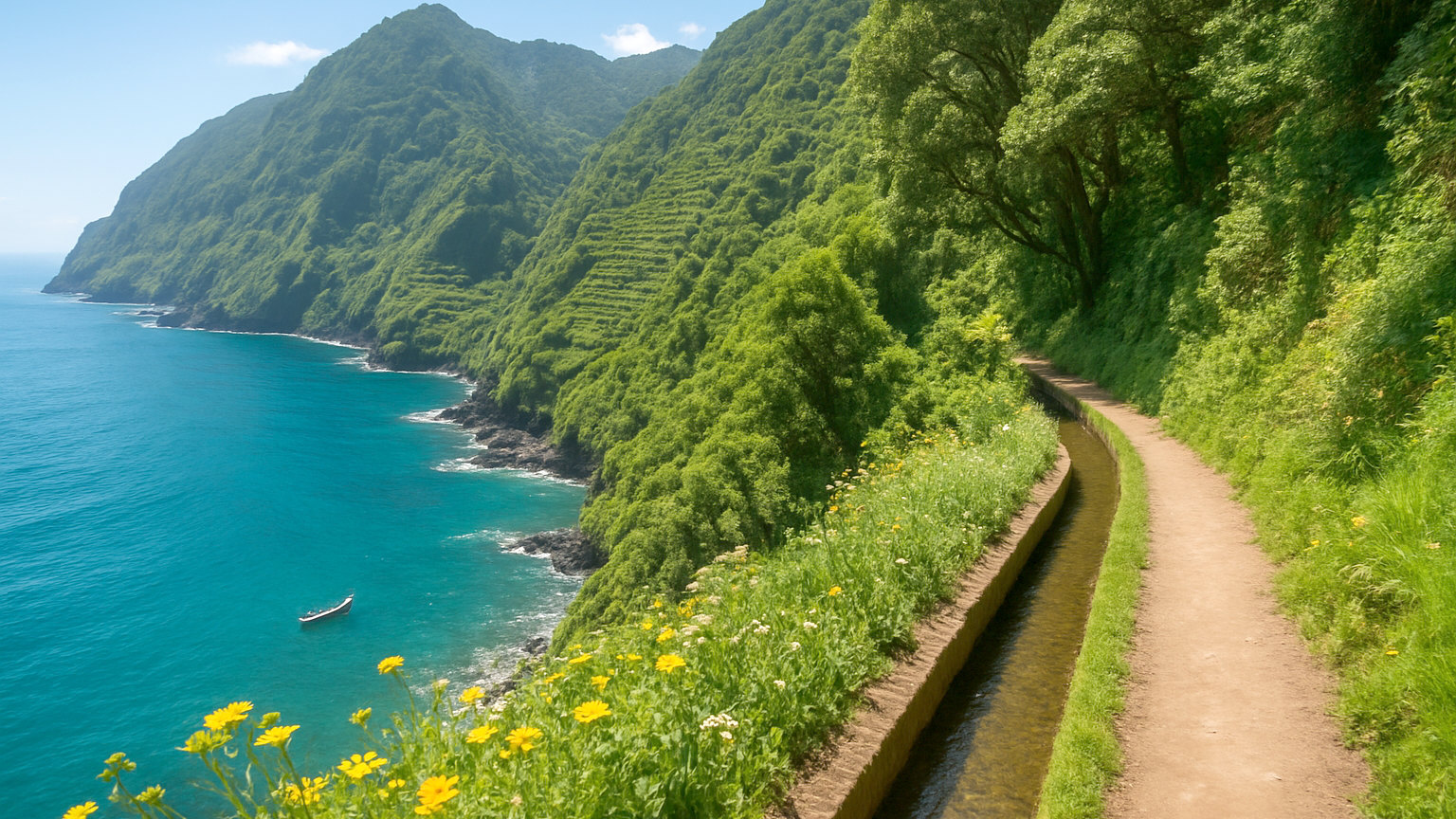
Irrigation channels cut into the mountainsides from the fifteenth century onwards, with maintenance paths running alongside them. There are around two thousand kilometres of them, and walking the paths is the single best thing about the island. The 25 Fontes and Levada do Caldeirao Verde are the popular routes; some involve unlit tunnels and sheer drops, so a torch and a head for heights are worth having.
Where should you go in the mountains?
The Pico do Arieiro to Pico Ruivo ridge walk, which crosses the roof of the island between the two highest peaks and is the most spectacular day out available. It is a serious walk with exposed sections and steps, and it is frequently above the cloud line, which is the point. Go at sunrise if you can.
Where are the beaches?
Mostly imported. Calheta and Machico have sand brought in from elsewhere. The natural swimming is in the lava rock pools at Porto Moniz on the north coast, which are filled by the Atlantic and are excellent. Porto Santo, a short ferry or flight away, has a nine-kilometre golden beach and is where Madeirans go for a proper beach holiday.
Where should you stay?
Funchal for restaurants, transport links and the widest hotel choice. Calheta or Ponta do Sol in the sunnier southwest for quiet. Santana or Sao Vicente in the north if walking is the main purpose, since the weather there is wetter and the scenery better.
When is the best time to visit?
Any month. Temperatures sit between eighteen and twenty-five degrees all year, which is why it is one of the few genuinely reliable winter destinations in Europe. April and May bring the flower festival, and the New Year fireworks in Funchal are among the largest in the world. The north is wetter than the south in every season.
Do you need a car?
It helps a great deal. Buses connect the main towns but reach few trailheads, and the levada walks often start and finish in different places, which is why transfer services exist. The roads are steep, the tunnels are numerous, and the driving is more demanding than on most islands.
What should you eat and drink?
Espetada, beef grilled on a bay laurel skewer, and the black scabbard fish served with banana, which sounds wrong and works. Madeira wine is fortified and heated during production, and a tasting in Funchal is worth an hour. Poncha is the local rum drink and is stronger than it appears.
How does Madeira compare with the Canaries?
It is greener, more mountainous and considerably wetter, with a landscape closer to the Azores than to Lanzarote. The Canaries win decisively on beaches and on guaranteed sunshine in the southern resorts. Madeira wins on walking, scenery and on having somewhere that feels like a real place rather than a resort strip. The flight is around half an hour longer from the UK.
Who should choose it?
Walkers, gardeners, anyone wanting winter warmth without a beach, and anyone who has found the Canaries too developed. Families set on sand should look at Porto Santo or the Canaries instead.
Where to Visit in Tenerife: North, South and Teide goes into more detail on a closely related question, and the rest of our Destinations section covers the wider subject.
The short answer
A week based in Funchal with a car, three or four levada walks, the Arieiro to Ruivo ridge on the clearest morning, and the Porto Moniz rock pools. Go for the walking and the winter warmth, and go to Porto Santo if you want sand.