
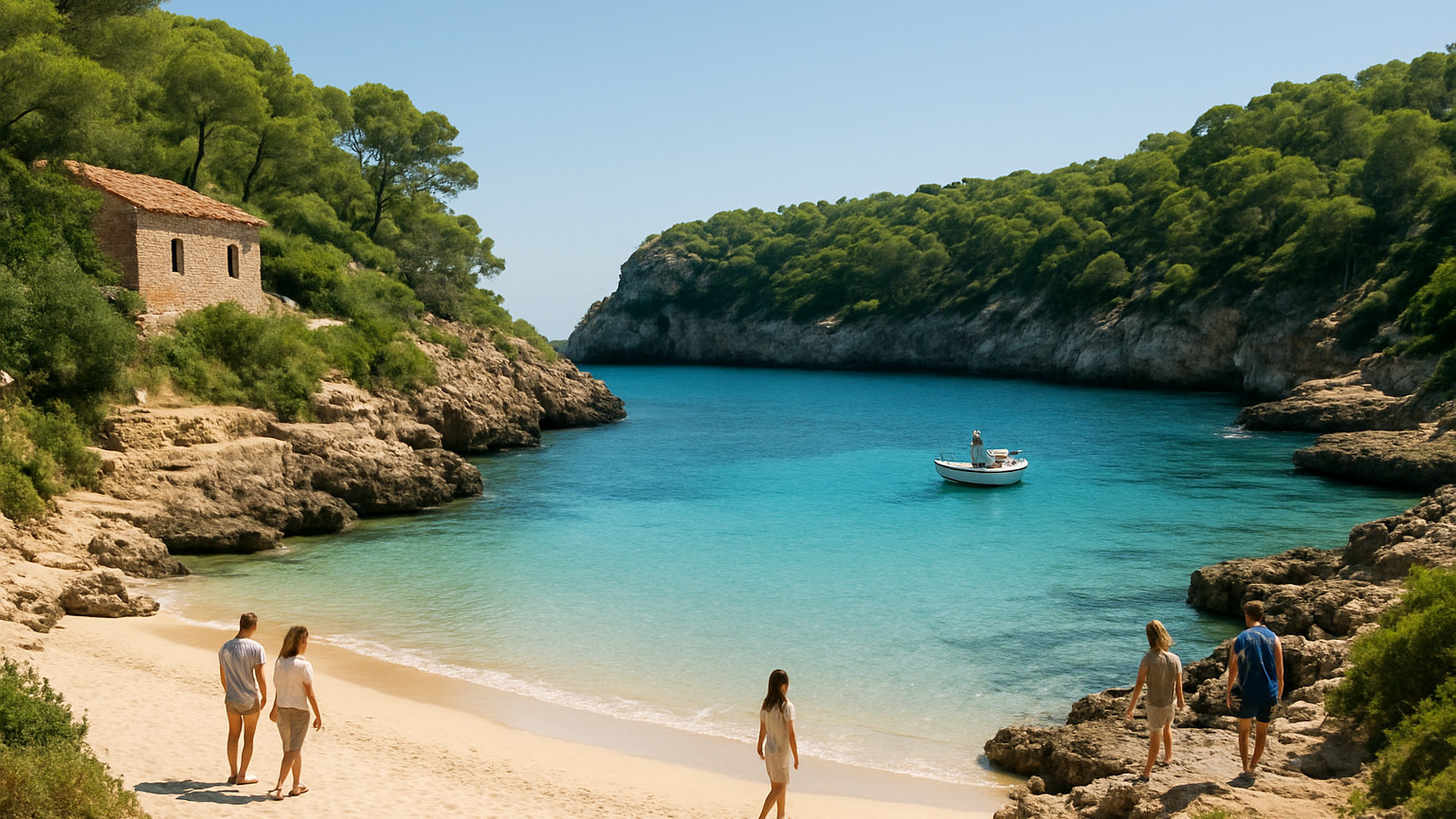
Menorca is the quietest of the Balearic islands by some distance. It was declared a UNESCO biosphere reserve in 1993 and building has been restricted ever since, which is why the coast is low-rise, the beaches are backed by pine rather than concrete, and the island feels a generation behind its neighbours in the best possible way.
Mahon or Ciutadella?
Ciutadella in the west is the prettier: a Catalan old town of narrow lanes, palaces and a small harbour below the cliffs, and the better place to stay. Mahon in the east is the capital, sitting above one of the largest natural harbours in the world, with a British architectural legacy from the eighteenth century and the island gin distillery. Two nights each would not be wasted.
What is the difference between the north and south coasts?
It decides where you should stay. The south has white sand and turquoise water in a series of sheltered coves backed by pine, which is the classic Menorcan image. The north is wilder, with red and dark sand, dramatic rock and more exposure to the tramuntana wind. The south is better for swimming and families; the north is better for scenery and solitude.
Which beaches are the best?
Cala Macarella and Macarelleta in the south, reached on foot or by a bus from a car park, and among the most photographed coves in the Mediterranean. Cala Mitjana nearby. Cala Pregonda in the north, a red-gold beach reached by a half-hour walk. Cala Turqueta for the colour of the water. Son Bou for the longest stretch of sand and the easiest access.
What is the Cami de Cavalls?
A restored bridle path of around one hundred and eighty-five kilometres running the entire coastline, originally built for horseback patrols. It is divided into twenty stages and is the best way to reach the quieter coves. Walking a single stage as a day out is the easiest introduction, and the southern stages are gentler than the northern ones.
What about the prehistoric sites?
Menorca has an extraordinary density of Bronze Age monuments, recently UNESCO listed: taulas, which are T-shaped stone structures found nowhere else, talayots, which are conical towers, and burial navetas. Naveta des Tudons is the best known and takes fifteen minutes to visit.
When is the best time to visit?
May, June, September and early October. The sea is swimmable from June to October. July and August are busy with Spanish and Italian holidaymakers and accommodation prices double. Menorca has a much shorter season than Majorca and a great deal closes from November to April, which is worth knowing before booking out of season.
Do you need a car?
Yes. The best coves are down unsigned tracks or require a walk from a car park, and the bus network connects towns rather than beaches. The island is small enough that nowhere is more than about forty-five minutes from anywhere else.
What should you eat?
Caldereta de llagosta, the lobster stew that is the island signature and is expensive, Mahon cheese, which is protected and sold at several ages, and the local gin, a British legacy, drunk with lemonade as pomada.
How long do you need?
A week. The island is around fifty kilometres end to end and can be covered comfortably in that time, including both towns and a good number of coves. Ten days if you intend to walk several stages of the Cami de Cavalls.
Who should choose Menorca?
Families, couples and walkers who want Balearic beaches without Balearic crowds. Anyone wanting nightlife, a city, or much to do on a rainy day should choose Majorca or Ibiza, both of which are a short ferry or flight away.
Anyone weighing this up will also want Where to Visit in Ibiza Beyond the Clubs, along with the rest of the Destinations section.
The short answer
A week based near Ciutadella with a car, three or four southern coves, one stage of the Cami de Cavalls and a day in Mahon. Go in June or September, and choose the south coast if swimming matters more than scenery.


