
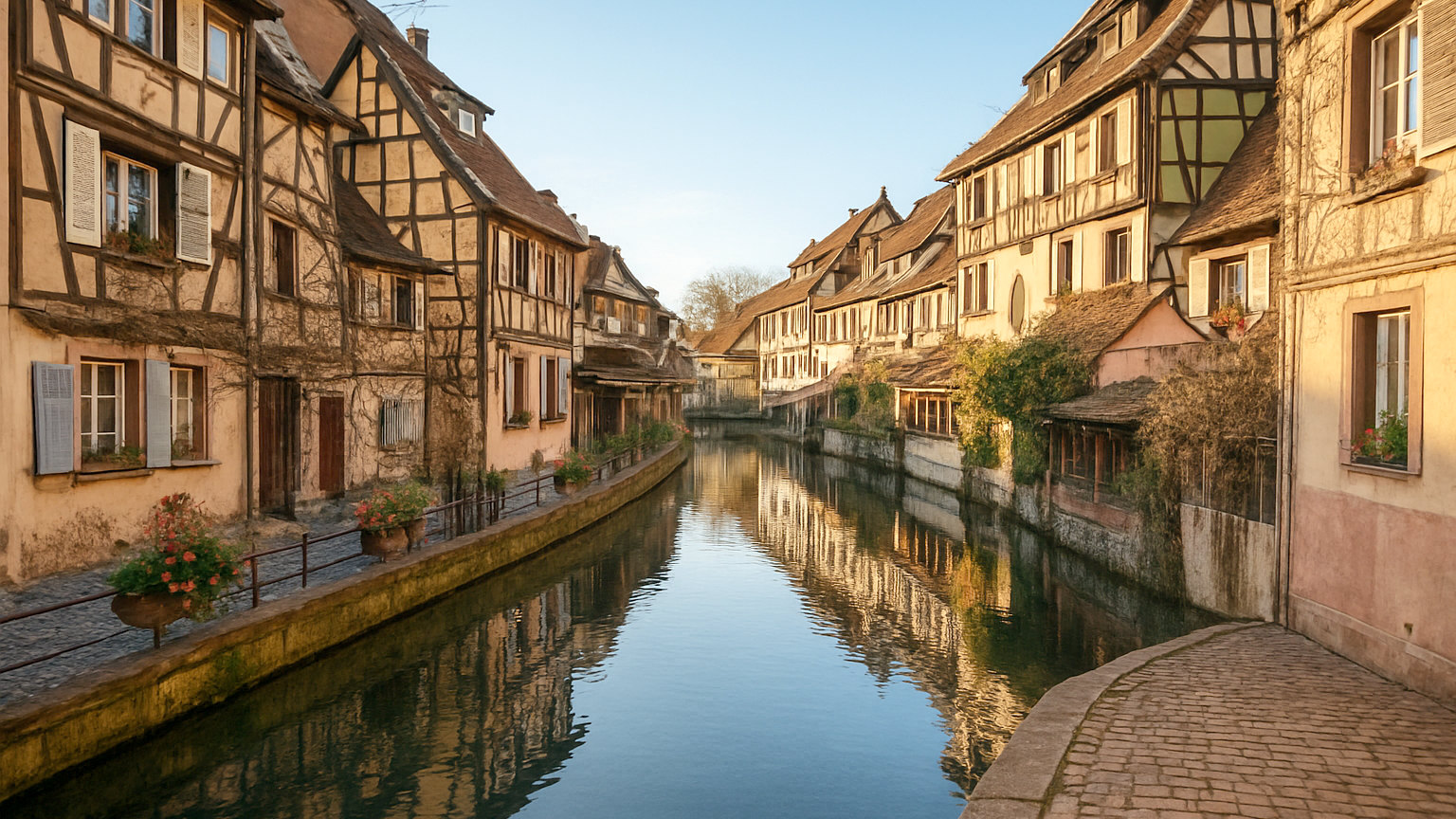
Colmar sits on the Alsace plain between the Vosges mountains and the Rhine, in a region that has changed nationality four times since 1870. The old town is a dense run of half-timbered houses in pink, ochre and green along small canals, and it looks so much like an illustration that visitors routinely assume it has been restored for effect. It has not.
What makes it different?
The Franco-German mixture. The architecture, the food and many of the place names are German; the administration and the language are French. The result is a regional culture that belongs to neither country, with its own wines, its own cooking and a string of villages along a marked wine route that are among the prettiest in Europe.
How long do you need?
Two or three nights. Colmar itself needs a day. The rest goes to the wine route villages, which are the real reason to come and which need a car or a bicycle.
What should you see?
La Petite Venise, the canal quarter, which is the postcard image and is best before nine in the morning. The Unterlinden Museum, which holds the Isenheim Altarpiece, one of the most powerful paintings in Europe and a genuine reason to visit in its own right. The Maison Pfister and the Koifhus. The Bartholdi Museum, in the birthplace of the man who designed the Statue of Liberty.
What is the wine route?
A marked road running around a hundred and seventy kilometres along the foot of the Vosges through vineyards and walled villages. Riquewihr, Eguisheim, Kaysersberg and Ribeauville are the best known and are all within twenty minutes of Colmar. Alsace produces mainly white wine: Riesling, Gewurztraminer, Pinot Gris and Muscat, and tasting rooms in the villages are informal and usually free.
Are the Christmas markets worth it?
They are among the best in Europe and the region effectively invented them, with records going back to the sixteenth century. Colmar runs several across different squares from late November. It is extremely busy at weekends and accommodation across Alsace books out months ahead, so a midweek visit is both cheaper and far more pleasant.
Where should you eat?
Alsatian cooking is German in substance and French in execution. Choucroute garnie, tarte flambee, baeckeoffe and coq au Riesling are the staples. A winstub is the traditional wine tavern and is the right kind of place to eat. Portions are large and prices are moderate for France.
How do you get there?
Strasbourg is thirty minutes by train and Basel airport around an hour. Paris is under three hours by TGV. A car transforms the trip because the wine villages are not well served by public transport, though a marked cycle route runs between several of them.
When is the best time to visit?
May, June and September for the villages and the vineyards, and late September into October for the harvest. December for the markets. July and August are warm and busy. February and March are the quietest months and much of the village tourism closes.
What do people get wrong?
Staying only in Colmar. The town is lovely and heavily visited, and Eguisheim or Riquewihr twenty minutes away are quieter and just as good to look at. The second is visiting the canal quarter at midday, when it is at its most crowded.
How much should you budget?
Alsace is mid-priced for France and cheaper than Provence or the Cote d Azur. Accommodation in the wine villages is often better value than in Colmar itself. Wine tastings are usually free or nominal, and the winstub set menus are good value. December is the exception, when market-season rates roughly double across the region.
Annecy: The Lake Town in the French Alps is the natural next read, alongside the wider Destinations section.
The short answer
Three nights, with a car, based in Colmar or a wine village. Petite Venise before nine, the Isenheim Altarpiece, and two days on the wine route. Come midweek in December if the markets are the point.


