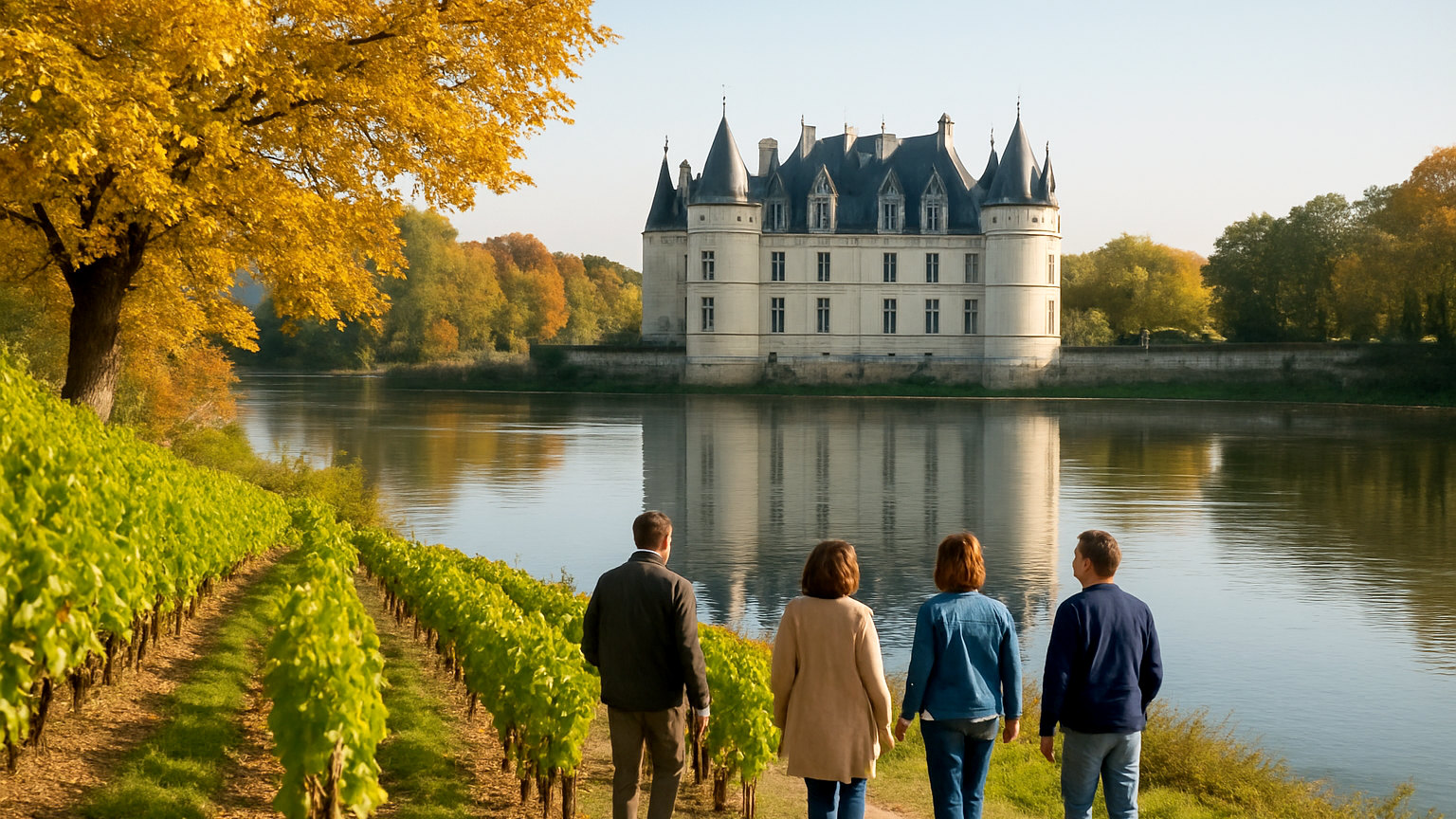
The Loire is the longest river in France and its valley is the only major wine region where most visitors come for something other than the wine. Several hundred chateaux line it, the best of them among the finest buildings in Europe, and a dedicated cycle route runs beside the water for around nine hundred kilometres.
What do they make here?
More variety than any other French region, because the valley runs from the Atlantic almost to the centre of the country. Muscadet at the western end, crisp and made for oysters. Chenin blanc in the middle at Vouvray and Savennieres, dry through to sweet. Cabernet franc reds at Chinon, Bourgueil and Saumur. Sauvignon blanc at Sancerre and Pouilly-Fume in the east. Sparkling Cremant de Loire throughout.
Which chateaux should you choose?
Chenonceau, built across the river on arches, which is the most beautiful and the busiest. Chambord, enormous and unfinished, with a double helix staircase attributed to Leonardo. Villandry for the formal gardens rather than the house. Azay-le-Rideau for a smaller and more intimate example. Three is plenty in a trip; they become repetitive faster than people expect.
Where should you base?
Amboise or Tours for the central chateaux and Vouvray. Saumur for the sparkling wine, the cavalry school and the troglodyte cellars cut into the tuffeau cliffs. Sancerre at the eastern end for the best-known whites and a hilltop village. Blois as a compromise between Chambord and Chenonceau.
Is the cycle route worth doing?
La Loire a Velo is signed, largely flat and mostly on dedicated paths or quiet lanes, and it connects the chateaux and the vineyards directly. Many people ride a section over three or four days with luggage transfer arranged. It is among the best cycling holidays in Europe and it solves the drinking and driving question neatly.
How do you visit the wineries?
Easily and informally, more so than in Burgundy or Bordeaux. Many Loire producers have simple tasting rooms open during working hours and welcome walk-ins. Several around Saumur and Vouvray have cellars dug into the soft limestone, which are worth seeing in their own right. Tastings are usually free or nominal.
When is the best time to visit?
May, June and September. The chateaux gardens are at their best in early summer, the cycling is most pleasant in those months, and the harvest is in late September. July and August are busy at the major chateaux. Winter is quiet and several smaller properties close.
How much should you budget?
Mid-priced and cheaper than Burgundy or Bordeaux. Chateau entry fees add up if you visit several, so a combined ticket is worth checking. Loire wines are among the best value in France, particularly Chinon and Muscadet, and are widely underappreciated abroad.
What do people get wrong?
Attempting six chateaux in three days, which produces a blur of tapestries and turrets. Two or three visited slowly, with the rest of the time given to the river, the villages and the cellars, is a far better trip.
How long do you need?
Four or five nights, or a week if you are cycling a section. Tours and Amboise are around an hour from Paris by fast train, which makes a short trip practical.
What should you eat?
Rillettes from Tours, goat cheese from Sainte-Maure and Chavignol, and freshwater fish such as pike-perch with beurre blanc, which is a Loire sauce. Tarte Tatin comes from the region. The white wines here suit the food far better than most visitors expect.
Which wine should you buy?
Chinon and Bourgueil for reds that are light enough to drink young and cost very little. Vouvray demi-sec, which is widely misunderstood and ages superbly. Muscadet sur lie if you are heading to the coast.
See also Rioja: Spain Best Known Wine Region, which covers a related part of the same decision, and our other Destinations guides.
The short answer
Four nights based in Amboise or Saumur, ideally with bicycles. Three chateaux at most, a troglodyte cellar at Saumur, and a tasting at Vouvray or Chinon. Take the train from Paris and hire wheels rather than a car.