All inclusive works better for families than for any other group, and the reasons are only partly financial. Children eat unpredictably, at different times from adults, and in quantities that vary by the day. Removing the decision and the bill from every one of those moments is worth a great deal over a fortnight.
Does it save money with children?
Usually, and by more than the same calculation for adults. Children graze constantly, and soft drinks, ice creams, snacks and the extra meal they want at four oclock add up quickly when bought individually. Many resorts also charge child rates at a discount or include young children free, which improves the arithmetic further.
What is the bigger benefit?
The end of negotiation. Without all inclusive, every drink and ice cream is a small transaction and a small decision, repeated many times a day. With it, children can help themselves within agreed limits and parents stop counting. Most families rate this above the money saved.
How does it solve meal timing?
Buffets open for long windows, which means young children can eat at six and adults can eat later without it costing twice. In southern Europe, where restaurants rarely serve dinner before half past eight, this is the single most useful thing all inclusive does for a family with small children.
What about fussy eaters?
Buffets are the most reliable environment for a particular eater, because the child can see the food before committing to it. There is almost always pasta, bread, chips, fruit and something plain. The trade-off is that a fortnight of buffets becomes dull for the adults.
What should you check specifically?
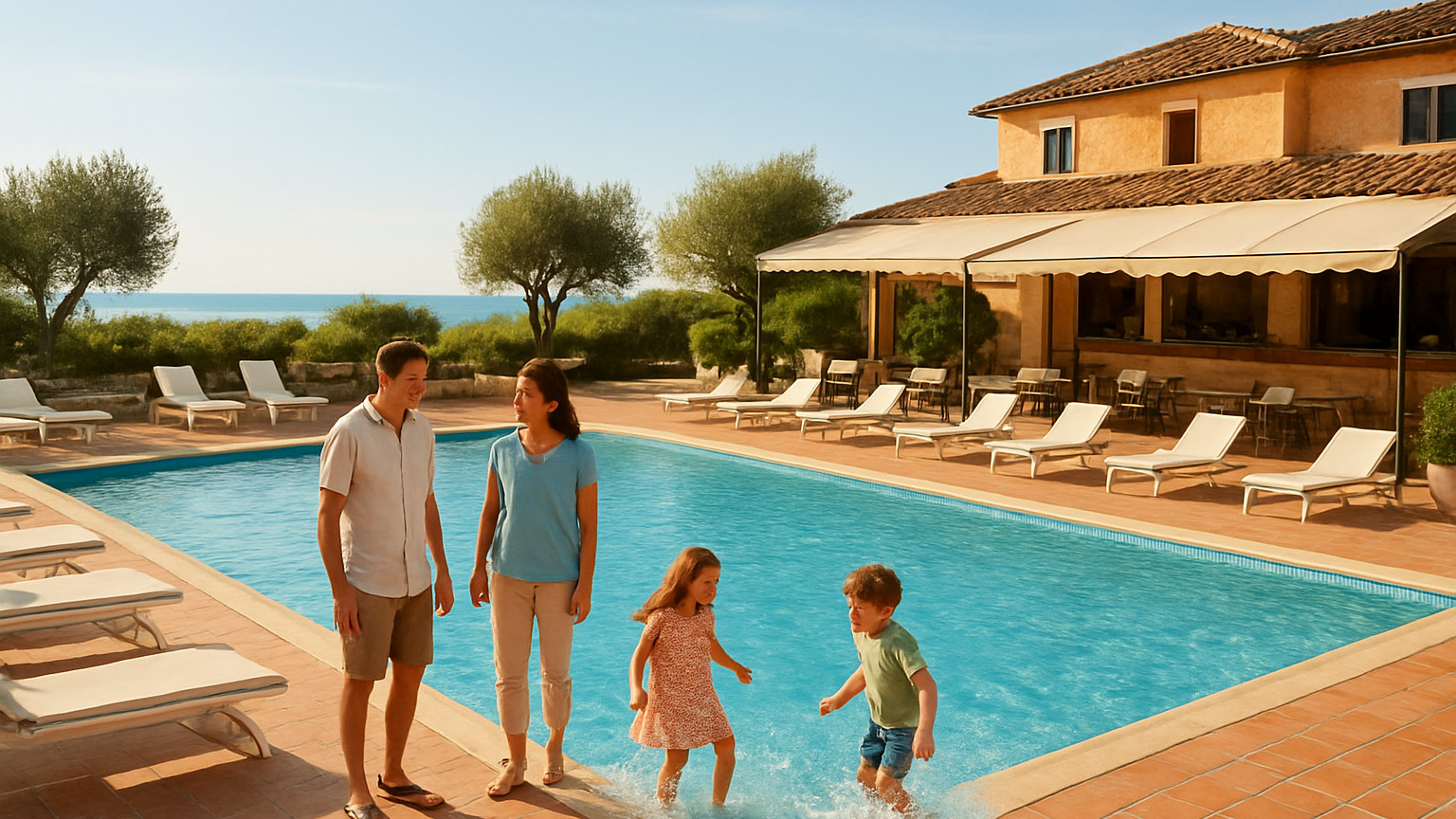
Whether the kids club is included or charged. Whether soft drinks and ice cream are available all day or only at set hours. Whether there are high chairs and a baby food area. Whether the a la carte restaurants accept children and at what age. And whether the pool has a shallow end, which is not an all inclusive question but is the one most often forgotten.
Which countries suit families best?
Turkey, where family all inclusive resorts are the core product and the standard is high. Spain and the Canaries for short transfers and consistency. Crete, Rhodes and Cyprus for a good combination of facilities and warm shallow water. Bulgaria for the lowest cost.
When is it the wrong choice?
When the family wants to explore, when the resort is in a country where eating out is cheap and enjoyable, and when the children are old enough to want independence. Teenagers in particular often prefer a town they can walk into over a resort with an entertainment programme, and an all inclusive that keeps everyone inside can work against that.
What about babies?
Baby food and formula are almost never provided, and this catches people out. Most resorts have a baby corner with purees, plain pasta and steamed vegetables, which varies enormously in quality. Bring what your baby actually eats, and check whether there is a bottle steriliser or a kitchenette available.
How does it compare with a villa?
The two dominant family options and they solve opposite problems. All inclusive removes all the work and confines the evening to a hotel room. A villa gives space and an evening and requires a car, shopping and cooking. Families with children under about five often prefer the villa for the separate bedroom; families with children between five and twelve usually prefer the resort for the kids club and the pool complex.
How long should you go for?
Ten to fourteen nights makes the economics work best, since the fixed costs of flights and transfers are spread further and the daily rate usually falls with length of stay. A week is perfectly workable and the buffet does not have time to become tiring.
Anyone weighing this up will also want What Should You Check Before Booking All Inclusive?, along with the rest of the Holidays section.
The short answer
All inclusive is the strongest board basis for families with children between about three and twelve, mainly because it solves meal timing and ends the constant negotiation. Check the kids club, the snack hours and the shallow end, and reconsider it once the children are teenagers.