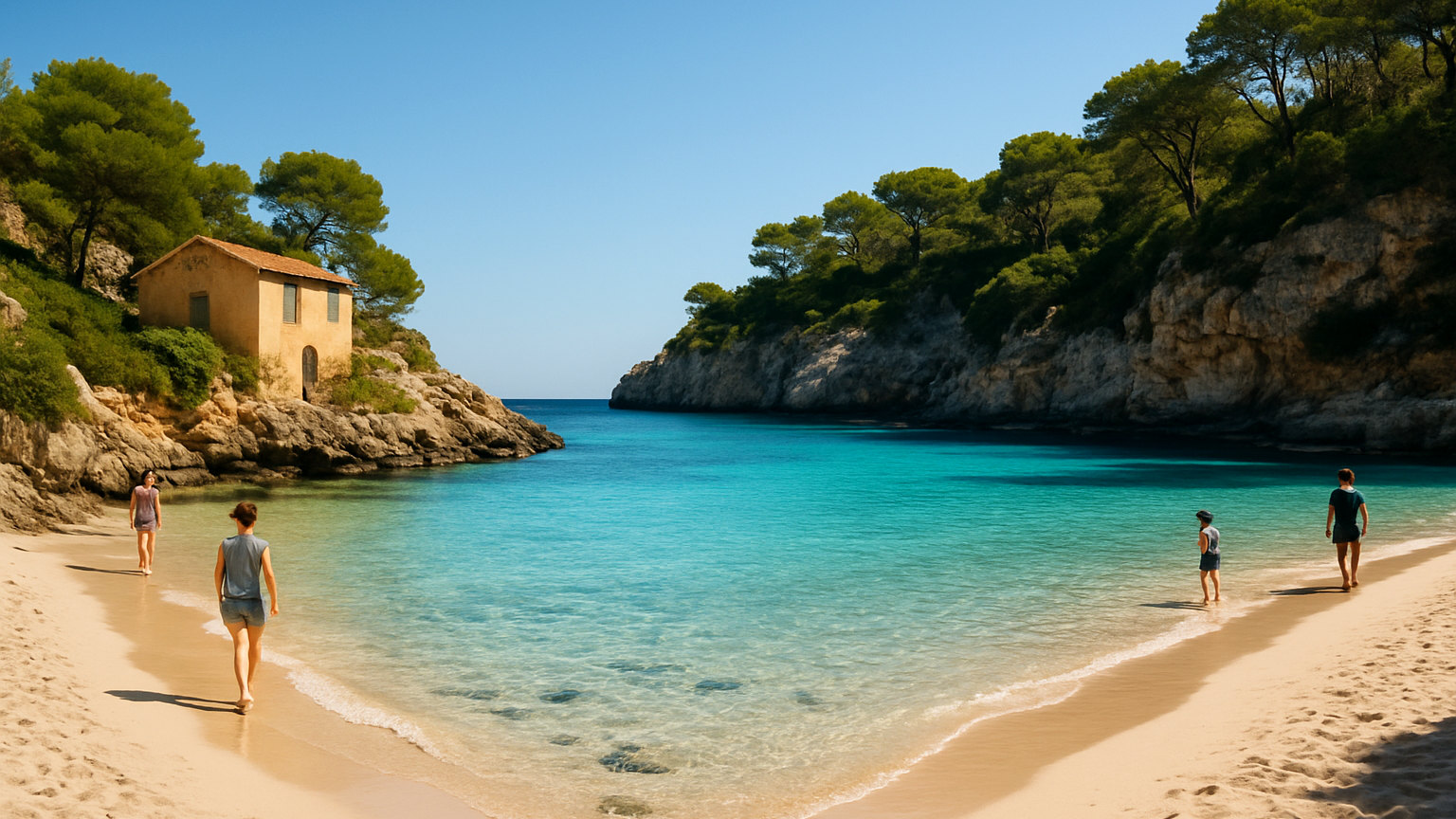
Snorkelling needs the opposite of what most beach holidays are booked for. Clear water comes from an absence of sediment and nutrients, which means rocky coasts rather than sandy ones, and calm conditions mean sheltered bays rather than open beaches. The best snorkelling in Europe is therefore mostly off beaches that are uncomfortable to lie on.
Where is the water clearest?
Croatia and Sardinia are the two standouts. Croatian water is exceptionally clear because the Adriatic is cold, deep and low in nutrients, and the coast is limestone rather than sediment. Sardinia, particularly the Maddalena archipelago and the Gulf of Orosei, has visibility regularly over twenty metres.
Malta and Gozo are next, with the added advantage of caves, arches and wrecks in shallow water. The Greek islands vary: the Cyclades and the Dodecanese are clearer than the Ionian, which has more freshwater run-off.
Which specific places are best?
The Blue Lagoon at Comino in Malta, early in the morning before the boats arrive. Cala Goloritze and Cala Mariolu in Sardinia, both reached by boat or a steep walk. The Kornati islands in Croatia. The Medes Islands marine reserve off the Costa Brava, which is the best on the Spanish mainland. The marine reserve at Cabo de Palos in Murcia. Vis and Bisevo in Croatia for caves.
Do marine reserves make a difference?
A very large one. Protected areas have noticeably more and larger fish than unprotected coast a short distance away, because Mediterranean fish stocks outside reserves are heavily depleted. If you want to see anything beyond small wrasse and sea bream, a reserve is worth travelling for. The Medes Islands, Port-Cros in France and the Cabrera archipelago off Mallorca are among the best.
What will you actually see?
In the Mediterranean, expect wrasse, bream, damselfish, octopus, sea urchins and posidonia seagrass meadows, which are ecologically important and look like underwater fields. Larger fish such as grouper appear mainly in reserves. There are no coral reefs, and visitors expecting tropical colour are usually disappointed; the appeal is clarity, rock formations and light rather than variety.
When are conditions best?
Early morning, before wind picks up and before boat traffic stirs the water. September and October are the best months, with the warmest water and often the calmest conditions. Avoid the day after a storm, when visibility collapses, and avoid exposed coasts during the meltemi in the Aegean.
What should you take?
Your own mask, since hired ones leak and fit poorly, and a mask that fits is the difference between an hour in the water and ten minutes. A rash vest for sun protection, because a back exposed to the surface burns faster than anywhere else. Swim shoes for rocky entry. A float or buoy if you are going any distance offshore, which also makes you visible to boats.
What should you avoid touching?
Sea urchins, which are common on Mediterranean rocks and whose spines break off in the skin. Fire worms and the occasional weever fish buried in sand. Jellyfish, which vary by year and location. None of these is a serious danger and all are easier to avoid than to treat.
Where can you snorkel without a boat?
This matters more than the list of best sites, since many of the finest locations need a boat. Good shore-entry snorkelling is found at Cala Goloritze approaches in Sardinia, at the rocky ends of most Croatian town beaches, at Ghar Lapsi and Wied il-Ghasri on Malta, and at the edges of almost any Greek bay where sand meets rock. As a rule, the point where a sandy beach turns to rock at either end is the best snorkelling on that beach.
Is it suitable for children?
From around six, in calm shallow water with a properly fitting mask and a float. A rocky edge in a sheltered bay is ideal, and a full-face mask suits nervous beginners better than a separate mask and snorkel.
Anyone weighing this up will also want Which Beach Resorts Have the Shortest Transfers?, along with the rest of the Holidays section.
The short answer
Croatia, Sardinia and Malta have the clearest water in Europe, and marine reserves such as the Medes Islands have by far the most fish. Snorkel early in the morning in September or October, bring your own mask, and expect clarity rather than tropical colour.