European rail is either excellent value or startlingly expensive, and the same seat on the same train can differ by a factor of four depending on when it was bought. Understanding how the main networks price their tickets is the whole of the saving.
How does advance pricing work?
High-speed and long-distance operators in France, Spain, Italy, Germany and the Eurostar release cheap fixed-train fares months ahead and raise them as the train fills, in the same way airlines do. Booking two to three months out on these routes commonly costs a fraction of the walk-up price. These tickets are tied to a specific train and are usually non-refundable.
Regional and local trains in most countries are the opposite: a fixed price whenever you buy, no reservation needed, so there is no advantage in booking early.
When is a rail pass worth it?
An Interrail or Eurail pass wins when you are making many journeys, travelling spontaneously, or covering countries where walk-up fares are high. It loses when you are making a few long journeys that could have been booked cheaply in advance, particularly in France, Spain and Italy, where pass holders must also pay compulsory seat reservations on high-speed trains.
The pass is strongest in Germany, Austria, Switzerland, the Netherlands and eastern Europe, where reservations are rarely compulsory and the network is dense.
Are night trains worth using?
They have expanded again across Austria, Germany, Italy, Sweden and central Europe, and they solve two costs at once by covering a long distance and a night of accommodation together. A couchette berth is good value; a private sleeper compartment is comfortable and not cheap. Book early, since sleeper capacity is limited and sells out well ahead.
Which routes beat flying?
Anything under about four or five hours of train time, once airport transfers, check-in and security are counted. Paris to Brussels, London, Lyon or Bordeaux. Madrid to Barcelona or Seville. Rome to Florence, Milan or Naples. Berlin to Hamburg or Prague. On these the train is faster door to door and usually cheaper if booked ahead.
What about regional day tickets?
One of the best-kept secrets in European travel. Germany has regional day tickets covering a whole state for a small flat fare, valid for several people travelling together on local trains. Austria, Switzerland and several other countries have equivalents. They are slow and extremely cheap, and for short hops between neighbouring cities they undercut everything else.
Where should you buy?
Directly from the national operator where possible, since third-party sites often add a booking fee. Cross-border journeys are the exception, where a single retailer covering several networks can be simpler than buying two tickets. Compare both, and be aware that some international routes are cheaper bought as two domestic tickets with a change at the border.
What catches people out?
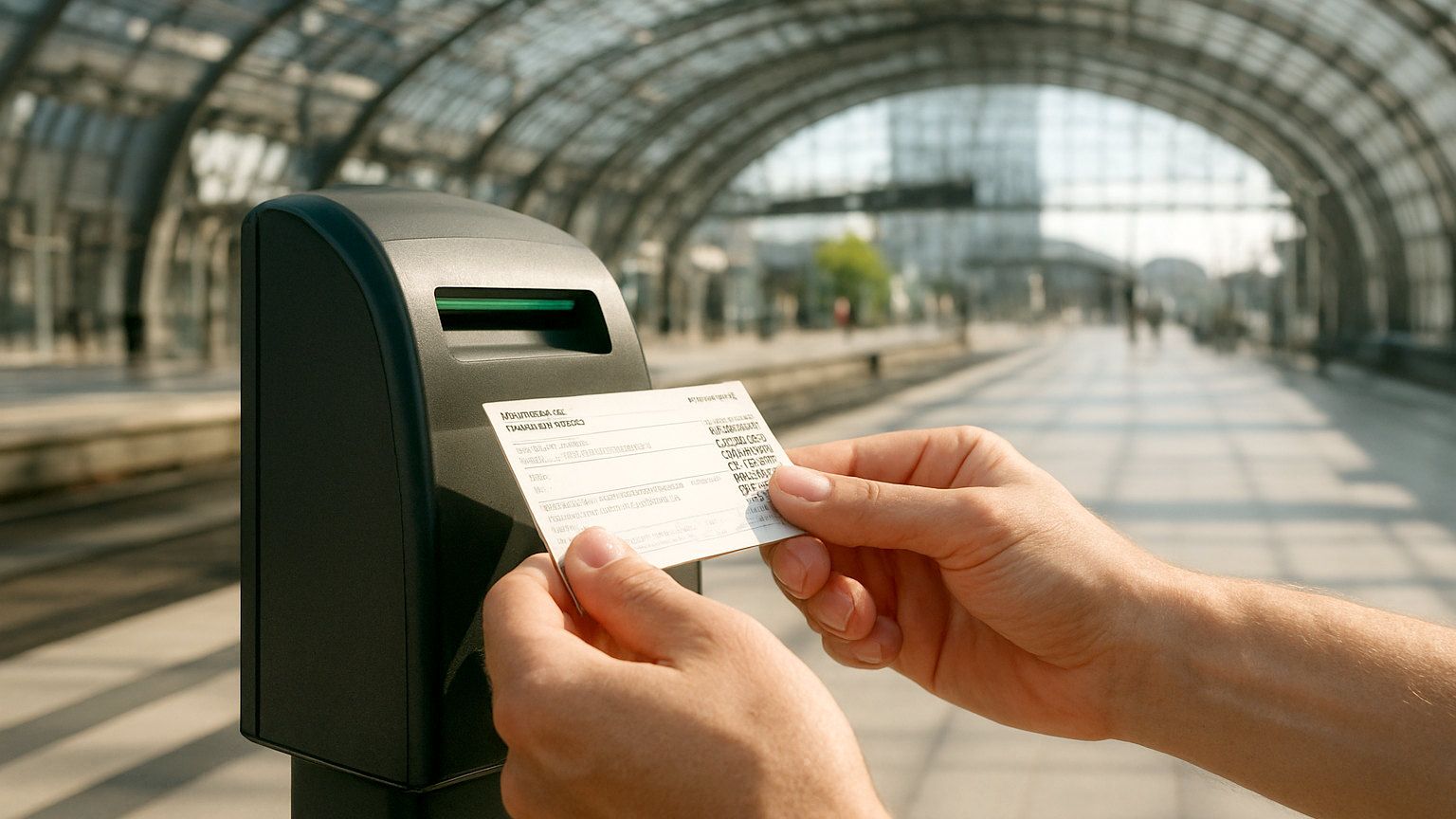
Validation. In Italy, Poland, Czechia and several other countries, paper tickets must be stamped in a machine before boarding, and inspectors fine regardless of intent. Mobile and advance tickets tied to a train do not need it. The other is assuming a rail pass covers everything, when reservations, sleepers and a few private operators cost extra.
Is the train cheaper than flying?
Sometimes, and the honest answer is that a budget flight often undercuts an advance rail fare on longer routes. The train usually wins once you add bags, airport transfers and the time cost, and it always wins on comfort. On routes under four hours it frequently wins outright on price too.
What about coaches?
The cheapest way to cross Europe by a wide margin, with long-distance operators covering most of the continent for very low fares. Journeys are slow and overnight services save a night of accommodation.
If you are planning further, What Are the Cheapest Ways From the Airport? covers the next part of the decision, and there is more in our Holidays guides.
The short answer
Book high-speed routes two to three months ahead for the cheapest fares, use regional day tickets for short hops, and take a pass only if you are making many journeys in pass-friendly countries. Validate paper tickets, and choose the train over flying on anything under about four hours.