Luxembourg is a wealthy financial centre with prices to match, and it is also the only country in Europe where all public transport is free to everyone. That single policy changes the cost of a visit substantially.
Is public transport really free?
Yes. Buses, trams and second-class rail travel are free nationwide for residents and visitors alike, introduced in twenty twenty. First-class rail and some cross-border services still charge, and the practical effect is that moving around costs nothing.
What does cost money?
Accommodation and eating out. Hotels are priced for the financial and European institution business that fills them on weekdays, and restaurant prices reflect high local wages.
When is it cheapest?
Weekends, decisively. Luxembourg empties of business travellers from Friday, and hotel rates fall sharply for Saturday and Sunday nights. A weekend break costs a fraction of the same rooms midweek, which is the single most useful thing to know.
What is free to see?
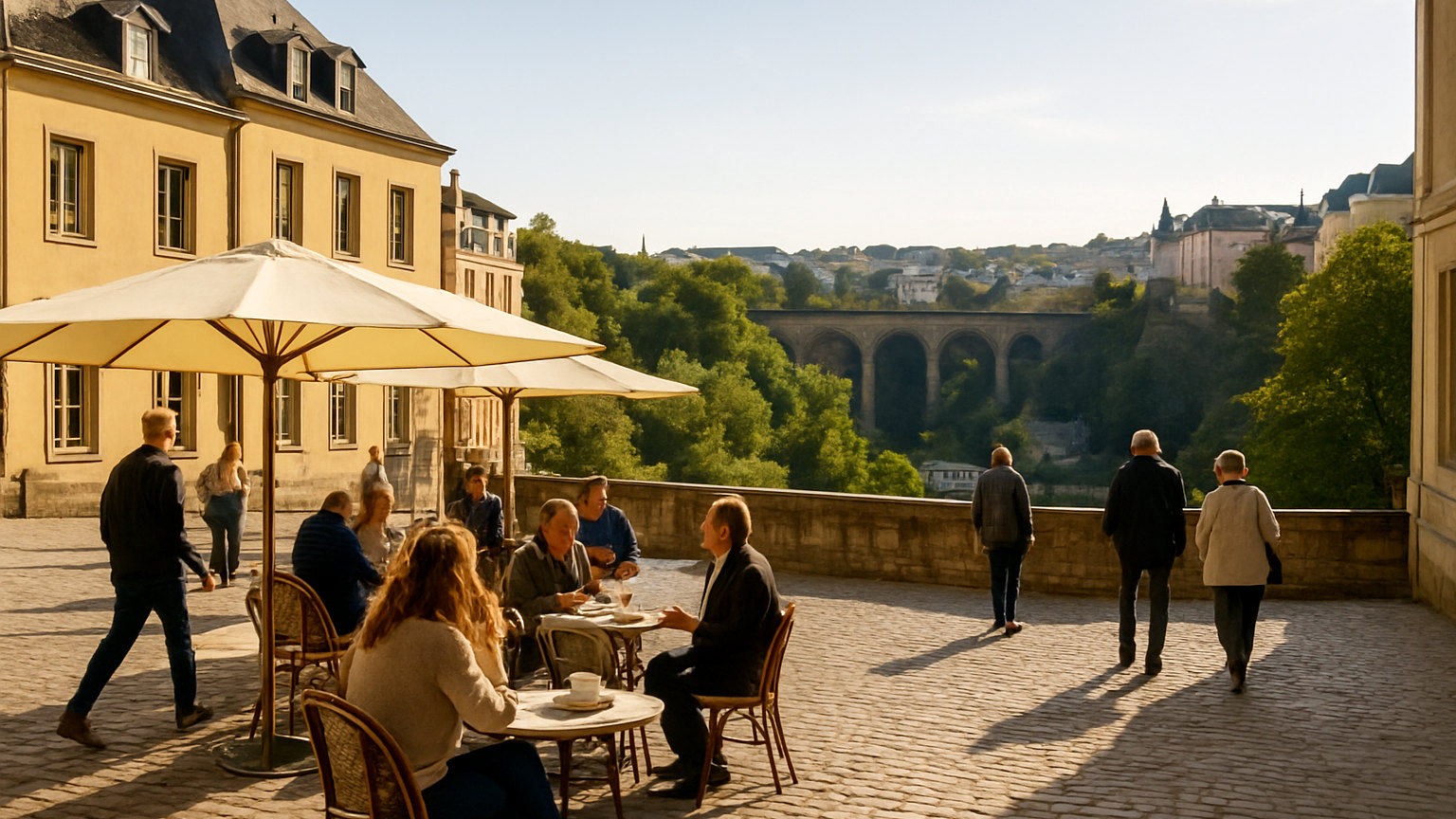
Walking the Chemin de la Corniche along the ramparts, which is the best view in the city. The Grund, the low quarter beside the river, reached by a free public lift. The old town streets. The Adolphe Bridge and the valley parks.
What is worth paying for?
The Bock casemates, tunnels cut into the rock beneath the fortifications, which are inexpensive and the main historical attraction. The national museums are modestly priced and several are free on certain days.
How do you eat cheaply?
The weekday lunch menu, and crossing into the surrounding region. Luxembourg is small enough that Trier in Germany or the French and Belgian border towns are a short free train ride away, and prices there are considerably lower.
How long do you need?
Two nights. The city is compact and walkable, and the country beyond it, including the Mullerthal walking area and the Moselle wine valley, fills a third day at no transport cost.
Is fuel cheaper there?
Traditionally yes, which is why filling stations cluster near the borders and drivers detour to use them. Worth knowing on a road trip through the region.
Is it good value overall?
Better than the reputation suggests, provided you go at a weekend. Free transport, free walking and modestly priced attractions offset expensive hotels, and the weekend rate difference does the rest.
How do you get there?
Flights from several UK airports, or by train from Brussels or Paris. The bus from the airport into the city is free like everything else.
Is it worth a trip on its own?
For a weekend, yes, particularly combined with Trier or the Moselle. As a longer stay it is thin, and most visitors find two nights sufficient.
Is the city walkable?
Entirely, and dramatically so. The old town sits on a plateau above a deep gorge, with lifts and bridges connecting the levels, and the whole centre can be crossed in half an hour on foot. The free public lift to the Grund saves the climb.
What languages are spoken?
Luxembourgish, French and German are all official, with English widely spoken in the centre and in the institutions. Menus and signage are frequently in several languages and communication is never a problem.
What is worth seeing beyond the city?
The Mullerthal region, sometimes called Little Switzerland, for sandstone rock formations and walking trails, and the Moselle valley for wine. Both are reachable on the free train and bus network, which makes a day out cost nothing but time.
Is it good for a family?
Better than expected. Free transport removes the per-head cost that makes cities expensive with children, the casemates are genuinely interesting to explore and the valley parks give space. Two days suits a family well.
Is English enough?
Comfortably, in the city and across the institutions.
If you are planning further, Can You Visit Monaco on a Budget? covers the next part of the decision, and there is more in our Holidays guides.
The short answer
Hotels and restaurants are expensive and all public transport is free nationwide. Go at a weekend, when business rates collapse, walk the Corniche and the Grund for nothing, and use the free trains to reach Trier or the Moselle for cheaper eating.