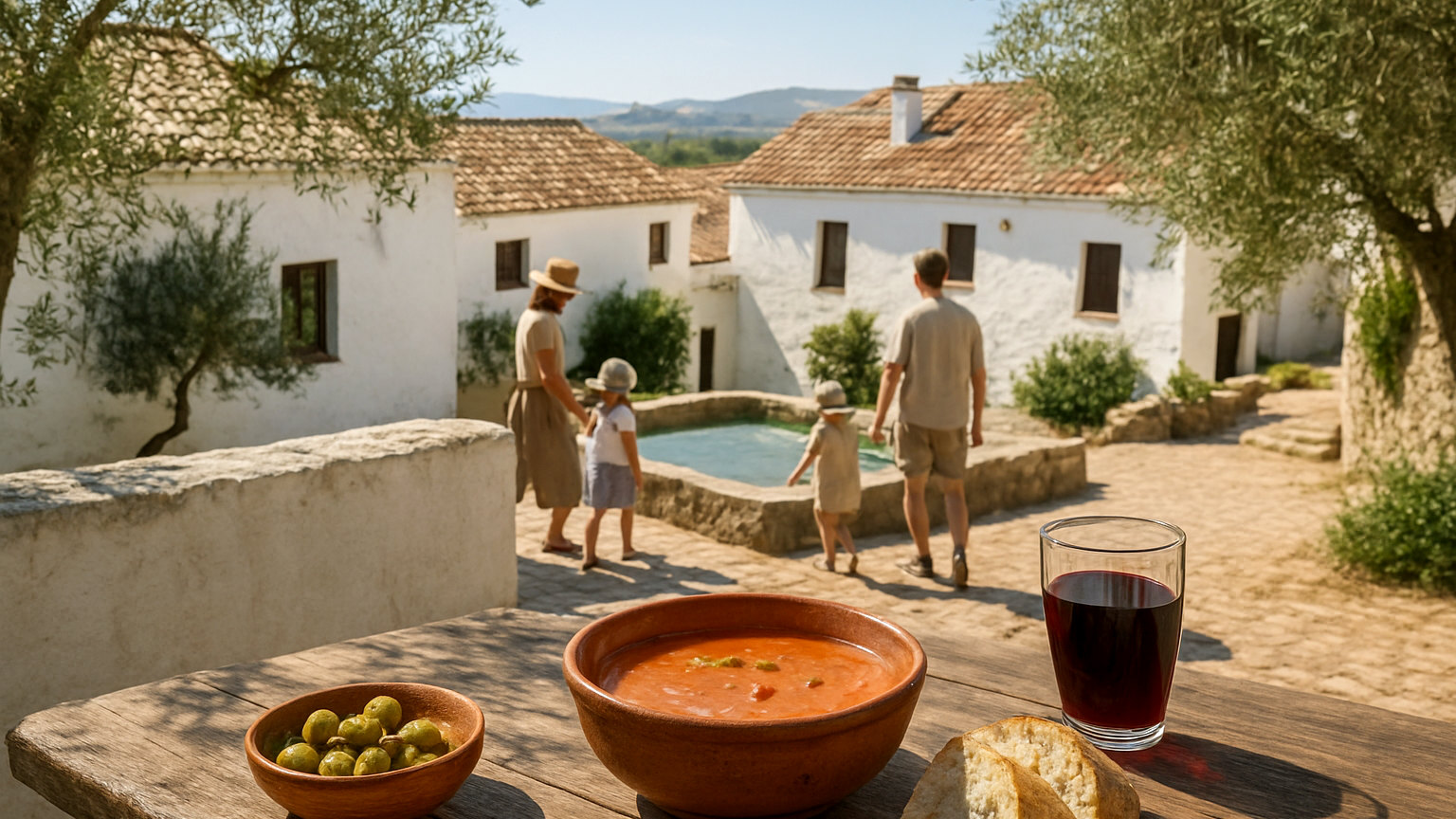
Southern Europe in July and August routinely reaches temperatures that small children handle much less well than adults. They overheat faster, dehydrate faster and complain about it less usefully. Almost all of the solution is restructuring the day rather than anything you buy.
Why do children struggle more?
They have a larger surface area relative to their body mass, sweat less efficiently, and are less able to recognise or communicate that they are overheating. Babies and toddlers are the most affected. This is a physiological difference rather than a matter of toughness, and it means adult comfort is a poor guide.
How should you structure the day?
The way people in hot countries do. Out early, between about eight and noon, when the beach is pleasant and the sights are quiet. Indoors or in deep shade from roughly noon to four. Out again from late afternoon until dinner. Trying to run a British summer day from ten to six is the commonest mistake.
An accommodation with air conditioning and something to do indoors for those four hours is worth more than almost any other feature.
What about sun protection?
High factor sunscreen applied generously and reapplied after swimming and every couple of hours. A hat with a brim and a back flap. A rash vest, which protects shoulders and back far more reliably than repeated sunscreen and removes most of the argument. Babies under six months should be kept out of direct sun entirely rather than relying on sunscreen.
How much should they drink?
More than they will ask for, and offered frequently rather than waited for. Water is best, and diluted juice works for children who refuse plain water. Signs of dehydration include unusual tiredness, fewer wet nappies, dry lips and irritability. Ice lollies are a genuinely useful way to get fluid into a reluctant child.
What should you watch for?
Heat exhaustion, which shows as clamminess, pallor, headache, tiredness and nausea, and responds to moving into shade, cooling and fluids. If a child becomes confused, stops sweating, has very hot dry skin or is unresponsive, that is heatstroke and needs emergency medical help immediately. Knowing the local emergency number, which is 112 across the European Union, is worth doing on arrival.
Is a pool cooler than a beach?
Usually more manageable, because shade is closer, drinks are nearer and the water is calm. Beaches with no natural shade are the hardest environment of all in midsummer, and sand reflects heat upward. Choose beaches with pine or cliffs behind them, or hire an umbrella early before they run out.
Which months are better?
May, June, September and October in the south, all of which are warm without being extreme and have sea temperatures that are perfectly good from June onward. For anyone tied to August, going north within the country helps, and the Canaries are notably cooler in August than mainland Spain, Italy or Greece.
What should you pack?
Rash vests, wide-brimmed hats, a lightweight pushchair with a proper canopy rather than a blanket over it, a small fan or water spray, and rehydration sachets from a pharmacy. Covering a pushchair with a cloth traps heat and is actively unhelpful.
What about the sea and the pool?
Both help with heat and neither removes the need for shade, since reflected light off water burns as readily as direct sun. Children in the water for long periods still need sunscreen reapplied and are often more comfortable in a rash vest than repeatedly recovered in cream. Cold water after a long spell in the heat can also be a shock, so entering gradually is sensible.
What Should You Pack for a Family Holiday? is the natural next read, alongside the wider Holidays section.
The short answer
Restructure the day around an early morning and a late afternoon, keep the middle four hours indoors, use rash vests rather than relying on sunscreen alone, and offer drinks constantly. Travel in the shoulder months if you can, and learn 112 before you need it.
This is general guidance rather than medical advice, and anyone concerned about a child in the heat should seek medical help locally.