A long drive with children is decided by the schedule rather than by what is on the tablet. European motorways are well provided with stops, distances are shorter than in Britain per hour of driving, and the difference between a manageable day and a miserable one is almost entirely how you break it up.
How far should you drive in a day?
Less than you would alone. Around four to five hours of actual driving is a comfortable family day, which with breaks means six or seven hours door to door. Anything beyond that tends to produce a bad final hour and a bad evening. Splitting a long journey across two days with an overnight stop is usually worth the cost of the hotel.
When should you set off?
Either very early, so that the first hour or two happens while children sleep, or immediately after lunch into the afternoon nap. Starting mid-morning after a slow breakfast wastes the best part of the day and puts you in traffic.
Avoid the French and Italian departure weekends in late July and mid-August, when domestic holiday traffic makes the motorways genuinely difficult.
How often should you stop?
Every two hours at most, and the stop should involve running rather than sitting. Many European motorway services have a play area, and the aires in France in particular are often set in woodland with picnic tables. A twenty-minute stop where children move properly buys more driving time than a five-minute toilet break.
What works for entertainment?
Audiobooks and podcasts do more work than screens for most families, because they last hours, do not cause car sickness and can be shared. Downloaded films for the difficult stretch rather than the whole journey. Simple games that involve looking out of the window, which are more engaging than they sound when the scenery is unfamiliar.
A small bag each of new and unfamiliar things, released gradually, is more effective than a large bag of familiar ones.
What about car sickness?
Common and worse on winding roads, which describes most of the scenic parts of southern Europe. Looking forward rather than down helps, so a screen or book low in the lap is the worst possible arrangement. Fresh air, frequent stops and eating lightly before setting off all help. A pharmacist can advise on remedies suitable for children, and some require taking well before departure.
What should you have in the car?
Water and snacks within reach rather than in the boot. Wipes and a carrier bag for the inevitable. A change of clothes in the cabin. Sunshades for the rear windows. And whatever the country requires by law, which across Europe commonly includes a warning triangle, high-visibility vests for everyone and in some countries a breathalyser or headlamp beam deflectors.
How should you plan the route?
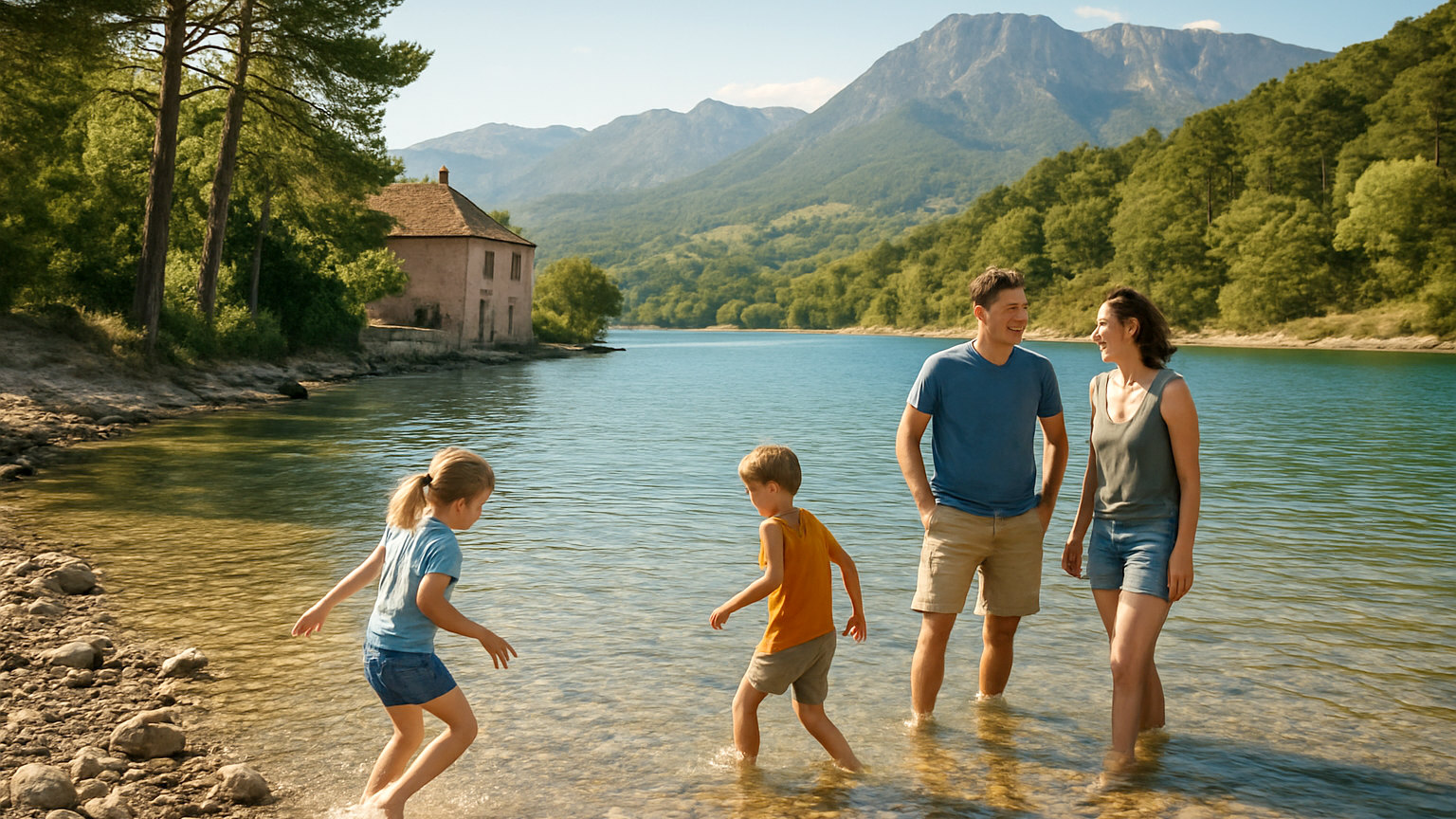
Look for somewhere genuinely worth stopping at the halfway point rather than a service station, which turns a chore into part of the holiday. A lake, a town with a square, or a picnic spot signposted off the motorway costs no extra time and changes the tone of the day.
What about tolls and city restrictions?
French, Italian and Spanish motorways are tolled and the cost across a long drive is substantial, so budget for it rather than discovering it. Italian city centres are ringed by restricted zones monitored by cameras, with fines arriving months later, so park outside and walk in. Many European cities also have low emission zones requiring registration in advance. Check the rules for every country on the route rather than only the destination, since a transit country can catch you out.
What Documents Do Children Need to Travel in Europe? answers a related question in more depth, and there is more of the same across our Holidays guides.
The short answer
Drive four or five hours a day at most, set off very early or straight after lunch, stop every two hours somewhere children can run, and use audiobooks rather than screens. Plan one proper stop worth making, and carry the legal kit the country requires.