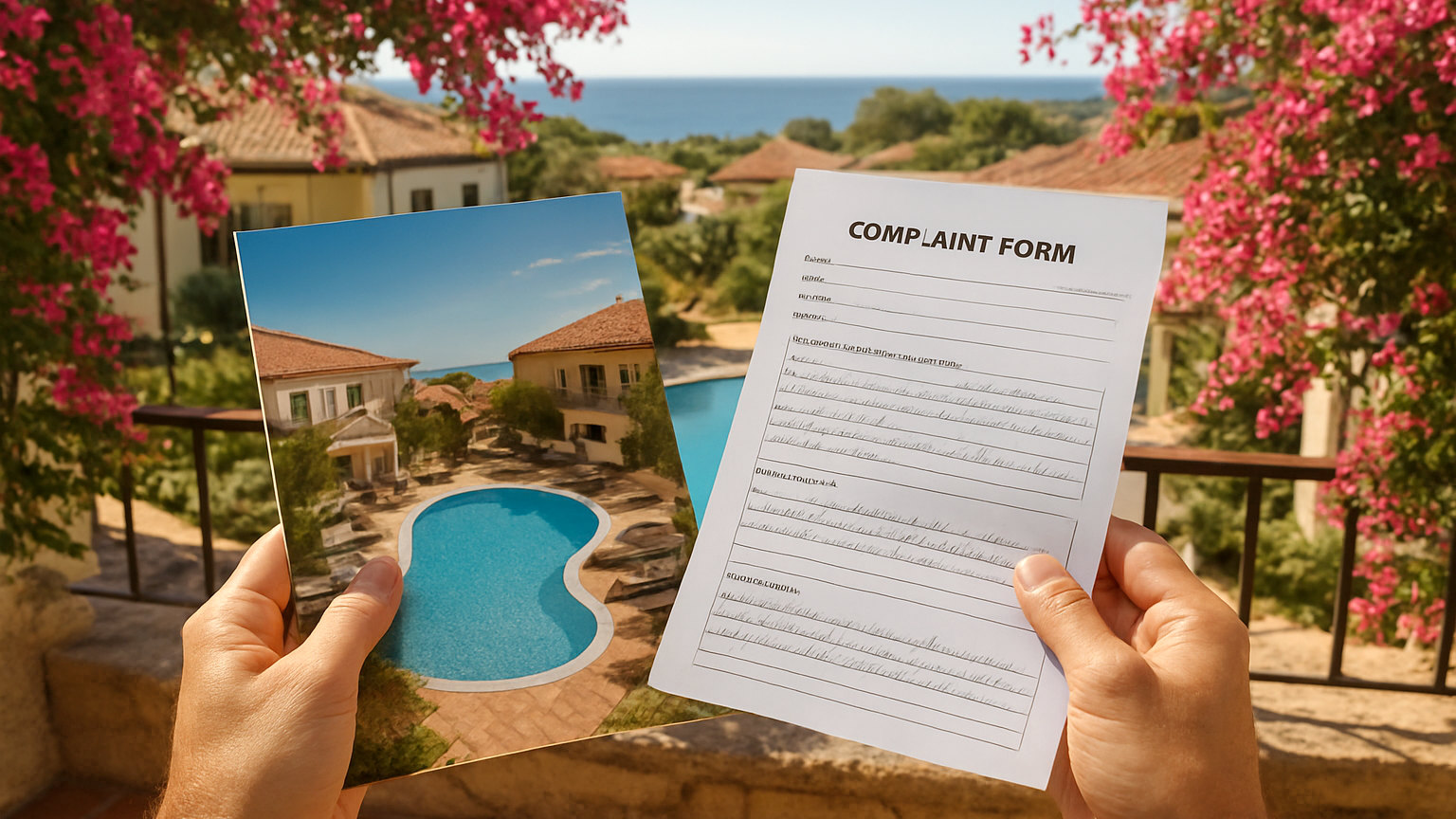
Holiday complaints succeed or fail largely on process rather than on the strength of the grievance. A legitimate problem raised in the wrong order and too late frequently gets nowhere, while a lesser one handled properly is often resolved quickly.
What should you do first?
Report it in resort, immediately, to the representative or the hotel management. The organiser has a right to the opportunity to put things right, and a complaint about something they were never told about is difficult to pursue afterwards. This single step matters more than anything that follows.
How should you record it?
In writing as well as verbally. Ask for the complaint to be logged and ask for a copy or a reference. Note the date, the time and the name of the person you spoke to. If the representative visits, ask for a written summary of what was agreed.
What evidence should you gather?
Photographs and video with timestamps, which are the most persuasive material by a wide margin. The original description or brochure page you booked from, so the difference is demonstrable. Receipts for anything you had to pay for yourself. Contact details of any other guests affected, if they are willing.
Should you accept an offer in resort?
Sometimes, and read what you are signing. A room move, a meal or a partial refund offered locally may be a perfectly good resolution. If you are asked to sign something accepting it in full and final settlement, understand that this may prevent a further claim. If in doubt, accept the practical remedy and decline to sign away your position.
How do you write the letter?
Short, factual and chronological. State the booking reference and dates, describe what was promised and what was provided, list what you reported and when, attach the evidence, and state clearly what you are asking for. Emotional language weakens it; specifics strengthen it. Send it to the operator customer services address within any deadline in the booking conditions.
What can you reasonably ask for?
A refund proportionate to what was not provided, reimbursement of costs you incurred, and in some cases compensation for loss of enjoyment where a significant part of the holiday failed. Asking for the entire cost of a holiday you largely took is the commonest reason a reasonable claim is dismissed.
Where do you escalate?
Through the operator own complaints process first, which is usually a requirement before anything else. If the operator is an ABTA member and you are not satisfied, ABTA operates a dispute resolution scheme. For flight-related matters, the CAA publishes details of the relevant alternative dispute resolution body. Citizens Advice can advise on consumer rights generally.
What about social media and reviews?
Sometimes effective at getting attention and no substitute for the formal process. Posting a review is legitimate and should be factual, since a demonstrably inaccurate public claim can create problems of its own.
How long does it take?
Operators usually state a target response time in their booking conditions, commonly a number of weeks rather than days. Chasing politely at the stated interval is reasonable; sending repeated messages before the deadline generally slows things down. Keep every response.
What if you get nowhere?
Dispute resolution schemes exist precisely for this and are generally free or low cost to the consumer. Small claims procedures are a further option for straightforward money claims, and Citizens Advice can explain how they work.
What weakens a complaint?
Not reporting in resort. Exaggerating. Claiming the full cost of a holiday you took. Waiting months to write. And relying on description rather than evidence. Each of those is avoidable and each is common, which is why many legitimate complaints fail.
For the next step, see Are Late Deals Worth Waiting For?, or browse the full Holidays section.
The short answer
Report the problem in resort and get it logged in writing, photograph everything, and follow the operator complaints process on return within their deadline. Write a short factual letter stating what you want, and escalate to ABTA or the CAA scheme only after the operator process is exhausted.