Ljubljana is among the smallest capitals in Europe and one of the most walkable. The historic centre along the river is compact enough to cross in ten minutes, which makes the usual advice about staying central considerably less important than elsewhere.
How small is it really?
The pedestrianised core around the Ljubljanica river, the Triple Bridge and Preseren Square can be walked end to end in well under fifteen minutes. Most of what visitors come for sits within that area.
Where is the nicest place to stay?
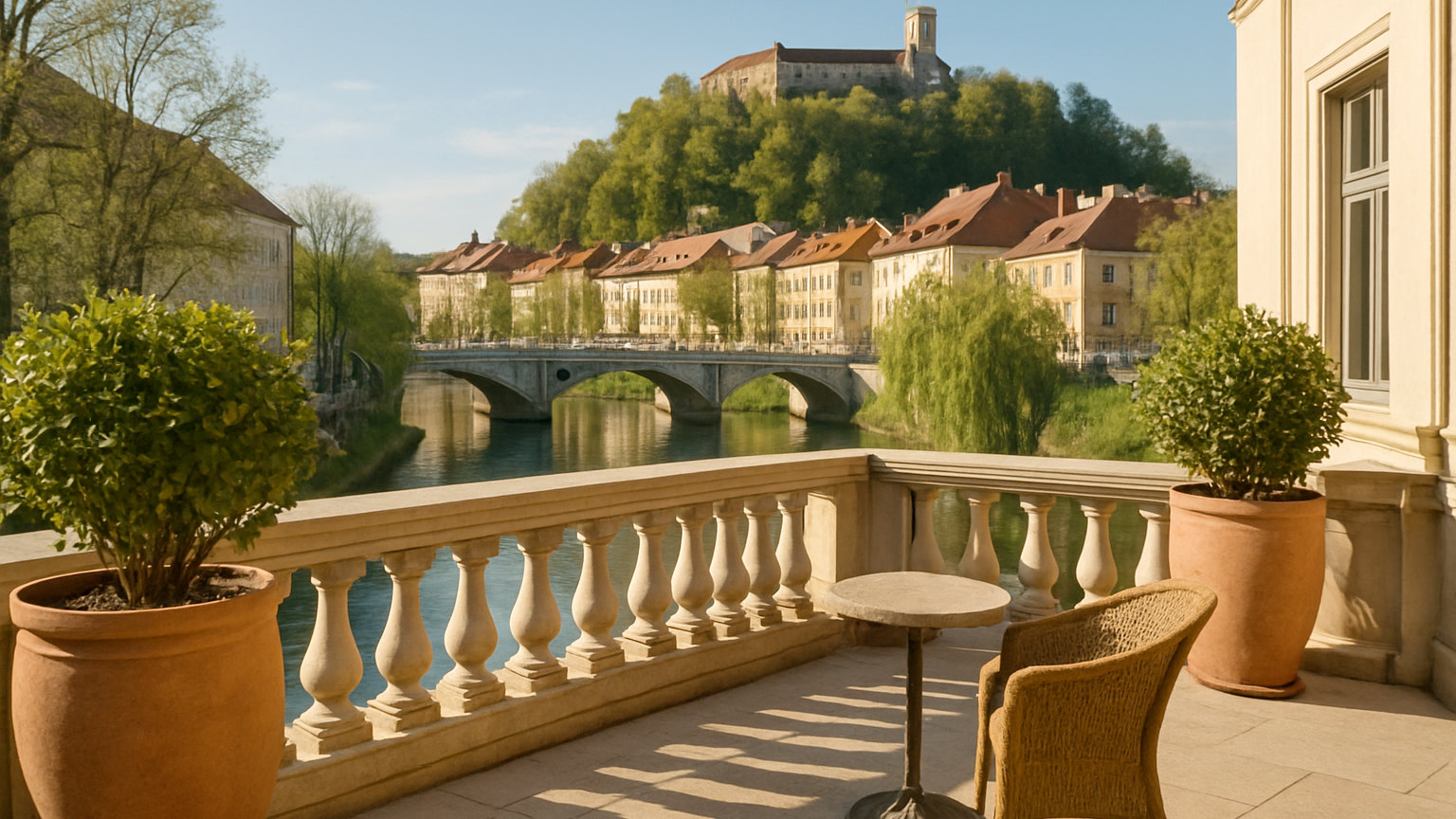
Along or just off the river in the old town beneath the castle, which is atmospheric and puts the market, the bridges and the cafes outside the door. It is also where the evening noise concentrates in summer.
Which areas are quieter?
Trnovo and Krakovo, just south of the centre, which are low-rise residential districts with allotments and quiet streets, ten minutes walk from the middle. They are the best combination of calm and convenience.
What about near the station?
A ten-minute walk north of the centre, convenient for buses and trains onward to Bled, Lake Bohinj and the coast. Functional rather than attractive and perfectly workable.
Is it noisy?
The riverside bars are busy on summer evenings and the sound carries along the water. Anyone sensitive to it should look a street or two back, which costs nothing in walking time.
How expensive is it?
Moderate, and higher than the Balkans further south but below the Alpine countries. Summer rates rise and the city fills, since it is on the route between Venice, Vienna and the Croatian coast.
Should you base there for Slovenia?
It works well. Bled is an hour, Postojna caves and Predjama castle around forty-five minutes, the Soca valley two hours and the coast at Piran ninety minutes. A car makes all of them easier and several are reachable by bus.
How long do you need?
Two nights for the city, or four or five using it as a base. Ljubljana is small enough that two days covers it thoroughly.
How do you reach the airport?
Around half an hour north by bus or shuttle, and the airport is small. Many visitors arrive instead from Venice, Trieste or Zagreb by bus or car.
What should you check?
Parking, if you are driving, since the centre is pedestrianised and hotels there frequently have none. A property with a space or a nearby garage matters more here than the exact street.
Are there many hotels?
Fewer than in larger capitals, since the city is small, and the stock fills in summer. Apartments and guesthouses make up a large share of what is available, and booking ahead matters more here than the size of the city implies.
What about the castle?
Reached by funicular from the old town or on foot in fifteen minutes, with views over the city and the Alps beyond. Staying beneath it is convenient rather than necessary.
Is it good for a family?
Well suited. The city is small, flat along the river, largely pedestrianised and safe, with the castle funicular, the dragon bridge and open space beside the water. Distances are short enough that children are not being marched between sights.
How busy is it in summer?
Noticeably, since it sits on the route between Italy, Austria and Croatia. Book ahead from June to August.
What about the market?
The central market along the river beneath the colonnade, open every morning except Sunday, with a covered section and an open-air one. Staying nearby is pleasant and it is the best place to assemble a picnic.
Do you need a car?
Not for the city and helpfully for the country. Buses reach Bled, Postojna and the coast adequately, and a car opens the Soca valley and the smaller villages. Hiring for part of a stay rather than all of it avoids paying for central parking.
Is It Worth Staying Overnight in Bratislava? answers a related question in more depth, and there is more of the same across our Hotels guides.
The short answer
Not especially, since the whole centre is ten minutes across. Stay by the river for atmosphere, in Trnovo or Krakovo for quiet, and prioritise parking over location if you are driving. It also works well as a base for Bled, Postojna and the coast.