In much of southern Europe the beach is divided between free public sections and commercial concessions with rented loungers. The system is unfamiliar to British visitors, who frequently either pay unnecessarily or sit on a lounger they have not rented.
How does it work in Italy?
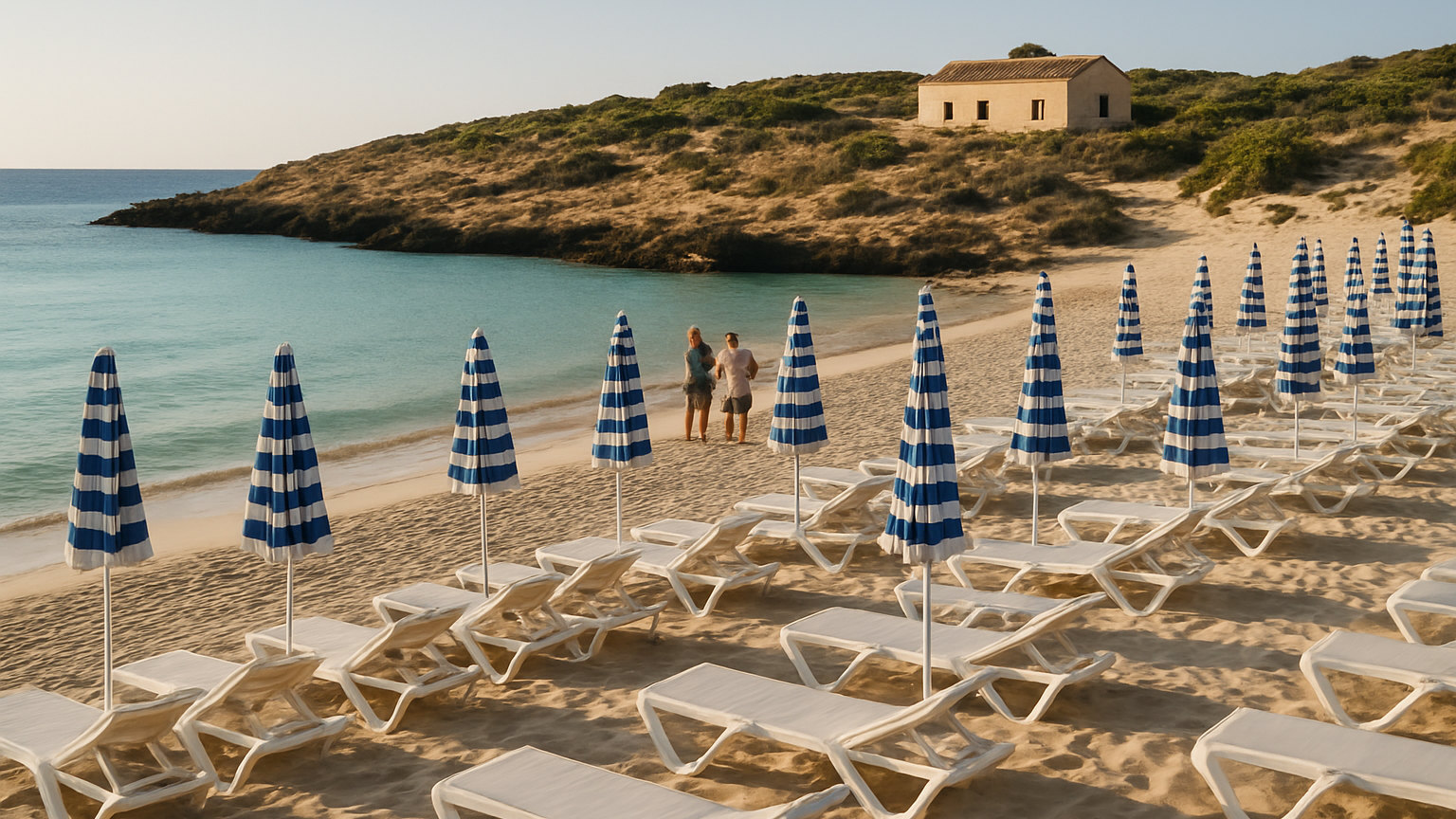
Most developed beaches are divided into stabilimenti, private establishments renting rows of loungers and umbrellas with showers, toilets and a bar. Between them are sections of free beach, usually smaller and less well equipped, where you may lay a towel.
The free sections are legally protected and are frequently narrow and busy.
What does it cost?
Varies enormously by location and season, with a daily rate for an umbrella and two loungers, and weekly or seasonal rates considerably cheaper per day. The front row costs more than the back. Prices peak in August and drop sharply either side.
Is Spain the same?
Different in practice. Spanish beaches are public and generally have hire available rather than being divided into private establishments, so you can sit anywhere with a towel and rent a bed if you want one. The atmosphere is noticeably more open.
What about Greece?
Mixed. Organised beaches have bed hire, and at many a purchase from the bar includes the beds, which is the common arrangement on the islands. Greek law protects public access to the shoreline, and a proportion of every beach must remain free.
And France?
Beach clubs occupy sections of coast on the Riviera and elsewhere, with loungers, service and frequently a restaurant. These are expensive at the fashionable resorts and there is always free public beach adjacent.
Do hotels include them?
Where a hotel owns or leases its beach frontage, usually yes for guests. Where the hotel sits behind a public beach, usually not, and guests pay an independent operator. This is a question worth asking before booking a beach holiday.
Can you always find free beach?
In most countries, yes, since public access to the shoreline is protected by law in Italy, Spain, Greece and Portugal among others. The free sections may be smaller, less convenient and busier, and they exist.
Is it worth paying?
For a full day with children, frequently. Shade, a lounger, toilets, showers and a bar remove most of the work of a beach day. For two hours in the morning it rarely is, and a towel on the free section does the job.
How do you avoid the cost?
Take your own parasol, which most coastal supermarkets sell cheaply, and use the free sections. Go early. Choose beaches outside the developed resorts, which are frequently unmanaged entirely.
What about towels on loungers?
The other side of the same question at hotels rather than public beaches, where reserving a lounger early and leaving it unused is a persistent annoyance. Several hotels operate a policy removing unattended towels after a set period, which is worth asking about.
Are there other charges?
Parking, frequently, at popular beaches in Italy, Spain and Greece, and sometimes an entry fee at protected beaches with visitor caps. Showers and toilets at concessions are usually included for those renting and charged otherwise.
Can you bring your own umbrella?
Onto free sections, yes, and not onto a concession where you have not paid. Beach umbrellas and windbreaks are sold cheaply in coastal supermarkets across southern Europe, and buying one on the first day frequently costs less than a single day of hire.
Is the front row worth it?
Rarely. It costs noticeably more, sits closest to the water and the noise, and gives no shade advantage. The second or third row is cheaper, quieter and frequently better placed for the walk to the bar and the toilets.
Anyone weighing this up will also want Which European Beaches Have the Warmest Water?, along with the rest of the Inspiration section.
The short answer
Italy divides beaches into private establishments with free sections between them; Spain is open with hire available; Greece frequently includes beds with a bar purchase. Public access is legally protected in most countries, so free beach exists even where it is not obvious.