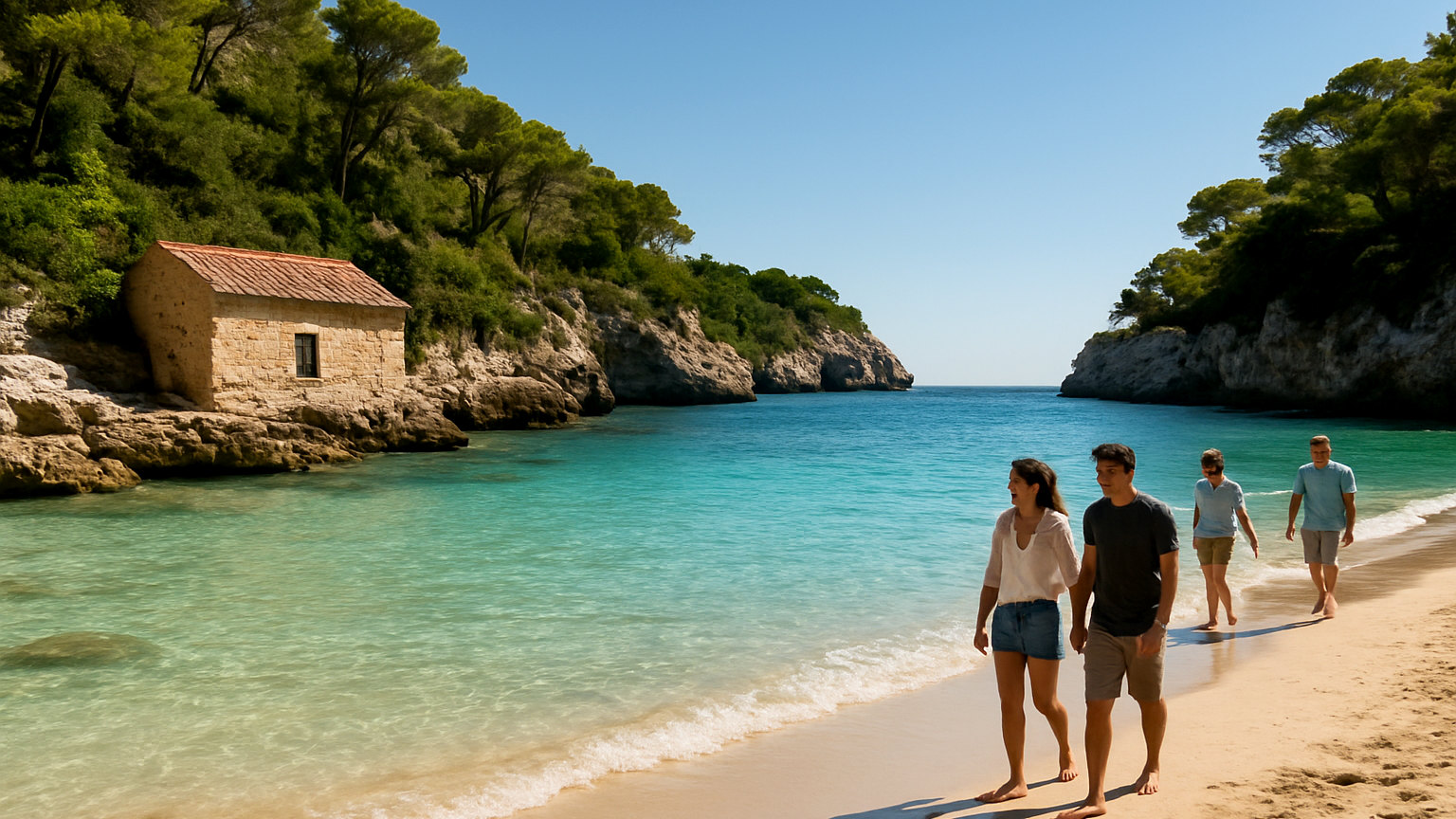
The beaches that photograph best and the beaches that swim best are rarely the same. Drama comes from exposure, surf and cliffs; good swimming comes from shelter, clarity and a gradual entry, which is a different and less photogenic set of qualities.
What makes a beach good to swim at?
A sheltered aspect out of the prevailing wind, clear water, no significant current and an entry that suits your confidence. Bays and coves deliver all four; long exposed shores deliver none of them reliably.
Where is the water clearest?
Croatia, Sardinia, Corsica, the Greek islands and Malta, all of which have rocky or pebble shores and little river sediment. Clarity is a function of what is on the bottom, which is why the clearest water is rarely over sand.
Which are the best sheltered bays?
The Croatian islands, where the coast is a sequence of protected coves. The south coasts of Crete and Rhodes. The Cala coves of Mallorca and Menorca. The Sardinian east coast. The Ionian islands, which are calmer than the Aegean.
Where is the snorkelling best?
Rocky shores rather than sandy ones, since fish need structure. Croatia, Malta and Gozo, the Greek islands, the Medes islands off the Costa Brava and Cabo de Gata in Spain. Sandy beaches are usually empty of marine life by comparison.
Which are warmest?
Shallow enclosed bays in the eastern Mediterranean, which reach the highest temperatures by late summer. Turkey, Cyprus and the Greek Dodecanese are the warmest in August and September, with Atlantic coasts several degrees cooler all year.
Which should you avoid for swimming?
Exposed Atlantic surf beaches unless you are a strong swimmer and the flags are green, since rip currents are common. The Aegean when the meltemi is blowing, which makes northern-facing beaches rough for days. Anywhere with a red flag.
Does the wind pattern matter?
Considerably, and it is the most useful local knowledge. Many Greek and Spanish coasts have a prevailing wind, so the sheltered side of an island is calm while the other is unswimmable. Locals move beaches according to it, and visitors rarely do.
Where can you swim in fresh water?
The Italian and Austrian lakes, which have proper lidos and warm surface water in summer. Slovenian lakes. Swiss lakes and rivers, where city swimming in the Aare and the Rhine is a summer tradition. Frequently clearer and quieter than the coast.
What about sea urchins and jellyfish?
Urchins live on rocky Mediterranean shores and are the commonest beach injury, which swim shoes largely prevent. Jellyfish appear seasonally and locally, and beaches fly a marine hazard flag when they are present. Local advice is the best guide on both.
When is the sea warmest?
Late August and September rather than July, since the sea lags the air by roughly two months. September swimming across the Mediterranean is consistently warmer than June, which is among the strongest arguments for an early autumn beach holiday.
Can you swim in the shoulder months?
In the eastern Mediterranean, Cyprus and the Canaries, comfortably into October and November. In the Adriatic and the western Mediterranean the season closes earlier, and Atlantic coasts are cold enough for a wetsuit most of the year.
What about swimming at night?
Popular in the Mediterranean and worth treating carefully. There is no supervision, judging distance and current is far harder in the dark, and entry points are difficult to find again from the water. Staying within your depth is the sensible limit.
What about lidos and sea pools?
A useful alternative on rough coasts. Natural and built sea pools in Madeira, the Azores, Malta and parts of Italy give sheltered swimming in seawater when the open sea is unsafe, and several are free.
See also Which European Beaches Are Worth the Walk?, which covers a related part of the same decision, and our other Inspiration guides.
The short answer
Sheltered bays with rocky or pebble bottoms give the clearest calmest water: Croatia, Sardinia, the Greek islands, Malta and the Mallorcan calas. Check which way the wind is blowing and use the sheltered side of the island, and take swim shoes for urchins.