Most road trips involve nothing more dramatic than a wrong turn. The preparation that matters is small: knowing the emergency number, having breakdown cover arranged and keeping the documents accessible. None of it takes long and all of it is difficult to arrange afterwards.
What is the emergency number?
112 works across the European Union and in many neighbouring countries, from any phone, and connects to police, ambulance and fire. Operators in most countries can handle calls in English. It is the single most useful thing to know before driving abroad.
What breakdown cover do you need?
European cover arranged before travelling, either through your own motoring organisation, an annual policy or the hire company. Check whether it includes roadside repair, recovery to a garage, onward travel and repatriation, since the cheapest policies cover only the first.
What does a hire car include?
Some assistance, and the extent varies considerably and frequently excludes anything judged to be driver error, including wrong fuel, lost keys and tyre damage. Read what is covered rather than assuming the hire agreement handles everything.
What should you do if you break down?
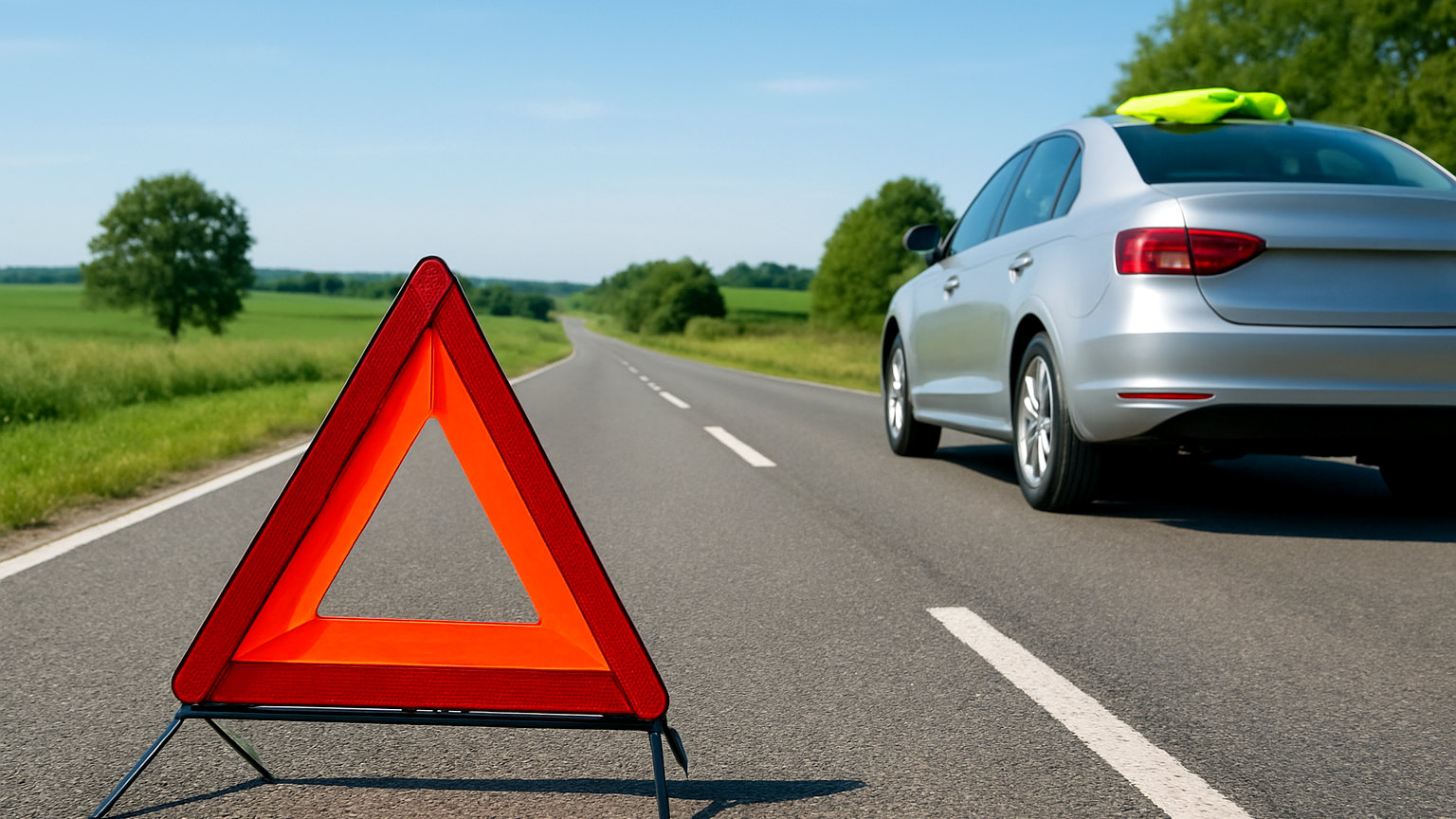
Get the vehicle off the carriageway if possible, put on hazard lights, and on a motorway get everyone out and behind the barrier rather than staying in the car. Then place the warning triangle at the required distance and call for assistance.
High-visibility jackets are legally required in several countries and should be put on before leaving the vehicle, which is why they are carried in the cabin rather than the boot.
What if you have an accident?
Stop, make the scene safe and call 112 if anyone is injured or the road is blocked. Exchange details with the other driver, photograph the vehicles and the position, and complete a European accident statement form if one is available, which most insurers provide.
Notify the hire company or your insurer as soon as practical, since delays can affect a claim.
What documents should be accessible?
Licence, passport, insurance details, hire agreement and breakdown policy number, kept in the car and also photographed on a phone and stored where you can reach them offline.
What about healthcare?
A UK Global Health Insurance Card gives access to state healthcare in the EU on the same terms as residents, and it is not a substitute for travel insurance, which covers repatriation and private treatment. Both are worth having.
What if you put the wrong fuel in?
Do not start the engine, which is what turns an expensive inconvenience into a serious repair. Call assistance and explain. This is excluded from many breakdown policies, so it is worth knowing whether yours covers it.
What about remote areas?
Signal is unreliable in mountains and rural regions, so download offline maps, tell someone your route and carry water. On remote routes, treating a half tank as low and stopping earlier than necessary is the sensible approach.
What about theft and security?
Opportunistic break-ins concentrate at viewpoints, trailhead car parks and beach access points, where cars stand empty and visible. Leaving nothing on display, taking documents with you and using guarded car parks overnight covers almost all of it.
What if the car is damaged while parked?
Photograph it immediately, report it to the police if required by your policy, and notify the hire company the same day. Many hire agreements require a police report for any damage claim, and obtaining one afterwards is considerably harder.
What about travelling alone?
Worth a little extra preparation. Telling someone your route and expected arrival, keeping the phone charged with a car charger and avoiding remote roads after dark are the sensible precautions, none of which is onerous.
If you are planning further, Which Road Trips Work Out of Season? covers the next part of the decision, and there is more in our Inspiration guides.
The short answer
112 is the emergency number across the EU. Arrange European breakdown cover including recovery and repatriation before travelling, check what a hire agreement actually covers, and on a motorway breakdown get everyone behind the barrier rather than staying in the car.