Mapping apps give a time for the distance and not for the day. Between stops, photographs, lunch, fuel and getting lost, a drive quoted at three hours takes five, and the difference between a good road trip and a tiring one is planning for the second figure.
What is a comfortable day?
Two to three hours of actual driving, covering perhaps a hundred and fifty to two hundred and fifty kilometres on ordinary roads. That leaves most of the day for the places, which is the point of the trip.
What is the maximum?
Four to five hours occasionally, as a transfer day between regions, and not repeatedly. Beyond that the driver is tired, the passengers are restless and the day has been spent in the car rather than anywhere.
Why do mountain roads take longer?
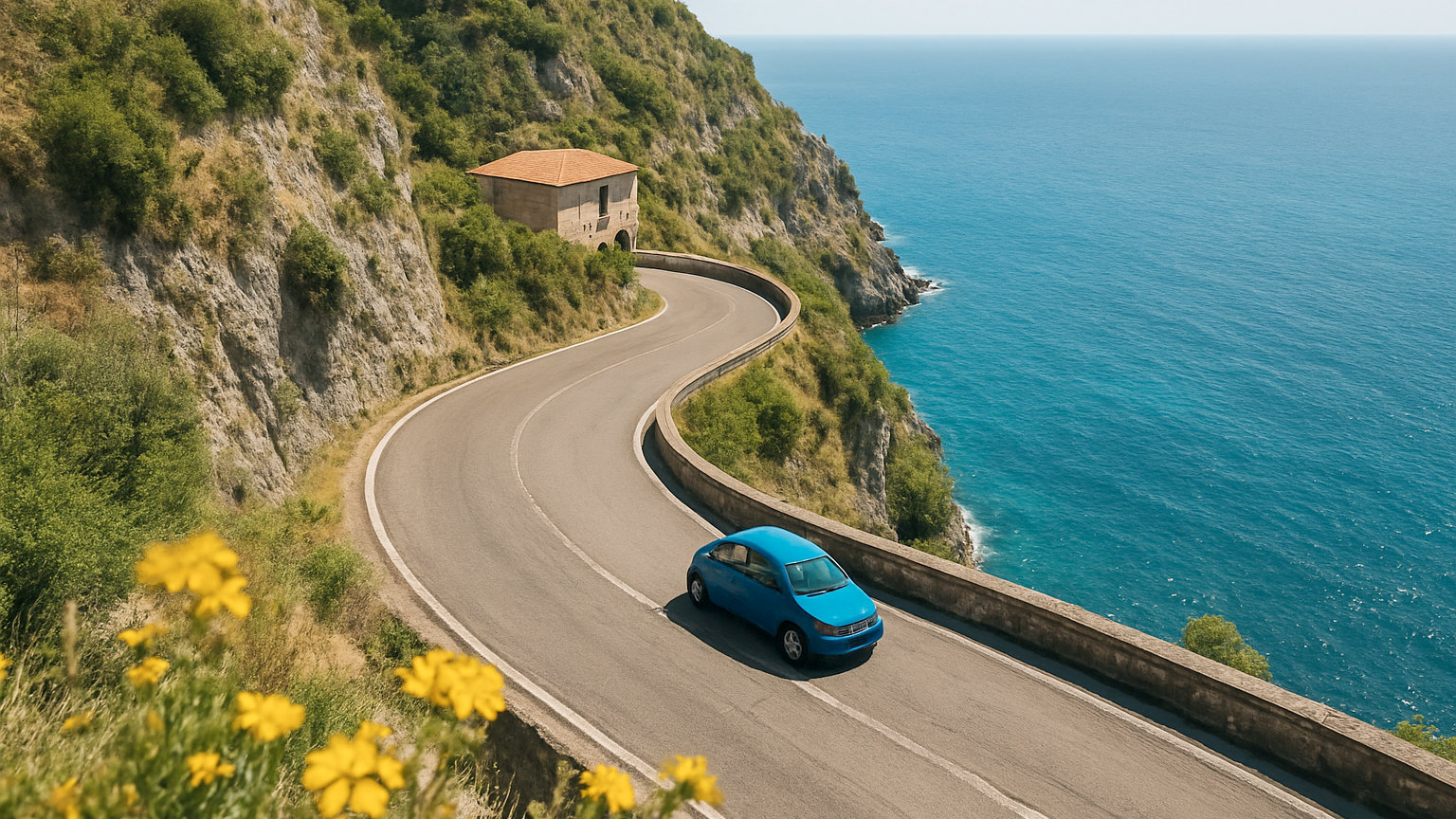
Because average speeds collapse. A hundred kilometres on an alpine pass, a Scottish single track or a Greek mountain road can take three hours rather than one, and mapping estimates are frequently optimistic on exactly these roads.
Assume half the speed you would expect on any mountain or single-track route.
How long do stops actually take?
Longer than planned. A viewpoint is fifteen minutes, a village is an hour, a meal is ninety minutes, and three of those across a day is half of it. Building two or three real stops into a drive is the realistic version of a scenic route.
How often should you break?
At least every two hours, which is the standard road safety advice, and more often with children. Tiredness is the main risk on a long drive and it arrives gradually enough to be missed.
What about the first and last days?
Keep them short. Collecting a car after a flight and then driving four hours is how road trips begin badly, and a long drive to the airport on the final morning risks the flight. An hour on each is a sensible limit.
How many nights per base?
Two minimum, which halves the number of driving days and the packing. A road trip with a different hotel every night spends its time checking in and out, and three bases in a week is better than six.
Does the season change it?
Considerably. Winter daylight in northern Europe can be seven hours, which means driving in the dark and seeing nothing. In summer heat, driving in the middle of the day and stopping in the cool hours works better.
What about motorways?
Faster and duller, and useful for the transfer days. Using a motorway to cover a boring stretch quickly and minor roads for the interesting parts is the sensible compromise rather than avoiding them on principle.
Who should drive?
Whoever is comfortable, and sharing where possible, which is the main argument for paying for an additional driver. Driving on the right for the first time is more tiring than it sounds, and the first day of a trip is not the moment to discover it.
What about navigation?
Download offline maps before travelling, since mountain and rural areas lose signal reliably. A passenger navigating is considerably safer than a driver glancing at a phone, and a paper map is a reasonable backup on remote routes.
What about children in the car?
Shorter stretches again, with a proper stop every ninety minutes rather than two hours. Child seats are required across Europe with rules varying by age and height, and hire company seats are charged per day and of variable quality.
How do you plan the route order?
With the longest drive early in the trip, when energy is highest, and the shortest at the end. Working backwards from the return flight and fixing the final night close to the airport is the other half of it.
See also Which Driving Roads Are Worth the Detour?, which covers a related part of the same decision, and our other Inspiration guides.
The short answer
Two to three hours of driving a day, with four as an occasional transfer. Assume half the expected speed on mountain and single-track roads, break every two hours, stay two nights minimum per base, and keep the first and last days short.