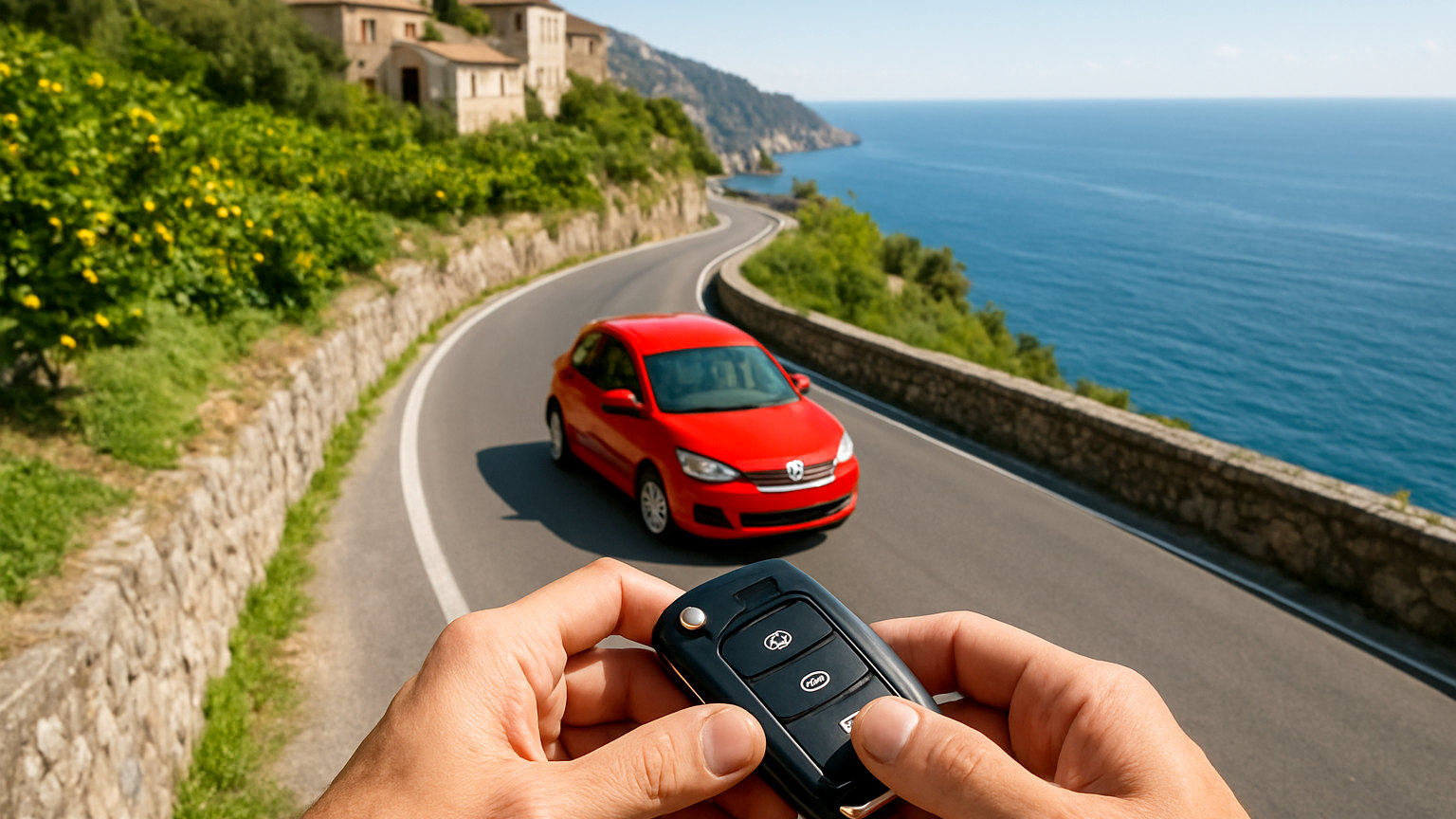
The headline daily rate is rarely what a hire car costs. The excess, the insurance, the fuel policy, the deposit and any drop-off fee together account for far more of the total, and each is decided before you collect the keys.
What is the excess?
The amount you are liable for if the car is damaged, typically a substantial sum, held against your card as a deposit at collection. Reducing it is where hire companies make their margin, and their counter product is usually the most expensive way to do it.
How do you cover the excess?
Either the hire company waiver, bought at the desk at a high daily rate, or a separate annual excess insurance policy bought independently, which costs a fraction. With the latter you pay any damage and reclaim it, so the deposit is still held.
Check that any policy covers the parts frequently excluded, including tyres, windscreen, undercarriage and keys.
What about the deposit?
Held on a credit card in the main driver name, frequently a large amount, and released after return. Many companies will not accept a debit card or will require additional insurance if you use one. Check the card requirements before booking.
What is the fuel policy?
Full to full is the fair arrangement and the one to look for. Full to empty means buying a tank at the company price with no refund for what you return, which is consistently poor value. Photograph the gauge at collection and return.
What about one-way hire?
The drop-off fee can be substantial, particularly across borders, and occasionally exceeds the rental itself. Price it before committing to a linear route, since a loop returning to the collection point frequently costs considerably less.
Can you cross borders?
Usually within western Europe and not always. Many companies restrict travel into certain countries or require notification and an extra fee, and taking a hire car outside permitted territories can void the insurance entirely. Ask specifically for the countries on your route.
What should you check at collection?
Photograph or video the entire car including wheels, windscreen and roof, with the date visible, before leaving. Check that existing damage is recorded on the form. This takes five minutes and resolves almost every dispute at return.
What about additional drivers?
Charged daily by most companies and worth adding for any long route, since sharing the driving matters. An unregistered driver is uninsured, which is a serious problem in the event of an accident.
What about automatic transmission?
Considerably less common in Europe than in Britain and more expensive, and it sells out. If you need one, book early and confirm it is guaranteed rather than a preference.
What about the car size?
Smaller than you would choose at home. European town streets, village lanes and mountain roads suit a compact car, and parking spaces are correspondingly tight. The boot space of a larger car rarely compensates for the difficulty of using it.
What about returning out of hours?
Possible at most airports and worth understanding, since you remain responsible for the car until it is inspected. Photographing it in the return bay with the fuel gauge visible is what protects you against damage claimed afterwards.
Should you book early?
Yes, particularly in summer and on islands, where fleets are limited and prices rise steeply as availability falls. Many bookings are cancellable without charge, so reserving early and rechecking later is the sensible approach.
What about mileage limits?
Worth checking, since some hire agreements cap the daily or total distance and charge per kilometre beyond it. On a long route this can add up quickly, and unlimited mileage is worth a modestly higher rate.
What Do You Need to Drive in Europe? is the natural next read, alongside the wider Inspiration section.
The short answer
Buy excess cover independently rather than at the desk, insist on full to full fuel, use a credit card in the main driver name for the deposit, and photograph the car before leaving. Price the one-way drop-off fee and confirm which countries you may drive into.