Southern European evenings follow a shape: a walk, a drink, a late dinner and possibly more. Visitors frequently miss it entirely by eating at seven and returning to the hotel at nine, which is the hour the evening actually begins.
What is the passeggiata?
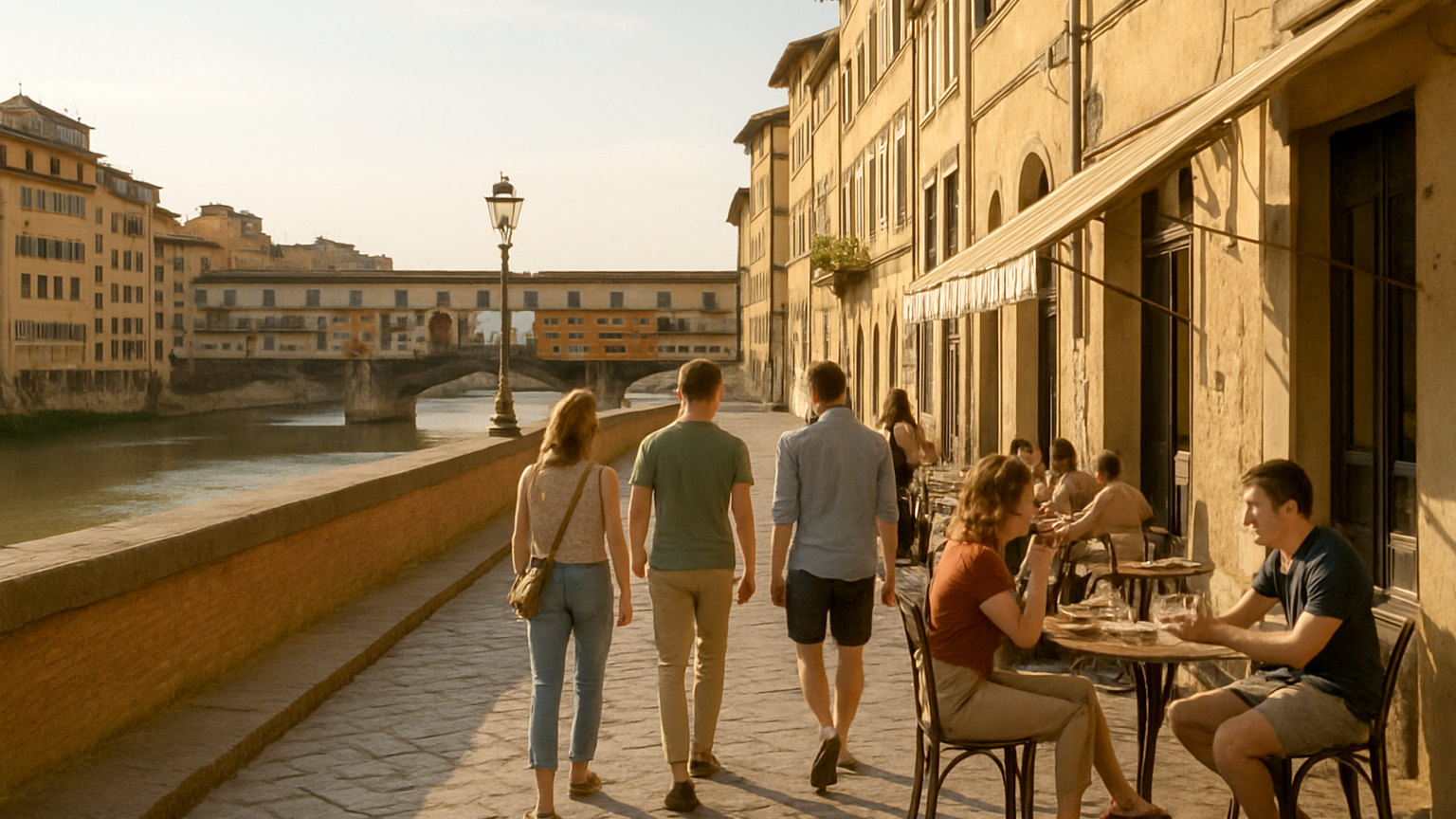
The evening walk, taken by the whole population of Italian, Spanish, Greek and Portuguese towns between roughly six and eight. People dress, walk the main street or the seafront, stop to talk and have an ice cream. It is the central social event of the day.
Joining it is free, requires nothing and is the simplest way to feel part of a place rather than observing it.
What is aperitivo?
The Italian bridge between afternoon and dinner, roughly six to eight, where a drink comes with snacks and in Milan and Turin with a substantial buffet. Spain has the equivalent in early tapas. Both solve the problem of a nine oclock dinner.
When do people eat?
Nine or later in Spain and Greece, eight in Italy and Portugal, earlier in northern Europe. Restaurants fill an hour after they open rather than at opening, and arriving at the local hour puts you among local diners.
What happens after dinner?
In the south, a great deal. Squares fill after ten with families and all ages, bars run late, and children are out at eleven, which surprises British visitors. Nightlife proper starts around midnight in Spain.
Where should you go?
Wherever people are walking, which is usually the main street, the seafront or the central square. Following the crowd in the early evening is a reliable method of finding the part of a town that is alive.
What about the shoulder hours?
The best time of day in summer. Between six and nine the heat drops, the light is good, the sights are emptying and everything is open. Planning to be outside in those hours rather than resting is what makes a hot-country evening work.
What is worth doing that is free?
Walking, sitting in a square, a viewpoint at sunset, a harbour, a church concert, a village festival. European evenings are substantially free, and the cost is a drink rather than an entry fee.
How do you find where locals go?
Walk away from the centre. Residential districts a few streets back have the bars and restaurants that people use on ordinary evenings, and they are cheaper, calmer and more interesting than the main square.
Does it differ in the north?
Considerably. Northern European evenings start and end earlier, with dinner at seven and bars closing sooner. In summer the long daylight compensates, and outdoor drinking and swimming continue late because it stays light.
What should you avoid?
Eating on the main square at seven, which combines the worst hour with the worst location. Moving the same evening two hours later and two streets back changes it completely.
What about the light?
Longer than Britain in the south and shorter in summer than people expect. Mediterranean sunset in June is around nine and in December around five, which reshapes the day entirely. Northern Europe reverses it, with midsummer light until nearly midnight.
Is it safe to walk at night?
European city centres are generally busy and well used into the early hours, which is itself the main safety factor. The usual sensible practice applies: stay where there are people, keep valuables out of sight and be more careful around transport hubs late at night.
How do you handle a first evening?
Walk rather than plan. An hour on foot at the local walking time orients you, shows you which streets are alive and frequently produces the restaurant for the following night. It is a better use of an arrival evening than committing to a booking.
Which Outdoor Activities Suit a European Holiday? goes into more detail on a closely related question, and the rest of our Inspiration section covers the wider subject.
The short answer
Join the evening walk between six and eight, take an aperitivo or early tapas, then eat at the local hour. Walk away from the centre to find where people actually go, and treat the hours between six and nine as the best part of a summer day rather than a gap.