
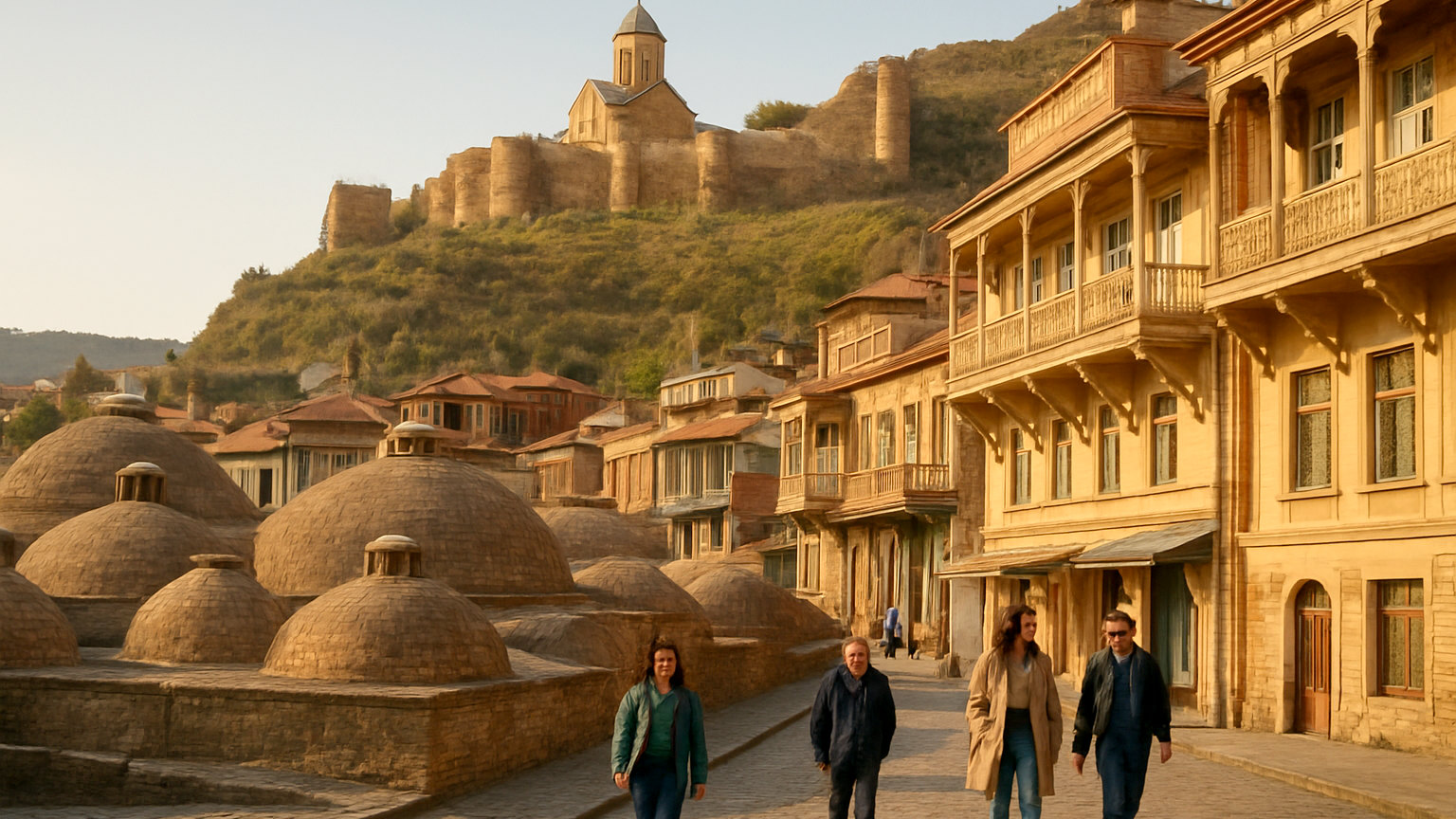
Tbilisi is the capital of Georgia, built along a gorge on the Kura river beneath a fortress, and it has become one of the more talked-about destinations in the region. The combination of sulphur baths, an ancient wine culture and very low prices explains most of the interest.
What are the sulphur baths?
Abanotubani, the bath district, where domed brick bathhouses sit over natural hot sulphur springs. You hire a private room by the hour rather than sharing a pool, and a scrub and massage can be added. It is the defining Tbilisi experience.
The smell of sulphur is strong and the water is genuinely hot, which surprises first-time visitors.
What should you see in the old town?
The wooden balconied houses of the Sololaki and Abanotubani districts, several in advanced decay and gradually being restored. The Narikala fortress above, reached by cable car for a nominal fare with views over the whole gorge.
What about the wine?
Georgia has one of the oldest continuous winemaking traditions in the world, using qvevri, large clay vessels buried in the ground. The method is recognised as intangible cultural heritage and produces amber wines unlike anything in western Europe.
Tastings in the city are inexpensive, and the Kakheti wine region is a day trip east.
What should you eat?
Khinkali, large soup dumplings eaten by hand. Khachapuri, cheese bread with regional variations including the boat-shaped Adjarian version with an egg. Walnut-heavy salads and grilled meats. Prices are very low by European standards.
What is the architecture like?
Unusually varied. Persian and Ottoman influence in the old town, Russian imperial boulevards, Soviet modernism and a wave of contemporary glass buildings, all within a small area. The Chronicle of Georgia monument on the city edge is a striking Soviet-era work.
What is Mtatsminda?
The hill above the city, reached by funicular, with a park, a viewpoint and a pantheon of Georgian writers. It is the standard evening outing and inexpensive.
What are the day trips?
Mtskheta, the old capital with two world heritage churches, half an hour away. The Kakheti wine region. Kazbegi in the high Caucasus, three hours north, with the Gergeti church beneath a five thousand metre peak.
How expensive is it?
Among the cheapest capitals in Europe across food, transport and accommodation, which is a substantial part of its appeal.
Is it safe?
Generally safe for visitors with ordinary precautions. Regional political situations affect specific areas rather than the capital, and current government travel advice should be checked before travelling.
When should you go?
May, June, September and October. Summer is very hot in the gorge and winter is cold, with the mountains best from June to September.
How long do you need?
Three or four nights for the city and one day trip, or a week to include Kakheti and the mountains.
How do you get there?
Direct flights from several European cities, with the airport around twenty minutes from the centre. Georgia is outside the Schengen area and entry requirements should be checked before travelling.
Is it walkable?
The old town entirely, though it is steep and the cobbles are uneven. The metro is cheap and simple, and taxis and ride-hailing apps cost very little for longer distances.
What about the nightlife?
Substantial and late, with a well-known techno club scene alongside wine bars and traditional restaurants with live music. The Fabrika complex, a converted Soviet sewing factory, is the usual starting point for anyone looking.
How safe is it at night?
Generally safe in the central districts, with ordinary precautions.
What is the currency?
The Georgian lari. Cards are accepted in the centre and cash is useful in markets, bakeries and smaller restaurants, and exchange rates in the city are better than at the airport.
For the next step, see What Is There to See in Ankara?, or browse the full Inspiration section.
The short answer
Book a private room at the Abanotubani sulphur baths, walk the balconied old town, take the cable car to Narikala, eat khinkali and khachapuri, and drink qvevri wine. Add Mtskheta or Kakheti as a day trip, and go in late spring or autumn.


