
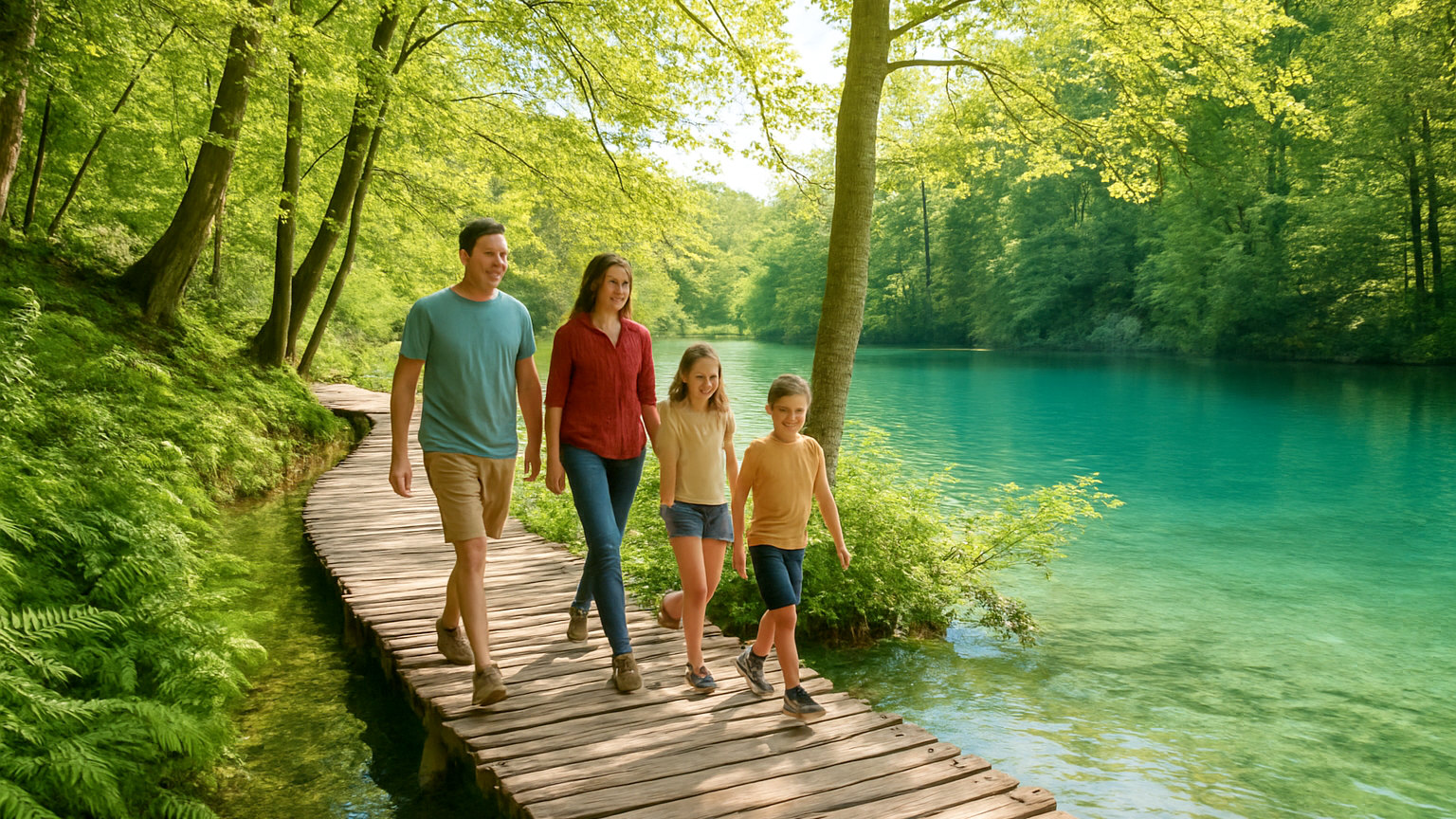
Sightseeing with children works when the day has something in it for them, and fails when it is a sequence of things adults want to see. The successful activities are frequently the cheapest and rarely the ones marketed at families.
What is the basic principle?
One thing a day for them, one for you, and an afternoon break. A morning of sightseeing followed by a pool, a park or a beach is sustainable for a week; two museums a day is not, for anyone.
Which attractions actually work?
Anything involving height, water, animals or machinery. Castles with walls to walk, towers to climb, boats, funiculars, cable cars, aquariums and anywhere with a lift to a view. Standing structures beat foundations requiring imagination.
What about museums?
Selectively and briefly. Science, transport, natural history and maritime museums work well; painting galleries rarely do beyond an hour. Many European museums run family trails and activity sheets, which are frequently free and genuinely effective.
What is underrated?
Playgrounds, which every European city has and which cost nothing. An hour in a park does more for the rest of the day than any attraction, and European city playgrounds are frequently excellent. Markets also work well.
What about transport as an activity?
Genuinely effective. Trams, funiculars, ferries, cable cars and metro rides are all novel to a child and are transport you needed anyway. The Lisbon trams, the Budapest funicular and any harbour ferry do double duty.
How do you handle a long sightseeing day?
Shorter than you want, with food built in and an early stop. Snacks prevent most difficulties. Letting a child choose one thing each day, however trivial, changes the dynamic from being dragged around to participating.
Do theme parks matter?
Europe has several large ones, and they are expensive days that consume a whole day of a short trip. Worth including on a longer holiday and rarely worth building a week around unless the children specifically asked.
What about older children?
Different requirements entirely. Teenagers want independence, wifi, somewhere to spend money and something active. Watersports, cycling, climbing and giving them an hour alone in a safe area all work better than guided anything.
Are European cities child-friendly?
Very, particularly in the south, where children are welcome in restaurants at any hour and nobody objects to noise. Spain, Italy, Portugal and Greece are the easiest countries in Europe to travel with young children.
What should you build the day around?
Water, if it is hot. A pool, a beach, a lake or a fountain to run through solves the afternoon, and the sightseeing fits around it rather than the reverse.
What about the heat?
The main practical constraint in summer, since children overheat faster and tire sooner. Sightseeing before eleven and after five, with the middle of the day indoors or in water, is what local families do and is the only sustainable pattern in a Mediterranean August.
How long should the trip be?
Longer in one place rather than moving frequently. Children settle into a base and find the same park and the same cafe reassuring, and every change of accommodation costs a day of adjustment as well as travel.
Is anything reliably free?
Playgrounds, parks, beaches, markets, harbours and most churches, which together can fill several days. In every European city the free options for children are more numerous and frequently more successful than the paid ones.
What about eating out?
Easier in Europe than at home, since southern European restaurants welcome children at any hour and have no separate children culture. Eating the main meal at lunch suits everyone, and an early dinner works in a tapas bar or a pizzeria.
Anyone weighing this up will also want Which Activities Are Worth Learning on Holiday?, along with the rest of the Inspiration section.
The short answer
One thing a day for them, one for you, with an afternoon break. Height, water, animals and machinery work; painting galleries do not. Use playgrounds, trams and ferries as free activities, build the day around water in hot weather, and let each child choose one thing.


