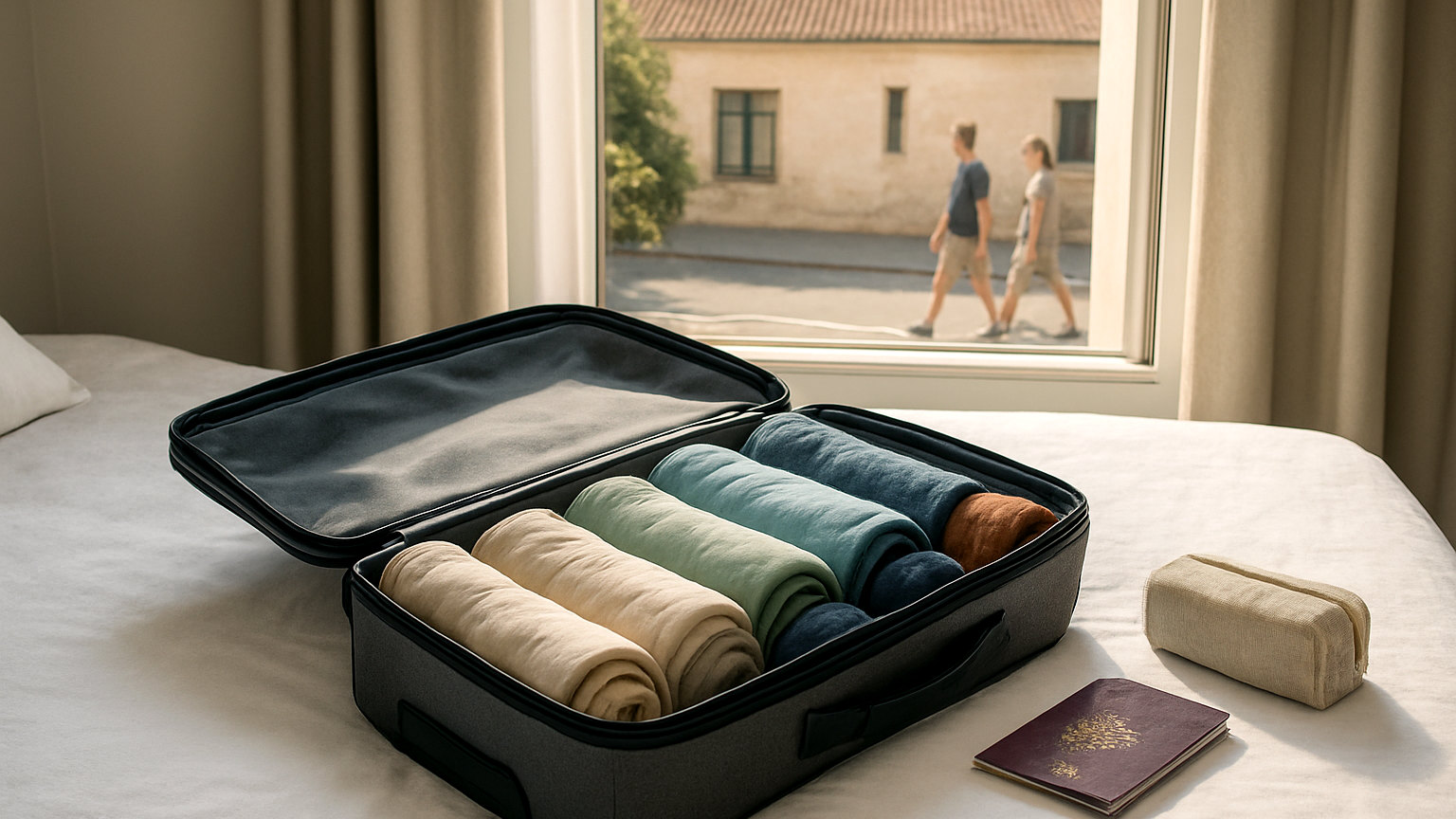
For a two or three night trip a cabin bag is sufficient, and the benefits go beyond the fee. No bag drop, no waiting at the carousel and no risk of a lost bag together save around an hour at each end of a short trip, which is a significant proportion of it.
What do the rules allow?
They vary substantially between airlines and change regularly. Most permit a small personal item free and charge for a larger cabin bag, with strict size and sometimes weight limits. Check the specific airline for your flight rather than assuming.
Gate checks are enforced and the charge for an oversized bag at the gate is considerably higher than booking it in advance.
What about liquids?
The long-standing rule limits containers to one hundred millilitres in a single transparent bag. Some airports have introduced scanners permitting larger volumes, and the position varies by airport and has changed more than once.
Pack to the stricter rule unless you have confirmed otherwise for both departure and return airports.
What should you pack for a weekend?
What you travel in, one change of clothes, one smarter option if you intend to eat somewhere good, underwear and socks, a thin layer and a light waterproof. That is genuinely enough for three days.
What takes the most space?
Shoes, which is why wearing the bulkiest pair and taking at most one other matters more than any other packing decision. Coats are the same: wear the heaviest item rather than carrying it.
What can you buy there?
Almost anything. Toiletries, an umbrella, a charger and any forgotten item are available in any European city, frequently more cheaply than at home. Packing for eventualities is what fills a bag unnecessarily.
What about medication?
Always in hand luggage rather than the hold, with a copy of the prescription for anything significant. Liquid medication is generally permitted above the limit with documentation, and declaring it at security is straightforward.
Does it work in winter?
Harder, since coats and boots take space. Wearing the bulk and choosing thin layers rather than thick ones makes it manageable, and a merino base layer replaces two heavier items.
What about bringing things home?
The main constraint. Wine, olive oil and anything liquid cannot go in a cabin bag, which for a food-led trip is a genuine reason to check a bag. Vacuum-packed cheese and cured meat travel fine within import rules.
Is a backpack or a case better?
A backpack for cobbled streets, stairs and stations; a case for smooth surfaces and heavier loads. On a weekend with one bag, a soft backpack that compresses to fit the sizer is the more forgiving choice.
What about liquids you buy at the airport?
Permitted through security in a sealed tamper-evident bag with the receipt, and the rules on carrying these through a connecting airport vary. On a direct flight it is straightforward; on a connection it is worth checking before buying anything expensive.
Does the return flight have different rules?
The airline rules are the same both ways; the airport rules may not be. Security arrangements and liquid scanners differ by airport, so an item that passed on the outbound is not guaranteed to pass on the return.
What if you need a hold bag anyway?
Book it at the time of booking the flight, since adding it later or at the airport costs substantially more. For two people travelling together, one shared checked bag is frequently cheaper than two cabin bags on some airlines.
What about the return journey home?
Worth a thought when buying anything bulky. A bag that fitted the sizer on the outbound will not fit with three days of shopping in it, and gate charges are steep. Leaving a little space is easier than posting things home.
Anyone weighing this up will also want Which Second Cities Make Better Weekends Than Capitals?, along with the rest of the Inspiration section.
The short answer
A cabin bag is enough for three nights: one change of clothes, one smarter option, a thin layer and a waterproof. Wear the bulkiest shoes and coat, check the specific airline size limits since they differ, and pack liquids to the stricter rule.