Autumn colour in Europe is a moving target. It begins at altitude and in the north in late September and works downhill and south into November, which means the same valley can be green, spectacular or bare depending on which fortnight you arrive.
Where is the colour best?
The Dolomites, where larch forests turn a deep gold against pale limestone in the second half of October. The combination of colour and rock is unlike anywhere else in Europe and it is the single most photographed autumn landscape on the continent.
The Slovenian and Austrian Alps, the Bavarian forests, the Carpathians and the Tatras all deliver the same on a larger, quieter scale.
What about further south?
The Apennines in Italy, particularly the beech forests of Abruzzo and Umbria, which turn in late October and early November. The Sierra de Grazalema and the chestnut forests of the Genal valley in Andalusia, which are at their best in November and are one of the latest displays in Europe.
Where in northern Europe?
Finnish Lapland in late September, where the phenomenon has its own name, ruska, and the tundra turns red and orange over a short and spectacular window. The Swedish and Norwegian forests follow. Scotland in October, particularly Perthshire and the Trossachs.
What about the vineyards?
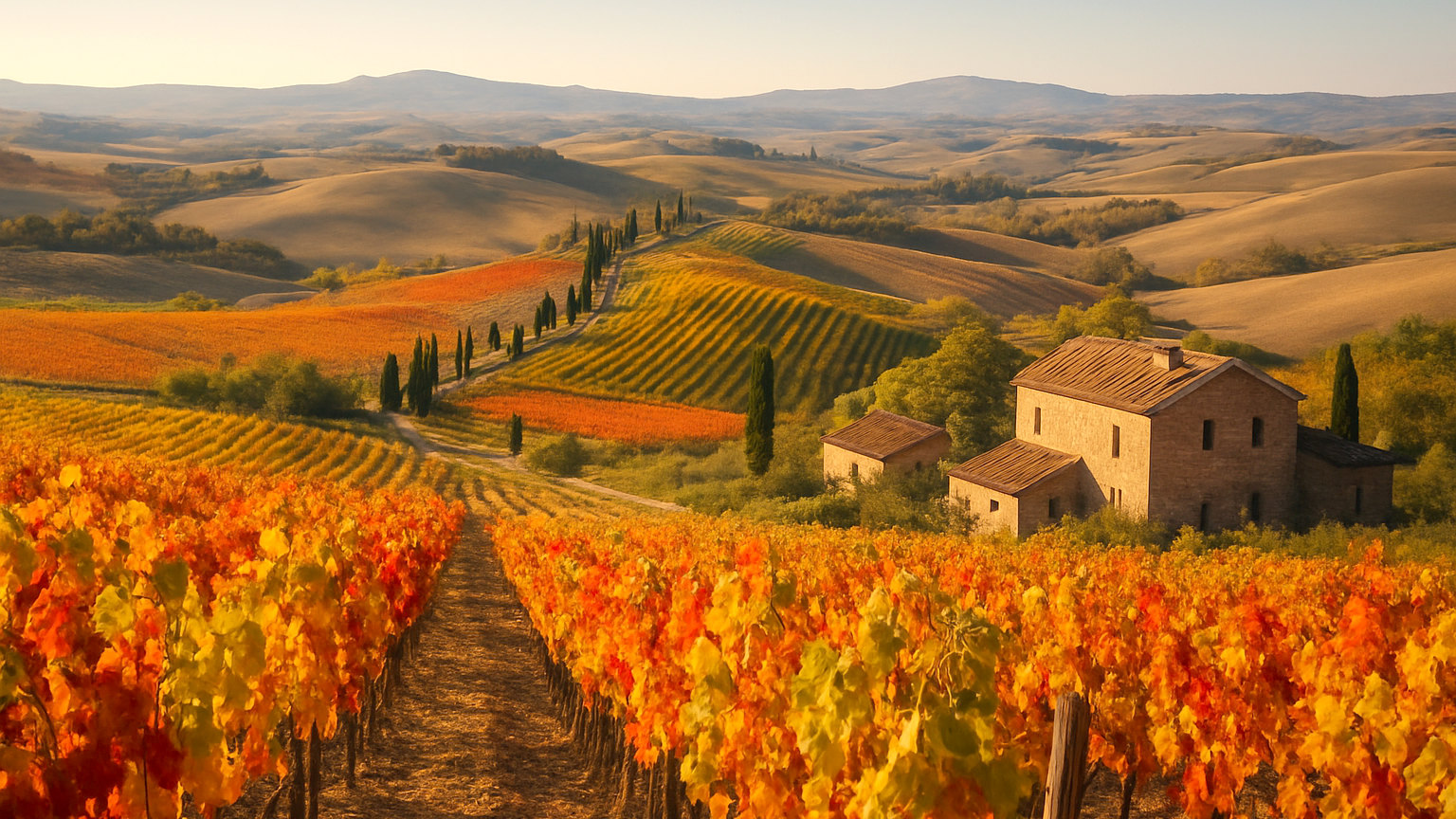
An underrated version of the same thing. Vines turn gold and red after the harvest, which means late October and November in the Douro, Alsace, Burgundy, Piedmont and Tuscany. The terraced Douro in particular is remarkable, and it comes after the harvest crowds have gone.
When does it peak?
Roughly: Lapland in late September, the Alps and Dolomites in the second half of October, central European forests in late October, Italian and Spanish lowlands in early to mid November. Altitude advances it and southern latitude delays it.
How does altitude change the timing?
Considerably. Colour arrives roughly a week earlier for every three hundred metres of altitude, so a valley at eight hundred metres and a slope at fifteen hundred can be a fortnight apart. In a mountain region this means there is usually good colour somewhere, just at a different height.
Which trees give the best colour?
Larch, which is the only deciduous conifer in the Alps and turns pure gold. Beech, which produces copper and bronze across central Europe. Chestnut and oak further south. Maple and birch in the north. Mediterranean evergreen forest gives very little, which is why the colour is a northern and upland phenomenon.
Is it predictable?
Roughly, and the peak shifts by a week or more depending on the year. A warm autumn delays it and an early frost advances and intensifies it. Several alpine regions publish colour reports through October, and webcams are useful for checking a week ahead.
What about the light?
Part of the appeal. Autumn light is low and warm through the day rather than only at the edges, which is why the colour photographs so well. Days are short, so an early start matters more than in summer.
How do you plan a trip around it?
Pick a region with a wide altitude range rather than a single location, so that if the valley is late you can drive up and if the high ground is past its best you can drive down. The Dolomites, the Tatras and the Scottish Highlands all allow this within an hour.
What else is worth doing then?
Walking, which is at its best in the same weeks: cool air, clear light and no summer crowds. The colour is a reason to be somewhere rather than an activity in itself, and combining it with a walking or driving route makes far more of the trip.
What Is the Harvest Season Like in Europe? goes into more detail on a closely related question, and the rest of our Seasons section covers the wider subject.
The short answer
The Dolomites in the second half of October for larch against limestone, Lapland in late September, and the Douro or Alsace vineyards in November. Colour arrives a week earlier for every three hundred metres of altitude, so check the height as well as the date.