Most European cities are better in the shoulder months. Budapest is one of the few with a serious case for winter, because its defining attraction works better in the cold and because the city has a strong indoor culture built for it.
Why is winter good?
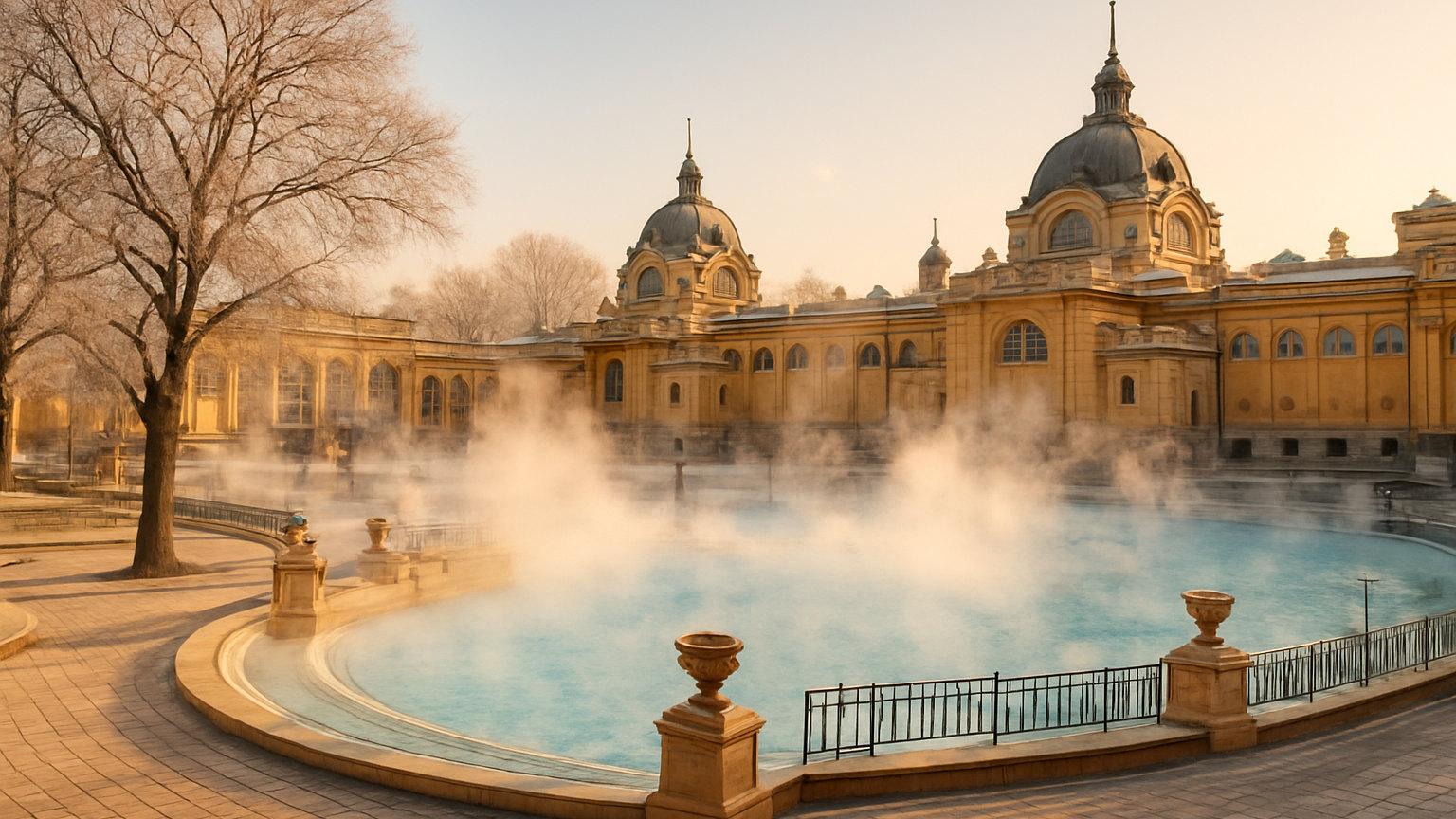
The thermal baths. Sitting in an outdoor pool at thirty-eight degrees with snow falling and steam rising is the experience Budapest is known for, and it is considerably better in January than in July. Szechenyi in particular is at its best in the cold.
What else does winter offer?
Christmas markets from late November, a strong cafe and ruin bar culture that suits bad weather, low accommodation prices and far fewer visitors. The city is also handsome under low winter light along the Danube.
How cold does it get?
Properly cold, with temperatures around or below freezing through January and February and occasional snow. It is a continental climate rather than a mild Atlantic one, so proper clothing matters.
What is summer like?
Hot, frequently above thirty degrees, with the city holding heat. The Danube embankments, the island park on Margaret Island and outdoor dining all come into their own, and the baths become somewhere to cool off rather than warm up.
What is on in summer?
Sziget festival in August, one of the largest in Europe, which fills the city for a week. Outdoor concerts, open-air cinema and the ruin bar gardens. Summer evenings in Budapest are excellent.
What about spring and autumn?
The safest choice if you want neither extreme. April, May, September and early October give comfortable temperatures, long daylight and moderate crowds, and everything is open.
When is it cheapest?
January and February after the New Year, when rates are at their lowest across the city. Budapest is inexpensive year round by western European standards and these months are the cheapest of all.
When is it busiest?
July and August, plus the Christmas market weeks and New Year. The baths in particular queue in summer, and booking online in advance saves a considerable wait.
Which baths suit which season?
Szechenyi for winter, with its large outdoor pools. Gellert and Rudas for the indoor historic interiors in any season. Rudas has a rooftop pool over the Danube that works year round.
Does the daylight matter?
December daylight is short, with dark by four, which limits sightseeing and suits an evening in a bath or a cafe. June gives light until well past nine.
So which is better?
Winter, for a first visit built around the baths, the markets and low prices. Summer, if you want river life, festivals and long evenings. Spring and autumn if you want to walk the city comfortably.
What should you know about the baths?
Tickets are cheaper booked online and the queues in summer are long. Most require a towel, flip-flops and a swimming cap in some pools, all of which can be hired at additional cost, and taking your own is simpler.
How long do you need?
Three nights, allowing a full afternoon at the baths, a day for the castle hill and Pest, and an evening for the ruin bars. Budapest rewards a slower pace than most city breaks.
When are the markets on?
From mid November until around New Year, with the main ones in Vorosmarty Square and outside St Stephen Basilica. They are among the better markets in central Europe and bring the one winter period when the city is genuinely busy.
What about the Danube?
The river is the city defining feature and the embankments and bridges are best in summer evenings and under winter lights. River cruises run year round and are cheapest and quietest outside the summer months.
If you are planning further, Is Prague Worth Visiting in Winter? covers the next part of the decision, and there is more in our Seasons guides.
The short answer
Winter, narrowly, because the outdoor thermal baths are genuinely better in the cold and prices are at their lowest. Summer brings river life, festivals and heat above thirty degrees, and spring and autumn are the easiest months for walking the city.