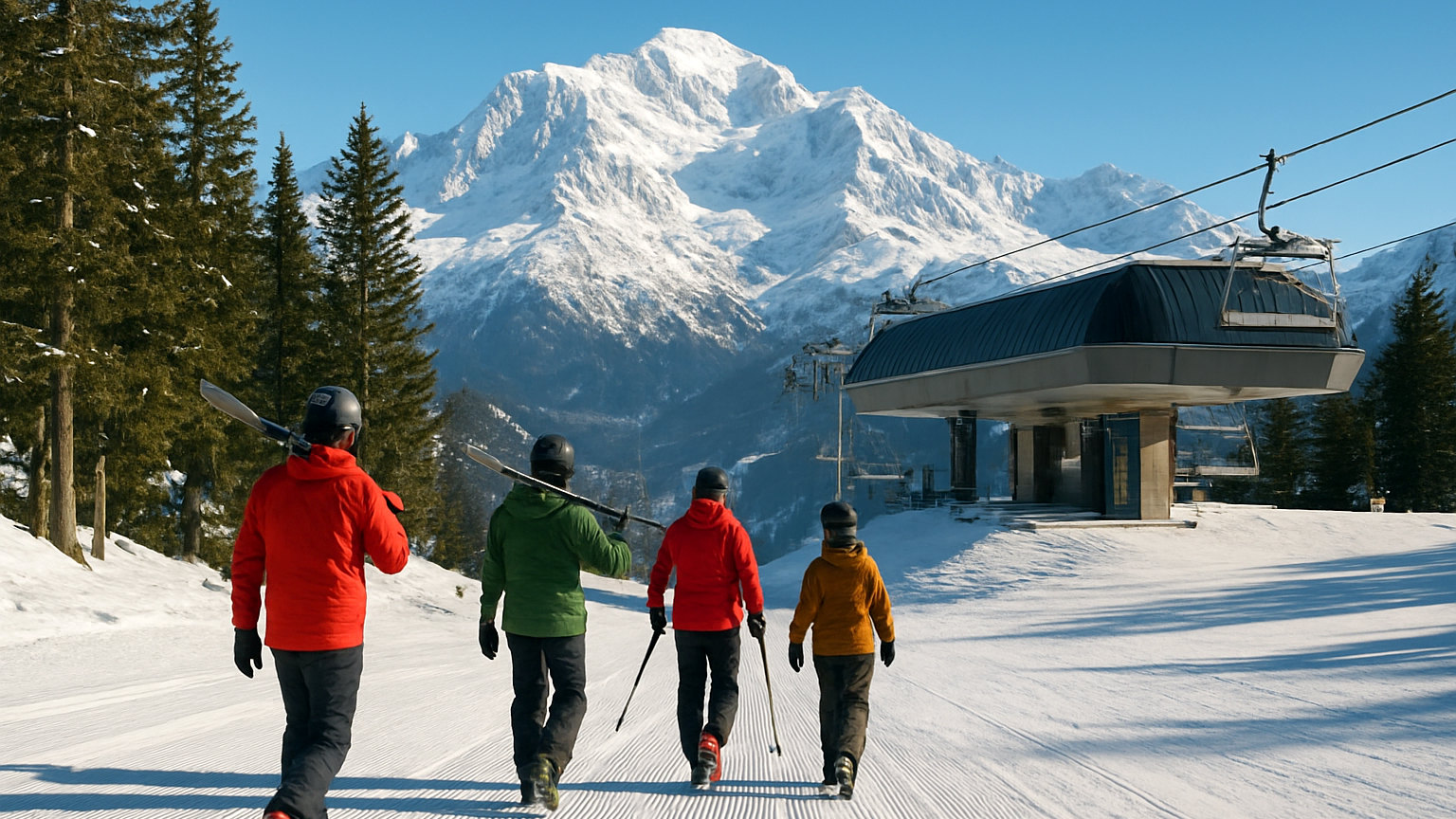
The European ski season runs from December to April, and the weeks within it differ enormously in both snow quality and price. The two do not line up, which is the whole of the planning problem: the most reliable snow falls in the most expensive weeks.
Which month has the best snow?
February, generally, with the deepest base of the season and cold temperatures that preserve it. Late January is close behind. Both give consistently good conditions across the Alps, the Dolomites and the Pyrenees at most altitudes.
When is it cheapest?
The middle two weeks of January, after the New Year crowds leave and before the February half term. Accommodation and lift passes fall sharply, the slopes are quiet, and the snow is usually good. This is the single best combination of conditions and price in the season.
Early December and the second half of March are cheaper still, with less reliable snow.
What happens at half term?
Prices roughly double for one week in mid-February, when British, French and Dutch school holidays overlap. Alpine accommodation is at its most constrained and the pistes are at their busiest. Travelling the week before or after gives near-identical conditions for a fraction of the cost.
What about Christmas and New Year?
The most expensive fortnight of the season and the least reliable for snow. Early-season conditions vary enormously, and a green Christmas in the lower resorts is not unusual. Anyone booking that period should choose high altitude or a glacier resort.
Is spring skiing worth it?
Yes, and it is underrated. March and early April bring long days, warm sun, terraces and cheap accommodation. Snow at altitude often remains good, while lower slopes soften into slush by afternoon. The usual approach is skiing hard in the morning and sitting outside after lunch.
Easter varies by up to a month and is the one spring price spike.
How does altitude change the answer?
Considerably. Resorts with skiing above about two thousand metres hold snow reliably from December to April. Lower resorts depend on a good season and are genuinely risky in December and late March. Altitude matters more than latitude across the Alps.
What about the days?
Short in December and January, with lifts closing around four and useful light going soon after. By March the days are noticeably longer and the lifts run later, which adds real skiing time to a week.
Which week should most people choose?
The second or third week of January for value with good snow, or mid-March for sunshine and cheap accommodation accepting softer afternoon conditions. Those two weeks cover most needs without paying peak prices.
Does it vary by country?
The school holiday calendars differ, which shifts the busy weeks. French and Swiss holidays are staggered across several weeks in February, spreading demand. Italian and Austrian resorts fill at slightly different times. Checking the specific country calendar helps if you are flexible.
What about snow conditions through the day?
They change more in spring than in midwinter. In March and April the snow firms overnight and softens through the morning, which makes nine to one the best skiing and the afternoon heavy going on lower slopes. In January the conditions stay broadly consistent all day.
How far ahead should you book?
For half term, Christmas and New Year, many months, since capacity is genuinely constrained rather than merely expensive. For mid-January and March, a couple of months is usually enough and late availability does appear.
Does the resort calendar match the school one?
Not exactly, which creates useful gaps. Continental half terms are staggered across several weeks in February in France and Switzerland, so one week can be busy in one country and quiet in another. Checking which national holidays fall in your week is worth five minutes if you have any flexibility.
If you are planning further, Which Country Should You Choose for Skiing? covers the next part of the decision, and there is more in our Seasons guides.
The short answer
February has the best snow and the worst prices. Mid-January is the best combination of the two, and March offers sun and low prices with softer afternoon snow. Avoid half term and the Christmas fortnight, and choose altitude if you must ski at the edges of the season.