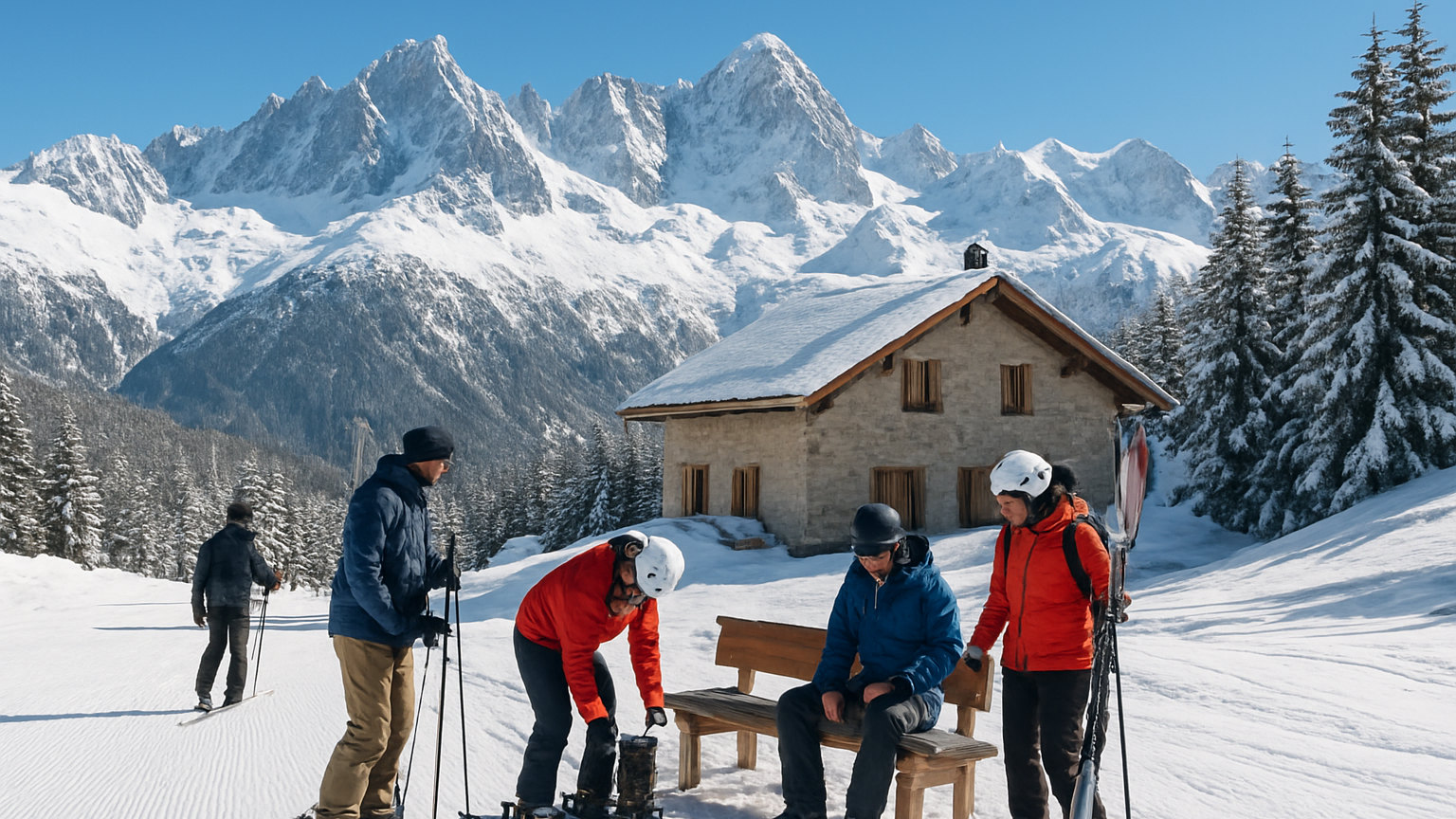
Equipment divides cleanly. Skis and poles are worth hiring for almost everyone. Boots are worth owning from about your second season. Helmets and clothing sit in between, and the answer depends on how often you go.
Why hire skis?
Because hired skis are serviced, waxed and edged between users, matched to conditions and your current ability, and require no transport. Owned skis need maintenance, cost money to fly with, and lock you into one type of ski regardless of the snow that week.
Unless you ski several weeks a year, hiring is both cheaper and better.
Why buy boots?
Because boots are the one item where fit determines everything. Hire boots are worn, compressed by previous users and fitted in ten minutes in a busy shop. Your own boots, fitted properly by a bootfitter, transform comfort and control more than any other equipment change.
They are also the cheapest part of a kit to own and the easiest to carry.
How much does hire cost?
It varies by country and by equipment grade, and it is consistently cheaper booked online in advance than at the resort desk. Beginners genuinely do not need the premium grades, which are stiffer and less forgiving. Booking ahead also guarantees availability in busy weeks.
What about helmets?
Worth owning, since they are inexpensive, easy to pack and hygiene is better. Helmets are effectively standard in European resorts now and compulsory for children in several countries, including parts of Italy and Austria. Check the rule for your destination.
A helmet that has taken a significant impact should be replaced.
Should you buy clothing?
Yes, if you intend to go more than once, since hire options are limited and poor. A decent waterproof jacket and salopettes last many seasons. Layers underneath matter more than the outer shell, and cotton is the one material to avoid entirely.
Gloves, goggles and thermal layers are all worth owning and cheap.
What about flying with equipment?
Airlines charge for ski carriage and the fees add up, frequently exceeding the cost of hiring for a week. Equipment also gets damaged in transit. For a single annual trip, hiring skis and carrying only boots is usually the sensible balance.
Is second-hand worth considering?
For clothing and helmets, yes, with the caveat about helmet impacts. For boots, only if properly fitted, since a used boot has moulded to someone else. For skis, end-of-season ex-hire stock is sold off cheaply and is a reasonable way to buy a first pair.
When does buying skis make sense?
From around three weeks of skiing a year, or if you have a strong preference for a particular type of ski. Below that the maintenance, transport and storage outweigh the saving.
What about goggles and sunglasses?
Both, ideally. Goggles for snow, wind and flat light, sunglasses for sunny spring days and lunch on a terrace. Lens tint matters: a low-light or yellow lens transforms visibility in cloud, which is when most beginners struggle. Ultraviolet exposure at altitude is high and eye protection is not optional.
Do you need back protection?
Common among snowboarders and freestyle skiers and rare among recreational piste skiers. It is inexpensive and worth considering if you expect to fall a great deal, and it is not standard equipment for a normal week on marked runs.
What about hiring for children?
Always hire, since children grow out of equipment within a season or two. Many hire shops offer a free swap if boots prove uncomfortable, which is worth asking about at the counter. Helmets are commonly included in children packages and are compulsory for under-fourteens in several regions, including parts of Italy and Austria, so check the local rule rather than assuming it is optional.
See also Which Ski Resorts Suit Families?, which covers a related part of the same decision, and our other Seasons guides.
The short answer
Hire skis and poles, book them online in advance rather than at the desk, and buy your own boots from your second season. Own a helmet and clothing, avoid cotton layers, and only buy skis if you ski three weeks a year or more.