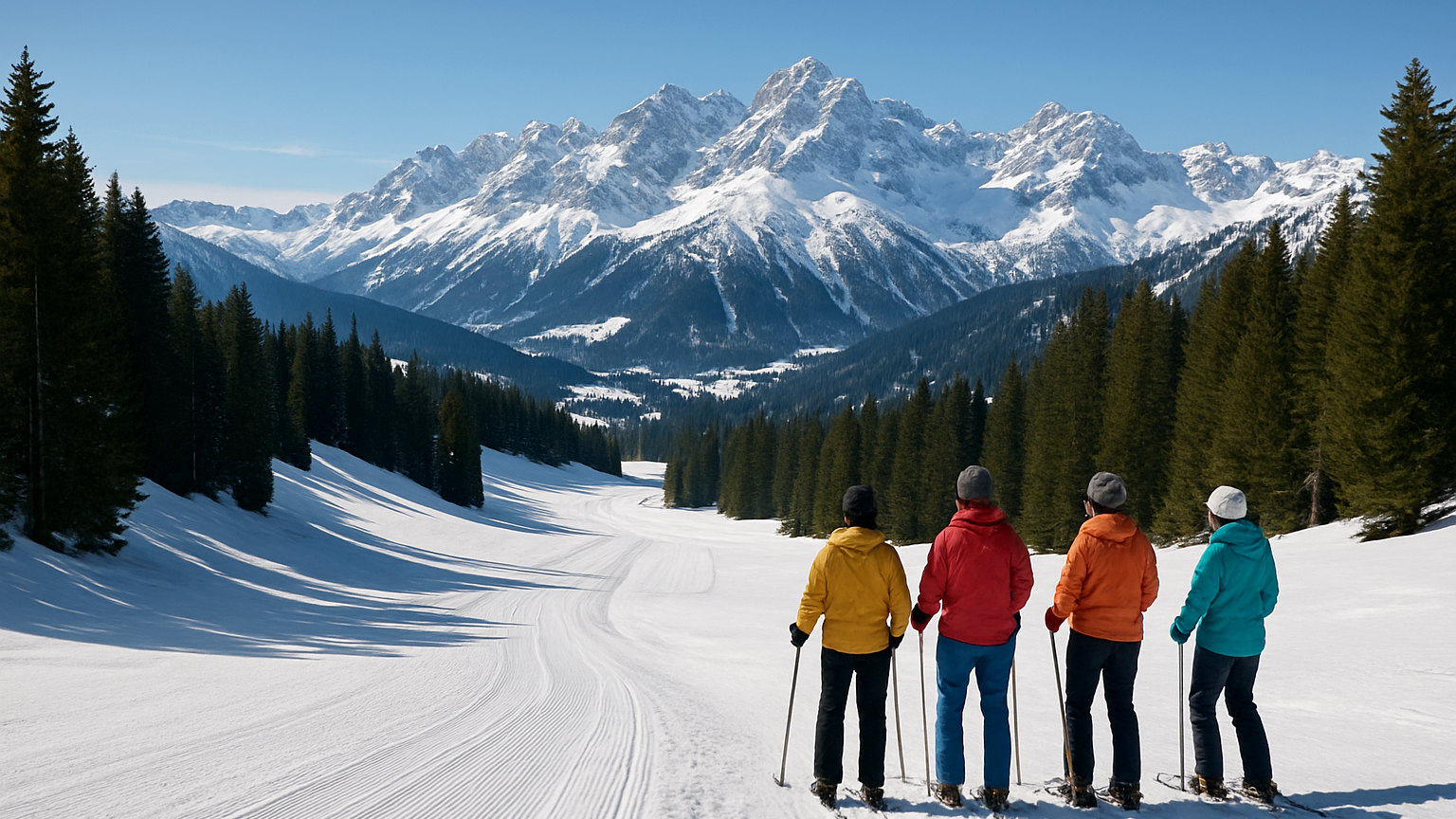
Off-piste describes any terrain outside the marked, patrolled runs. The important distinction is not steepness or difficulty but responsibility: marked pistes are assessed, secured against avalanches and patrolled at the end of the day. Off-piste terrain is none of those things.
What does a marked piste guarantee?
That the resort has assessed the avalanche risk and taken measures to control it, that the run is swept at the end of the day, and that a patrol will reach you. Injured skiers on marked runs are found. That guarantee ends at the piste boundary and does not depend on how far outside it you are.
How dangerous is it?
Avalanches kill people in the Alps every winter, and the majority of victims are recreational skiers and snowboarders who triggered the slide themselves. Burial survival falls sharply after about fifteen minutes, which is why companions with training and equipment matter more than any rescue service.
The risk is real, well documented and entirely different in kind from the risk of falling on a piste.
What equipment is standard?
A transceiver, a probe and a shovel, carried by every member of the group, with the training to use them quickly. Carrying the equipment without practised competence offers very little, since companion rescue is a time-critical skill rather than a matter of ownership.
What training is needed?
Avalanche awareness courses are run widely in alpine resorts and by national mountaineering bodies, typically over one to three days, covering snowpack assessment, route choice and rescue practice. This is the entry point rather than an optional extra.
Should you take a guide?
For anyone without that training, yes, and it is the sensible answer for most recreational skiers. A qualified mountain guide reads the snowpack, chooses the route and carries the responsibility, which is what you are paying for. Many insurance policies also require a guide for off-piste cover to apply.
Where do you check the risk?
National and regional avalanche bulletins, published daily through the season by the meteorological or snow research services in each alpine country. They use a standard five-point European danger scale. Resorts display the current level at lift stations, and it should be checked every morning rather than at the start of the week.
What about ski touring?
The same considerations with more exposure, since touring takes you further from assistance. It has grown rapidly and the safety requirements are identical: training, equipment, bulletins and, until experienced, a guide.
What does insurance say?
Off-piste is the commonest exclusion in winter sports policies, and wording varies. Some cover it within resort boundaries, some require a guide, some exclude it entirely. Anyone intending to leave marked runs should confirm the position in writing before travelling.
What is the danger scale?
A five-point European scale from low to very high, used consistently across the alpine countries. Most avalanche fatalities occur at levels two and three, which are the middle of the scale, because those are the days people choose to go out. A moderate rating is not a safe rating.
What about airbag packs?
Widely used and a supplement to training rather than a replacement for it. They improve the chances of remaining on the surface and do nothing to prevent trauma or to help if you are caught in terrain with obstacles. Nobody experienced treats one as licence to ski a slope they would otherwise avoid.
What about tree skiing and closed pistes?
Skiing a closed piste is a distinct category of bad idea, since closures usually indicate avalanche control work, machinery or unstable conditions, and it voids most insurance. Tree runs are still off-piste, and the trees themselves are a significant trauma hazard as well as an obstacle to rescue.
What Do the Piste Colours Actually Mean? goes into more detail on a closely related question, and the rest of our Seasons section covers the wider subject.
The short answer
Off-piste means unpatrolled and unsecured, and avalanche risk is the reason that matters. Take an avalanche course, carry and practise with a transceiver, probe and shovel, check the daily bulletin, and ski with a qualified guide until properly experienced.
This is general information rather than mountain safety instruction. Anyone considering off-piste skiing should seek qualified training and local guiding.