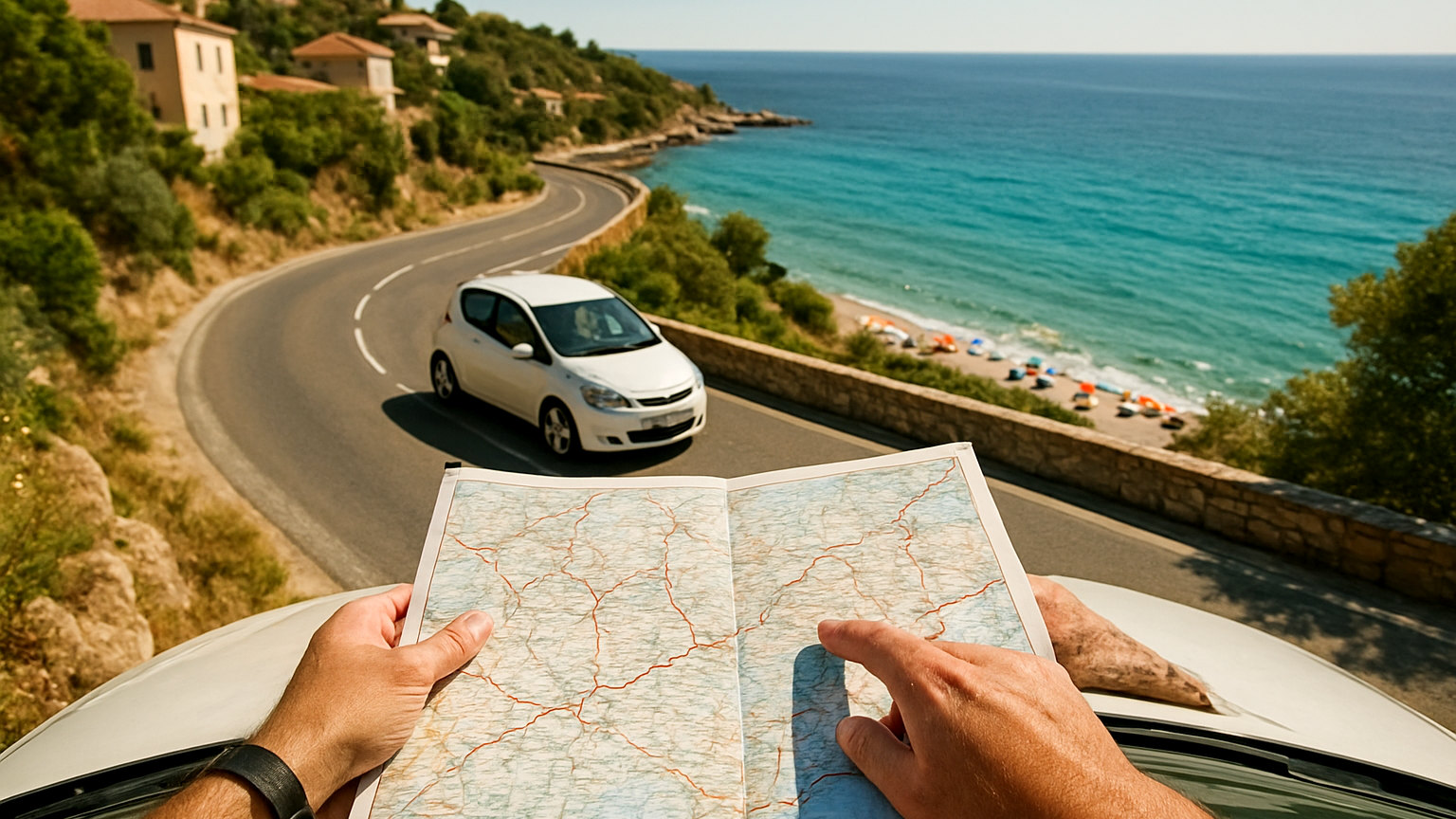
A European road trip in summer is a straightforward proposition that goes wrong in a handful of predictable ways: too many miles, unexpected tolls, city centre restrictions and the discovery that accommodation in a popular region was booked out in March.
How far should you drive in a day?
Less than seems reasonable. Three to four hours of driving is a comfortable day that leaves time to actually see somewhere. Anything over five turns the holiday into a transit exercise, and the scenic roads that justify a road trip are slow by design.
How many bases should you have?
Fewer than instinct suggests. Two or three nights in each place across a fortnight is far better than one night in seven towns, because packing, checking in and finding parking consume a substantial part of every moving day.
What about tolls?
A significant cost that people fail to budget for. French, Italian and Spanish motorways are tolled by distance and a long trip can accumulate a large sum. Austria, Switzerland, Slovenia, Czechia and Hungary use a vignette, a sticker or electronic pass bought in advance, and driving without one carries substantial fines.
Check the system for every country on the route rather than only the destination.
What are the city restrictions?
The commonest way to collect a fine months after returning home. Italian city centres are ringed by restricted traffic zones monitored by cameras, and entering one without authorisation is penalised automatically. Many European cities have low emission zones requiring advance registration.
The safe approach is to park outside any historic centre and walk in.
Which routes are best?
The Dolomite passes in northern Italy. The Alsace wine route. The Atlantic coast of Portugal. The Transfagarasan in Romania, open only in summer. The Amalfi Coast, spectacular and stressful. Northern Spain from the Basque country to Galicia. The Slovenian Julian Alps and the Vrsic pass.
What should you book ahead?
Accommodation, in summer, which removes most of the flexibility people imagine a road trip has. Popular regions book out months ahead in July and August. The compromise most people settle on is booking the nights in popular places and leaving one or two open.
What do you need in the car?
Requirements vary by country and commonly include a warning triangle, high-visibility vests for all occupants, a spare bulb kit and, in some countries, a breathalyser. Check for each country on the route. Hire cars usually carry the basics but not always for every country you intend to cross.
What about parking?
The recurring frustration. Historic towns have very little, and hotels in old centres frequently have none. Ask about parking when booking rather than on arrival, and budget for paid car parks in cities, which can be expensive over several nights.
What about hire car rules?
Check whether the hire agreement permits taking the car into every country on your route, since many restrict cross-border travel and some prohibit certain countries entirely. Additional fees and paperwork often apply. One-way rentals across borders can be expensive and need arranging in advance.
How should you handle fuel?
Motorway service prices are consistently higher than town ones across Europe, often substantially. Filling up off the motorway saves a meaningful amount over a long trip. Several countries have unattended automated pumps at night that require a chip and pin card.
What about the driving itself?
Most of Europe drives on the right, and the first hour is the one to concentrate through. Motorway standards are high, mountain roads are slower than the map suggests, and Italian city driving is best avoided entirely.
How long should the trip be?
Ten days minimum for anything covering real distance, and a fortnight is more comfortable. A week works for a compact loop such as the Alsace wine route or the Slovenian Julian Alps, where the driving is short and the bases are close together.
Where Can You Escape the Heat Inland? answers a related question in more depth, and there is more of the same across our Seasons guides.
The short answer
Drive three or four hours a day, stay two or three nights per base, and check the toll or vignette system for every country on your route. Park outside Italian historic centres to avoid automatic fines, book summer accommodation ahead, and confirm parking when you book.