Lake swimming is one of the more underused summer options in Europe, partly because people assume alpine lakes are freezing. Many are not. Shallower lakes in warm regions reach twenty-four or twenty-five degrees in July and August, which is comparable with the Mediterranean and considerably less crowded.
Which lakes get warmest?
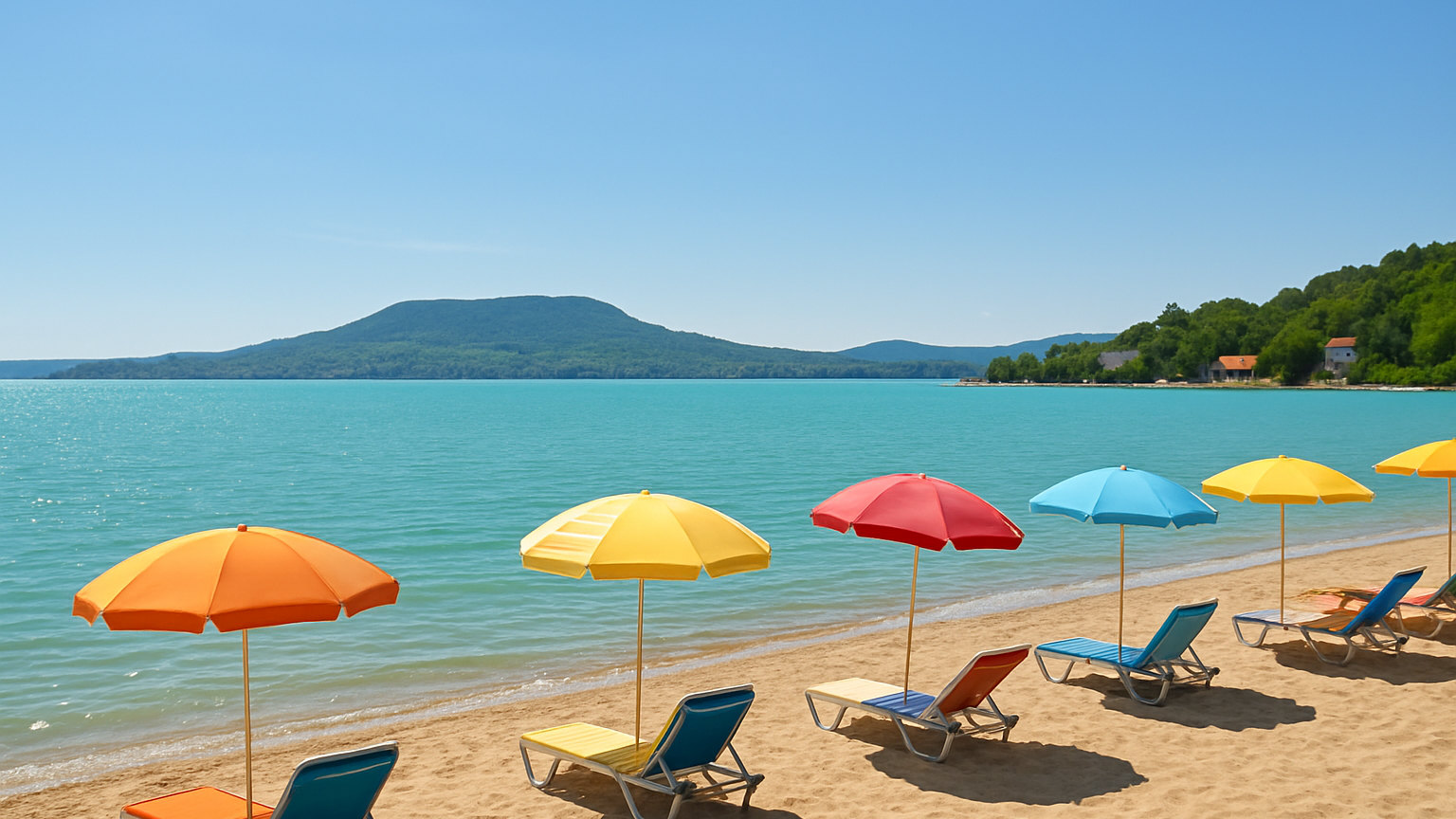
Lake Balaton in Hungary, which is very shallow and reaches twenty-five or twenty-six degrees, the warmest large lake in Europe. Lake Garda in Italy, around twenty-four. The Austrian Salzkammergut lakes, particularly the Wolfgangsee and Mondsee, at twenty-three or twenty-four. Lake Bled in Slovenia, around twenty-four.
Which stay cold?
Deep alpine lakes fed by glaciers and snowmelt. Lake Geneva, Lake Lucerne, Lake Constance and the Norwegian fjord lakes all sit in the high teens even in August. Lake Bohinj in Slovenia is a few degrees cooler than Bled for the same reason. Depth and altitude both work against warmth.
Why are some warmer than others?
Depth, mainly. A shallow lake warms quickly because the sun heats the whole body of water; a deep one stratifies, with a warm surface layer over cold water beneath. Balaton averages only about three metres deep, which is why it is so warm. Altitude and inflow from snowmelt do the rest.
Where are the best places to swim?
The Italian lakes at Como, Garda and Maggiore all have public lidos with lawns, diving platforms and cafes, which is how Italians actually use them. The Austrian lakes have similar municipal facilities in every village. Lake Bled has designated swimming areas and Bohinj allows swimming almost anywhere.
Is it safe?
Generally, with the usual caveats. Cold water shock is a real risk in deeper lakes even in summer, so enter gradually rather than jumping. Boat traffic on the Italian lakes is heavy and swimming outside marked areas puts you in it. Sudden depth changes and underwater obstacles are common near shorelines.
Supervised lidos remove most of this and are inexpensive.
What about water quality?
Generally excellent, and monitored. The European Environment Agency publishes bathing water results for designated inland sites as well as coastal ones, classified from excellent to poor. Alpine lakes in particular are often clean enough to drink from, though algae blooms occur in warm shallow lakes in hot summers.
Which lakes suit families?
Balaton, for shallow warm water on the southern shore. The Austrian lakes, which have safe municipal swimming areas with lifeguards. Garda, which has both beaches and lidos. All three are warmer and calmer than most sea swimming.
Is it better than the sea?
In several respects. No salt, no tides, no jellyfish, calm water and usually a lawn rather than sand. Against that, less dramatic scenery than a coast in some places and, in the alpine lakes, colder water than the Mediterranean in high summer.
What about the Scandinavian lakes?
Finland has around a hundred and eighty thousand lakes and swimming in them is a national habit, with temperatures reaching twenty or twenty-two degrees in July in the south. Sweden is similar. Combined with the long light evenings and the sauna tradition, it is among the best lake swimming in Europe.
Are there rules about where you can swim?
They vary. Some Swiss and Austrian lakes restrict swimming to designated areas, and several Italian lakeside towns prohibit it near ferry docks and marinas. The Nordic right of public access allows swimming almost anywhere. Signs are usually clear and worth reading.
What should you take?
Something to swim in, a towel and shoes for stony entries, which are common. Lidos provide the rest.
Do the lakes get crowded?
The Italian ones do, particularly Garda and Como in August, where the lakeside towns and roads are busy. The Austrian, Slovenian and Hungarian lakes are considerably calmer, and Finnish and Swedish lakes are empty by any standard. Crowding follows the same access rule as everywhere else.
Where Should You Go for a Summer Holiday Without a Beach? goes into more detail on a closely related question, and the rest of our Seasons section covers the wider subject.
The short answer
Balaton, Garda, the Salzkammergut lakes and Bled all reach twenty-four degrees or more in summer and are excellent for swimming. Deep alpine lakes such as Geneva and Lucerne stay cold. Use the municipal lidos, enter gradually, and stay inside marked areas where boats operate.