Winter sun in Europe is a much shorter list than most people expect. Genuine warmth, meaning temperatures in the low twenties with reliable sunshine, exists in one place. Everything else is mild, which is a different proposition and worth distinguishing before booking.
Which is the warmest?
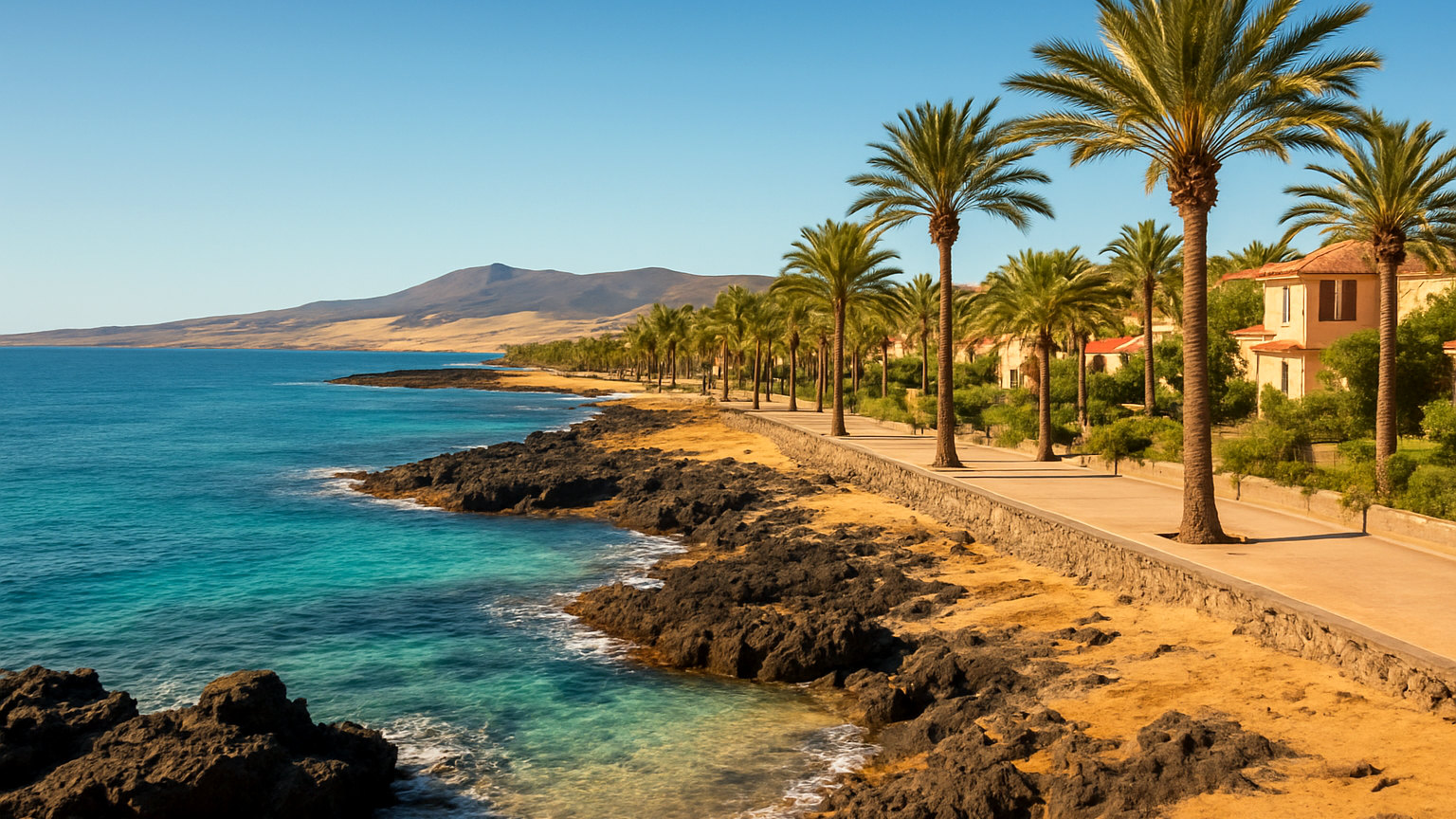
The Canary Islands, by a clear margin. Daytime temperatures sit around twenty to twenty-three degrees every month of the year, rainfall is low in the south of the main islands, and the sea holds around twenty degrees. Nowhere else in Europe comes close for consistency.
Within the archipelago, the southern coasts of Tenerife, Gran Canaria and Fuerteventura are the warmest and driest, since the mountains shelter them from the northern cloud.
What about Madeira?
Mild rather than hot, at around nineteen or twenty degrees in January and February. It is green, subtropical and considerably wetter than the Canaries, and it has almost no natural beaches. As a winter walking and garden destination it is excellent; as a winter beach destination it is not.
How warm is Cyprus?
Around sixteen to eighteen degrees in the day and considerably cooler at night, with a genuine rainy season from December to February. It is the warmest part of the Mediterranean in winter and it is not warm in the Canary sense. Walking weather rather than beach weather.
What about southern Spain and Malta?
The same picture. The Costa del Sol, Malta and Sicily sit in the mid to high teens, which is pleasant for sightseeing, lunch outside and golf, and too cold for swimming or lying on a beach. Nights fall to single figures and many hotels have limited heating.
Why are the Canaries different?
Latitude and ocean. They sit off the coast of northwest Africa, far south of mainland Europe, and the surrounding Atlantic moderates the temperature so there is very little seasonal variation. The trade winds keep the air clear and the northeast of each island wet while the south stays dry.
What is the sunshine like?
Around six to seven hours a day in the southern Canaries in December and January, which is roughly triple the British figure. Cyprus, Malta and southern Spain get five or six hours with a higher chance of a wet day.
How long are the days?
Short everywhere, and this is the constraint people forget. Even the Canaries get around ten hours of daylight in December, with sunset before seven. Southern Spain and Cyprus are similar. Winter sun does not mean long evenings.
Is anywhere else worth considering?
Just outside Europe, the Cape Verde islands and southern Morocco are warmer again and involve longer flights and different entry requirements. Within Europe, the honest list is the Canaries first and everything else second.
What should you expect from the sea?
Around twenty degrees in the Canaries, which is swimmable for most adults and cool. Around seventeen in Cyprus and sixteen in southern Spain, which is a brief dip. Heated pools matter more than sea temperature for most winter trips.
What about the nights?
Cooler than people expect everywhere. The Canaries drop to around fifteen or sixteen, Cyprus and southern Spain to eight or nine. Many Mediterranean properties have limited heating because it is needed for only a few weeks, so a January apartment in Andalusia can be genuinely cold indoors in the evening.
Which destinations are wettest?
Cyprus, Malta and southern Italy, all of which have their rainy season between December and February. The southern Canaries are the driest part of Europe in winter by a wide margin, and the northern coasts of the same islands are among the cloudiest.
Does it vary within a country?
Substantially. Almeria in southeast Spain is warmer and drier than Malaga two hours west, and the south of Tenerife is a different climate from the north. Choosing the specific coast matters more than the country.
Which Canary Island Should You Choose in Winter? goes into more detail on a closely related question, and the rest of our Seasons section covers the wider subject.
The short answer
The Canary Islands are the only reliably warm part of Europe in winter, at around twenty-two degrees with six or seven hours of sun. Madeira, Cyprus, Malta and southern Spain are mild rather than warm, which suits walking and sightseeing rather than a beach.