Winter is the best walking season in southern Europe, and it is the one most visitors never use. The coastal paths, gorges and hill routes that are punishing in July heat are ideal at sixteen or eighteen degrees, and the landscape is green rather than burnt.
Which destination is best?
Madeira, by a clear margin. The levadas run for around two thousand kilometres through forest and along cliffs and are walkable year round, and the high ridge routes between Pico do Arieiro and Pico Ruivo are among the finest mountain walks in Europe. Winter is green and the waterfalls are full.
What about the Canaries?
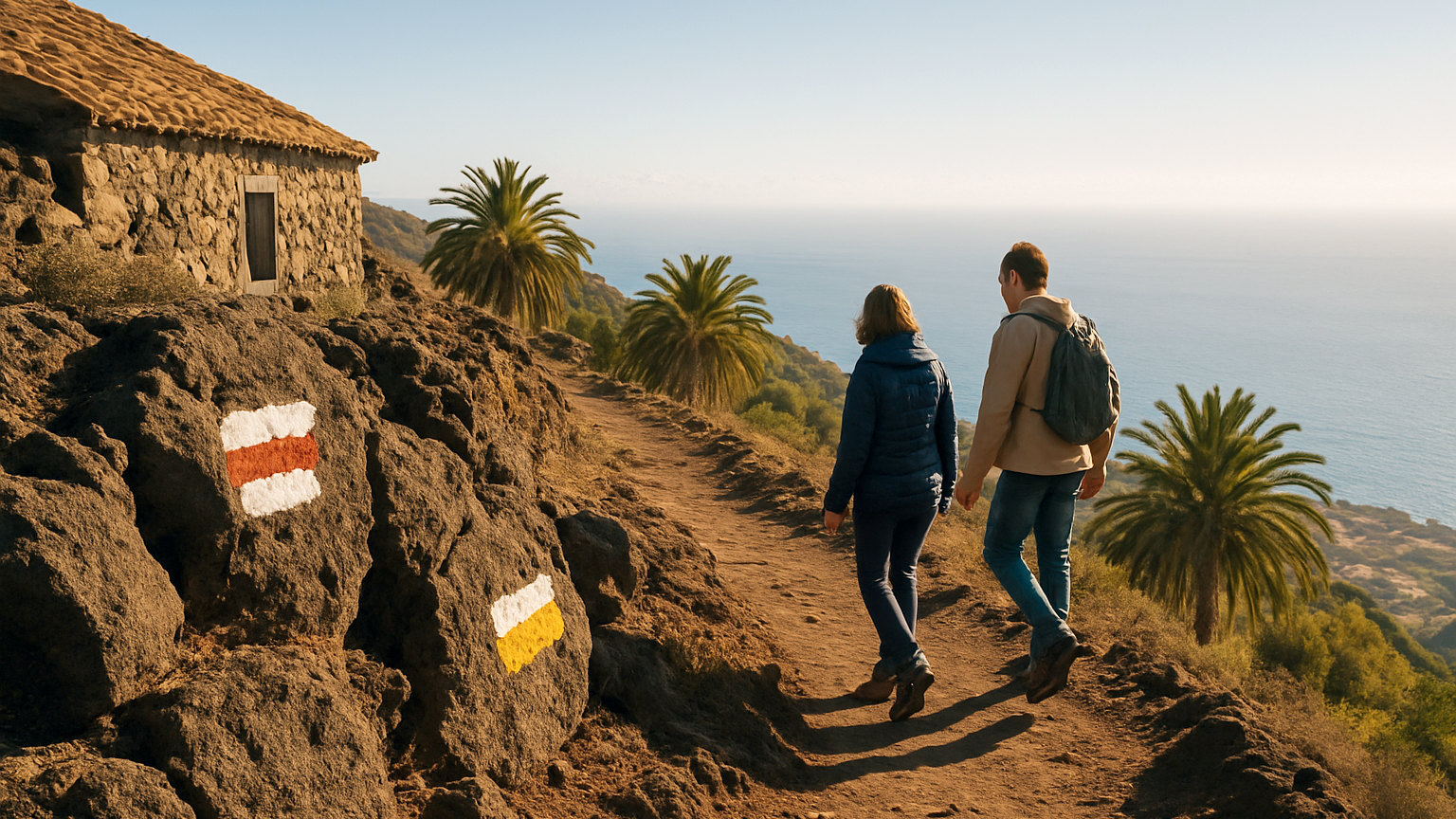
Excellent and varied. La Palma and La Gomera have ancient laurel forest and deep barrancos with almost no other walkers. Tenerife has the Anaga ridges and the Teide national park, which in winter requires warm clothing since the summit area is near freezing. Gran Canaria has the Roque Nublo massif.
Where on the mainland?
Andalusia, where the Caminito del Rey, the Sierra de Grazalema and the Alpujarras are all at their best in winter and are uncomfortable in summer. The route between the white villages inland from Ronda is superb in January.
The Algarve has the Rota Vicentina along the west coast and the cliff paths around Lagos and Sagres, both of which are exposed and windy in winter and never hot.
What about Cyprus and Crete?
Both excellent. The Akamas peninsula and the Troodos trails in Cyprus are ideal in winter, and the Troodos has snow at altitude. Crete has the gorges, though Samaria itself closes for the winter and the alternatives such as Imbros remain open.
What is the catch?
Daylight, which is the main constraint. Around ten hours in December and January across the southern Mediterranean means an early start and no margin for a slow day. Routes should be planned to finish well before dark rather than at dusk.
What about the weather?
Winter is the rainy season across the Mediterranean, so routes can be wet, muddy or closed after heavy rain. Gorges in particular should not be entered after or during rain because of flash flood risk, and several are formally closed in winter for that reason.
What should you take?
More layers than a summer walk requires, since the temperature difference between a sheltered valley and an exposed ridge is substantial. Waterproofs. A torch, given the short days. And proper boots rather than trainers, since winter ground is wetter.
Is it cheaper?
Considerably, since winter is low season everywhere except the Canaries. Accommodation in Andalusia, the Algarve, Crete and Cyprus falls sharply, and the walking is better than in the expensive months.
Are guided walks available?
Widely, and winter is when specialist walking operators run most of their Mediterranean programmes. Guided groups also solve the transport problem on linear routes, where the start and finish are in different places.
Which routes are best for a week?
The Rota Vicentina in the Algarve, the levada network in Madeira and the Anaga ridges in Tenerife all sustain a week of day walks from a single base, which avoids moving accommodation. Long-distance routes such as the GR131 across the Canaries suit those wanting to walk point to point.
Can you walk without a car?
In Madeira, with transfer services, which are well established because levada walks are usually linear. In the Canaries, buses reach some trailheads and a car is easier. In Andalusia and the Algarve, a car is close to essential.
What about guided groups?
Winter is their main Mediterranean season, and a guided week solves transport, route-finding and the linear walk problem in one.
Is the scenery better in winter?
In the Mediterranean, yes. Winter rain turns the burnt summer hillsides green, the streams and waterfalls run, and the wildflowers begin from January in Crete, Cyprus and Sicily. The landscape people photograph in spring is produced by the winter rain that makes walking possible.
See also Do You Need to Leave Europe for Winter Sun?, which covers a related part of the same decision, and our other Seasons guides.
The short answer
Madeira first, then La Palma, La Gomera, Andalusia and the Algarve. Winter walking in southern Europe is better than summer walking and far cheaper. Plan for ten hours of daylight, carry waterproofs and layers, and avoid gorges after rain.