
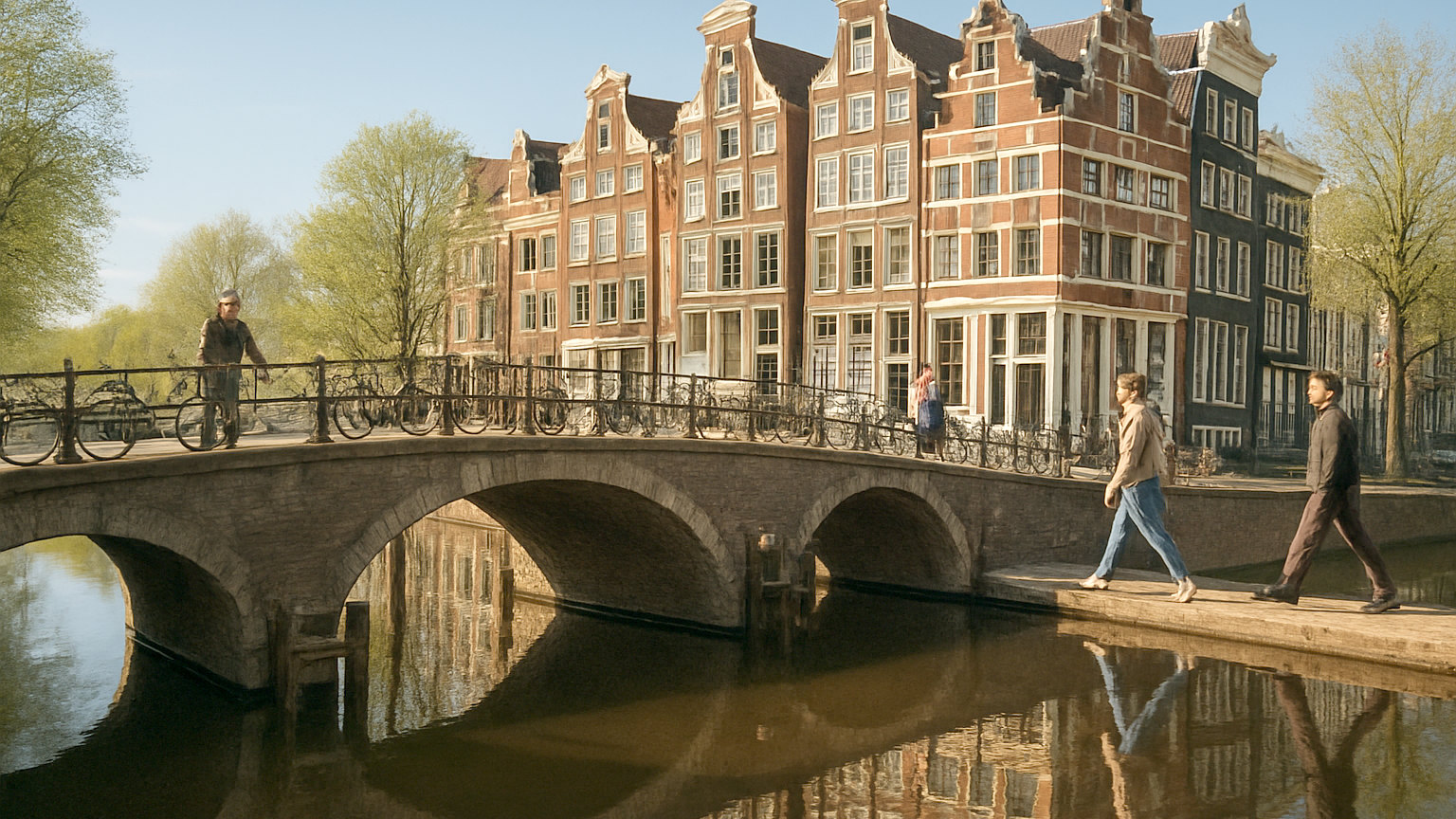
Amsterdam is compact enough that the canal ring can be walked end to end in under an hour, which makes it one of the most efficient European city breaks. Two full days covers the main museums and the centre. The complication is that its two best-known attractions require booking further ahead than almost anything else in Europe.
How long do you need?
Two or three nights. Three allows a day trip or a slower pace in the Jordaan and the eastern docks, which is where the city feels least like an attraction.
What are the essential sights?
The Rijksmuseum, which holds the Dutch Golden Age collection and is a half day. The Van Gogh Museum next door, which is smaller and more focused. The Anne Frank House, which is moving and very tightly managed. Beyond those, the canal ring itself, a canal boat trip, and the Begijnhof courtyard hidden behind a door off a busy square.
What should you book ahead?
The Anne Frank House, which releases timed tickets six weeks in advance and sells out within hours. The Van Gogh Museum and the Rijksmuseum both use timed entry and should be booked at least a few days out. There is no walk-up option for the Anne Frank House at all, which catches out a great many visitors.
Where should you stay?
The Jordaan for the prettiest canals and a quieter, residential feel. De Pijp for restaurants, the Albert Cuyp market and lower prices. The Canal Ring for the classic location at a premium. Avoid the streets immediately around the red light district unless the noise is genuinely not a concern.
Where should you eat?
De Pijp and the Jordaan. Dutch cooking is not the draw and the city compensates with excellent Indonesian food, a legacy of the colonial period, of which rijsttafel is the set-piece version. Brown cafes, the old wood-panelled bars, are the thing to seek out for a drink rather than a meal.
How do you get around?
On foot for the centre and by tram for anything further. Cycling is how the city works and is genuinely the best way to see it, though central Amsterdam traffic is fast and unforgiving of hesitation, so hiring on a quieter day or in a smaller town first is sensible for the nervous.
When is the best time to visit?
April and May for tulip season and mild weather, though this is also the busiest and most expensive period. June to August for long days. September and October are quieter and pleasant. Winter is dark and often wet, which suits the museums and the brown cafes perfectly well. King Day at the end of April is spectacular and fills every hotel in the country.
What do people get wrong?
Standing in a cycle lane, which is usually a differently paved surface rather than a painted one and causes genuine annoyance. The second is treating Amsterdam as the Netherlands, when Utrecht, Haarlem and Delft are all under half an hour away and considerably cheaper to sleep in.
What is worth a day trip?
Zaanse Schans for windmills, or Kinderdijk if you want the working version with fewer people. Haarlem for a smaller canal city fifteen minutes away. The Keukenhof gardens between late March and mid-May.
How much should you budget?
Amsterdam accommodation is the expensive part and rises sharply at weekends and through tulip season. Staying in Haarlem or Utrecht can halve it for a half-hour train ride. Museums are moderately priced, and the I Amsterdam card is worth it only if you intend three or more paid attractions in a day.
Is the red light district worth seeing?
It is a working neighbourhood rather than an attraction, photography of the windows is prohibited and enforced, and the city has actively discouraged group tours through it. Walk through if you are curious and treat it as a street rather than a spectacle.
It is worth reading alongside Lisbon City Guide: What to See and Where to Stay, which takes a different angle, and the wider Destinations guides.
The short answer
Three nights in the Jordaan or De Pijp. Book the Anne Frank House the moment tickets release, add the Rijksmuseum, walk the canal ring, and consider sleeping in Haarlem if the room rates look steep.


