
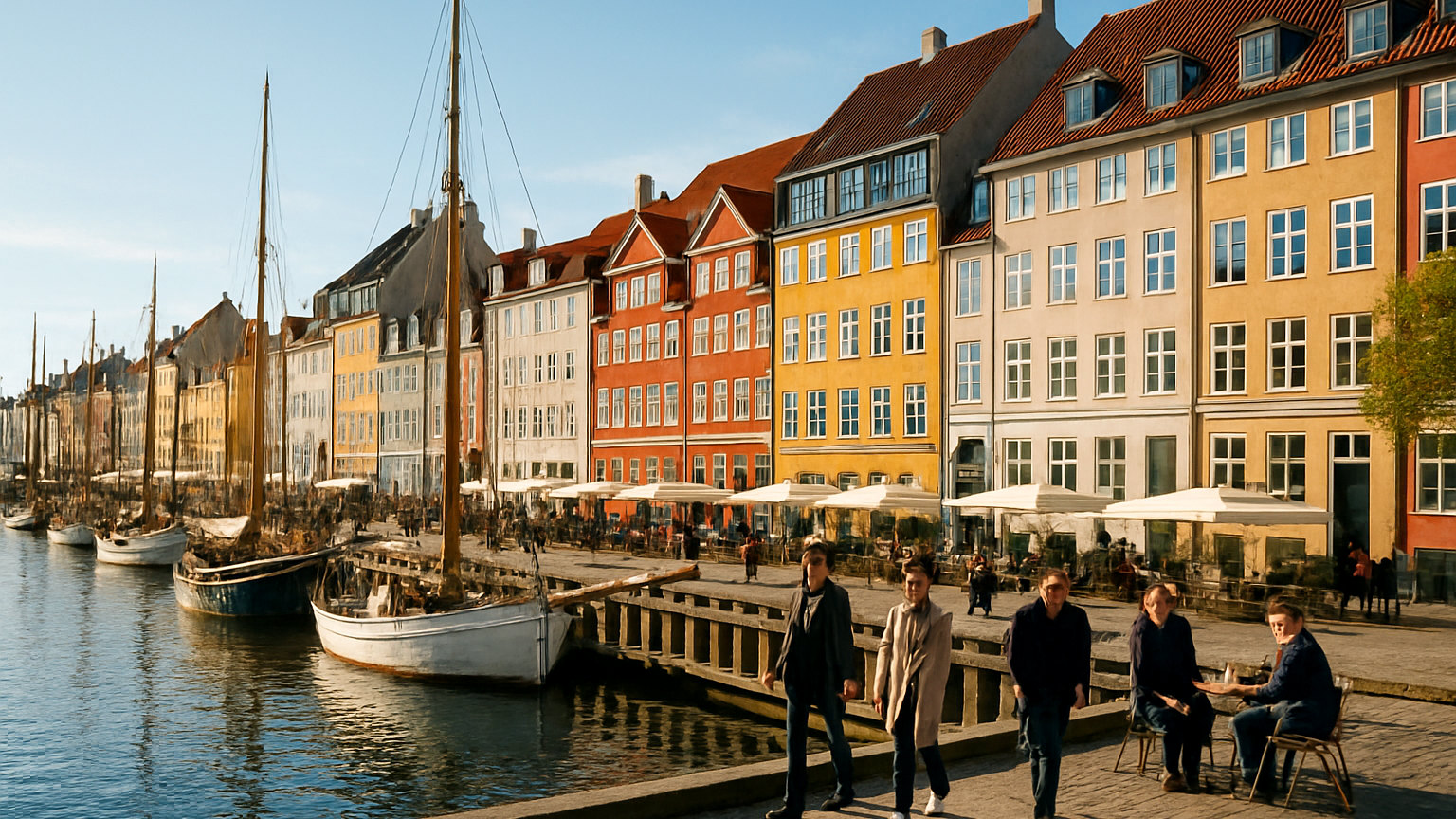
Copenhagen is flat, compact and organised around the bicycle to a degree no other European capital matches. It is also expensive, which is the main planning constraint. The good news is that the things it is best at, which are cycling, design and eating, do not all have to cost a great deal.
How long do you need?
Three nights. Two covers the centre and a third allows Louisiana or Kronborg, both of which are short train rides and both of which are better than anything left in the city on a third day.
What are the essential sights?
Nyhavn, the canal of coloured houses that is the postcard image and takes ten minutes. Tivoli Gardens, an 1843 pleasure garden in the middle of the city that is far more charming than the words amusement park suggest. The Design Museum Denmark for the furniture that defined a century. Christiania, the self-governing district, which is a genuine community rather than an attraction and where photography is restricted.
Is the Little Mermaid worth seeing?
It is the most consistently disappointing sight in northern Europe: a small bronze statue on a rock, usually surrounded by a coach party. If you pass it on a walk along the harbour, look. Do not build a morning around it.
Where should you stay?
Vesterbro for restaurants, bars and the Meatpacking District, which is the best area for eating. Norrebro for a younger, cheaper and more multicultural feel. Indre By, the centre, for walking distance to everything at a premium. Christianshavn across the water for canals and quiet.
Where should you eat?
Copenhagen has an unusual number of excellent restaurants and the famous ones book months ahead. Below that tier, the city is full of good mid-priced places, particularly in Vesterbro. Smorrebrod, the open sandwich, is the traditional lunch and is a genuine art form. Street food markets such as Reffen and Torvehallerne are the cheapest way to eat well.
Should you cycle?
Yes, and it transforms the trip. More than half of commutes in the city are by bicycle, the infrastructure is fully separated and the terrain is flat. Hire is inexpensive and widely available. The rules are taken seriously: hand signals, lights after dark and staying out of pedestrian space are all expected rather than optional.
How much should you budget?
Copenhagen is among the more expensive European capitals, with alcohol and restaurant dinners the worst offenders. Lunch is much cheaper than dinner in the same kitchens, the street food markets are genuinely good value, and Denmark uses the krone rather than the euro. The Copenhagen Card is worth it only if you intend several paid attractions a day.
When is the best time to visit?
May to September for long days and outdoor life, with June and July the warmest. Tivoli reopens for Halloween and Christmas and the city is at its most atmospheric in December, though the daylight is very short. February and March are cold, grey and cheap.
What is worth a day trip?
The Louisiana Museum of Modern Art at Humlebaek, forty minutes north, which is among the best-sited galleries anywhere with sculpture gardens running to the sea. Kronborg Castle at Helsingor, the Elsinore of Hamlet. Malmo in Sweden, thirty-five minutes across the bridge.
What do people get wrong?
Walking in the cycle lane, which is a separate paved strip rather than a painted line and is used at speed. The second is planning the trip around restaurant dinners and then finding the budget gone by the third night, when lunch at the same places costs a fraction. The third is buying the Copenhagen Card for a slow trip, where it rarely repays itself.
It is worth reading alongside Krakow City Guide: Old Town, Kazimierz and Beyond, which takes a different angle, and the wider Destinations guides.
The short answer
Three nights in Vesterbro, a hire bicycle for the whole stay, lunch rather than dinner in the good restaurants, an evening at Tivoli, and a day at Louisiana. Walk past the Little Mermaid rather than to it.


