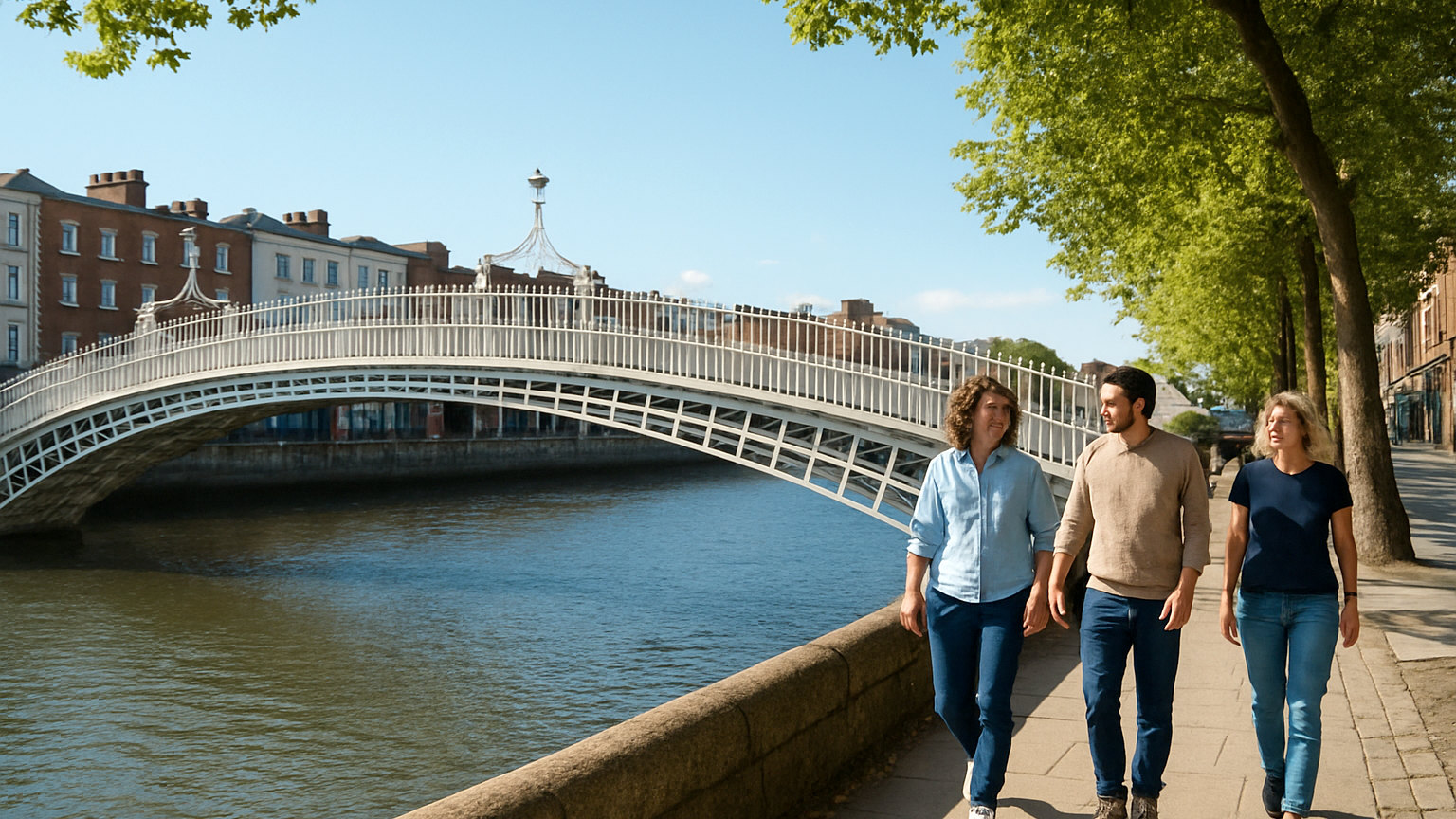
Dublin is small, walkable and considerably more expensive than the rest of Ireland, which shapes the sensible approach: see it properly in two days and then move west, where the scenery is and where the money goes further. Two full days covers the city comfortably.
How long do you need?
Two nights. A third is worth it only for a day trip or a slower pace. Dublin accommodation is out of proportion to the rest of the country, so extra nights here cost more than they do anywhere else in Ireland.
What are the essential sights?
Trinity College and the Book of Kells, with the Long Room library, which is the single most photographed interior in Ireland. Kilmainham Gaol, which covers the 1916 Rising and Irish independence and is the most affecting thing in the city. The National Museum for the bog bodies and the gold, which is free. Christ Church and St Patricks cathedrals.
Is the Guinness Storehouse worth it?
It is the most visited attraction in the country and is a brand experience rather than a brewery tour, ending in a rooftop bar with a good view and an included pint. Whether that justifies the ticket is a personal call. The Jameson distillery and the Teeling distillery offer something similar. Tickets should be booked ahead in summer.
Where should you stay?
The south side around St Stephens Green and Camden Street for the best balance of location, restaurants and quiet. Smithfield and Stoneybatter on the north side for lower prices and a more local feel. Temple Bar is central and is the noisiest option by a wide margin, with stag and hen groups until the early hours.
Should you drink in Temple Bar?
See it once and drink elsewhere. Prices there are the highest in the city by some distance and the music is aimed at visitors. The Stag Head, Kehoes, Grogans and the pubs around Camden Street are where Dubliners go, and the traditional music sessions in them are the real thing rather than a performance.
How do you get around?
On foot. The centre is small and almost everything is within twenty-five minutes of everything else. The Luas tram and the buses cover the rest, with a Leap card giving cheaper fares than cash. The airport is served by frequent express buses rather than rail.
When is the best time to visit?
May, June and September. The weather is unreliable in every month and planning around it is futile. St Patricks Day in March fills the city and doubles accommodation prices. Winter is quiet and the pubs are at their best.
What is worth a day trip?
Howth, a fishing village at the end of the DART suburban line, with a cliff walk and seafood. Glendalough in the Wicklow mountains, a monastic site in a glacial valley. Newgrange in the Boyne valley, a passage tomb older than the pyramids, which needs a booked tour.
What do people get wrong?
Spending four nights in Dublin and none in the west, which inverts what Ireland is good at. The second is underestimating the cost of drinking, which is high enough to be a real line in the budget.
How much should you budget?
Dublin is the most expensive part of Ireland and one of the pricier cities in western Europe, with accommodation and drinking the two worst lines. Museums are largely free, which offsets some of it. Staying on the north side or in Smithfield rather than the centre saves a meaningful amount for a ten-minute walk.
What should you eat?
Seafood, which is the genuine strength: oysters, chowder and smoked salmon. A carvery lunch in a pub is the cheapest substantial meal in the city and is a real institution rather than a tourist offering.
Anyone weighing this up will also want Copenhagen City Guide: What to See and Do, along with the rest of the Destinations section.
The short answer
Two nights on the south side. Trinity and the Book of Kells, Kilmainham Gaol, the free National Museum, a pint somewhere that is not Temple Bar, and then a train or a hire car west.